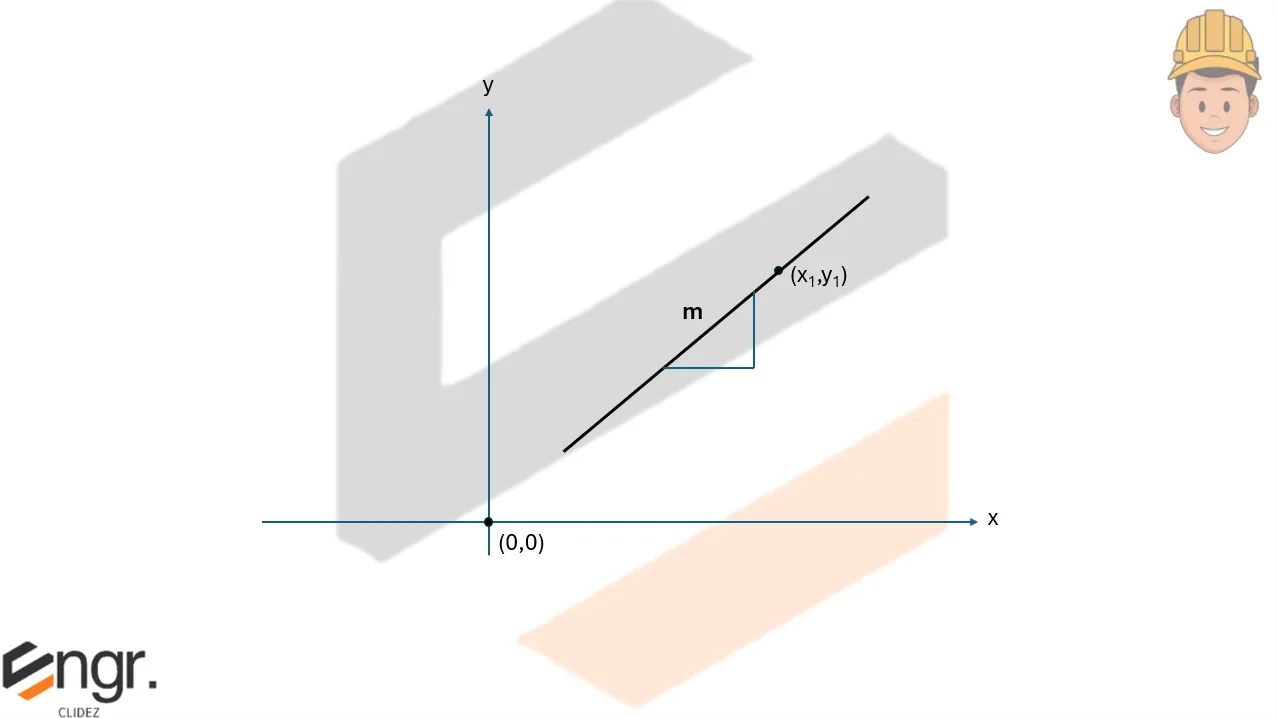
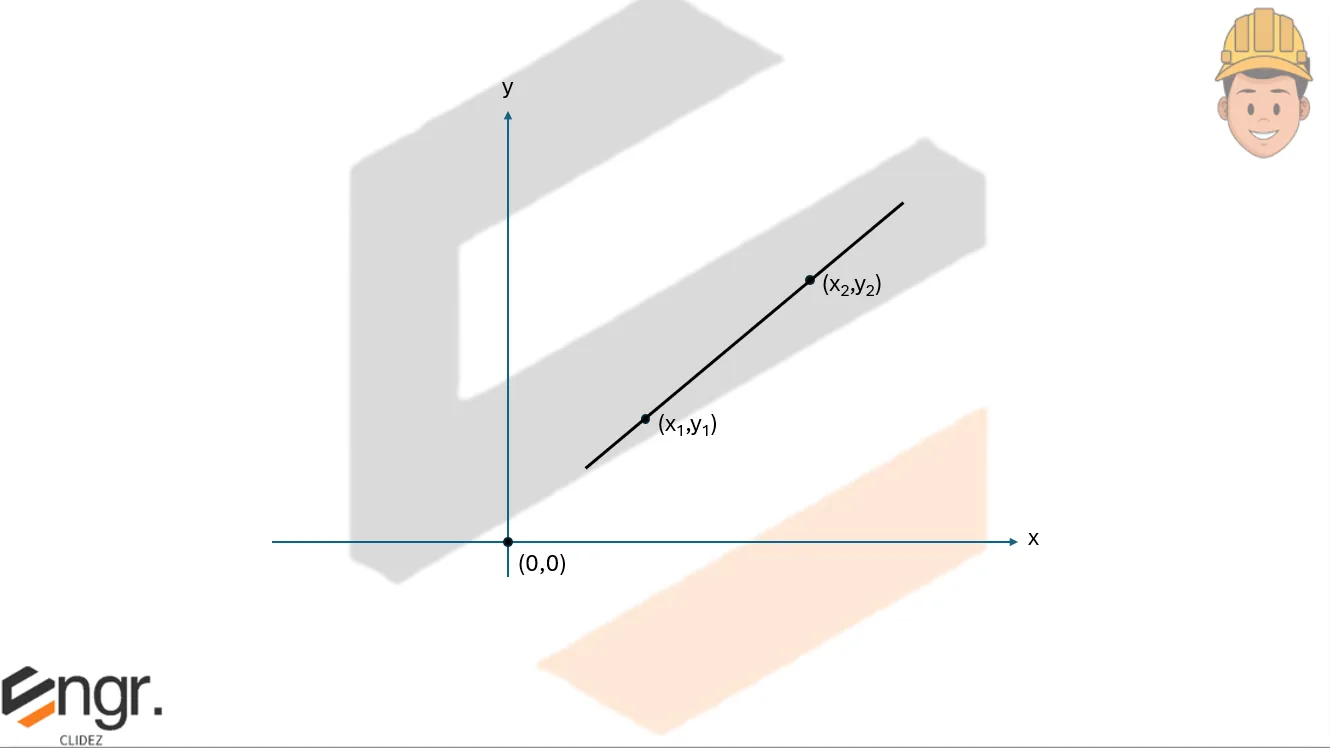
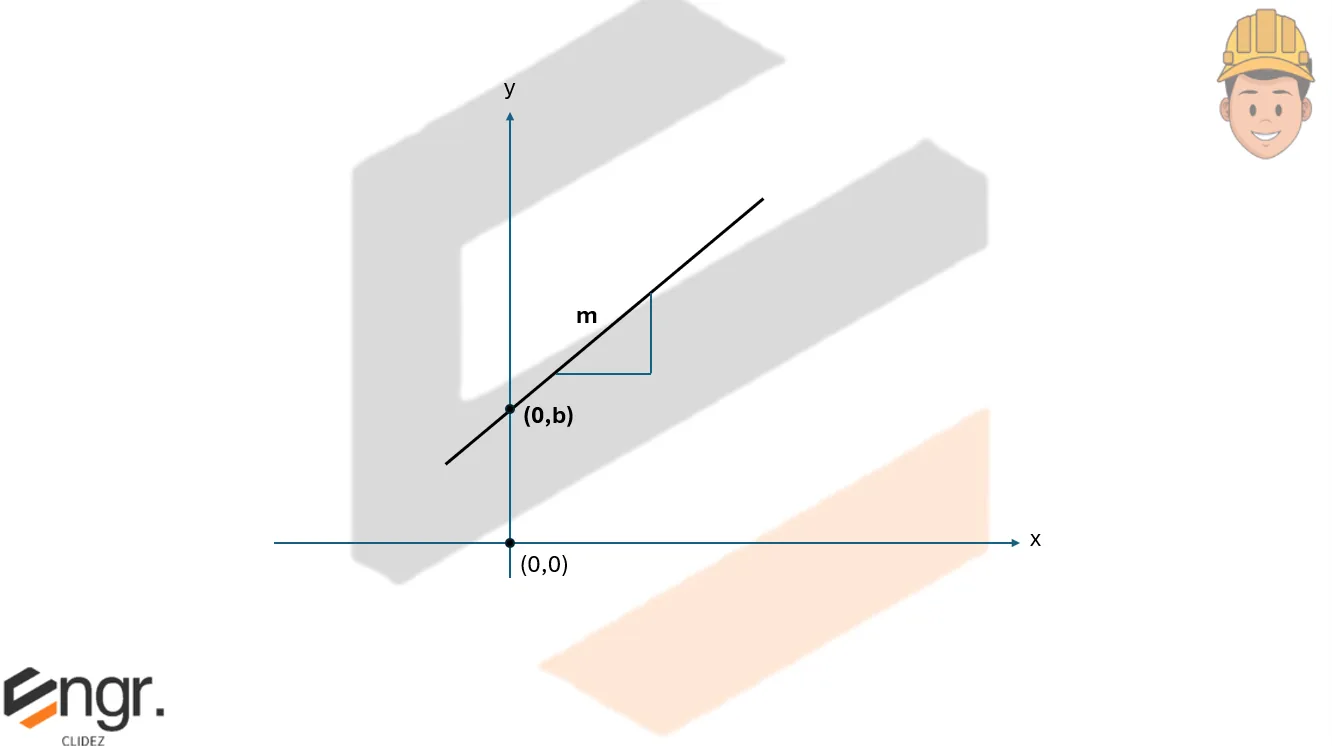
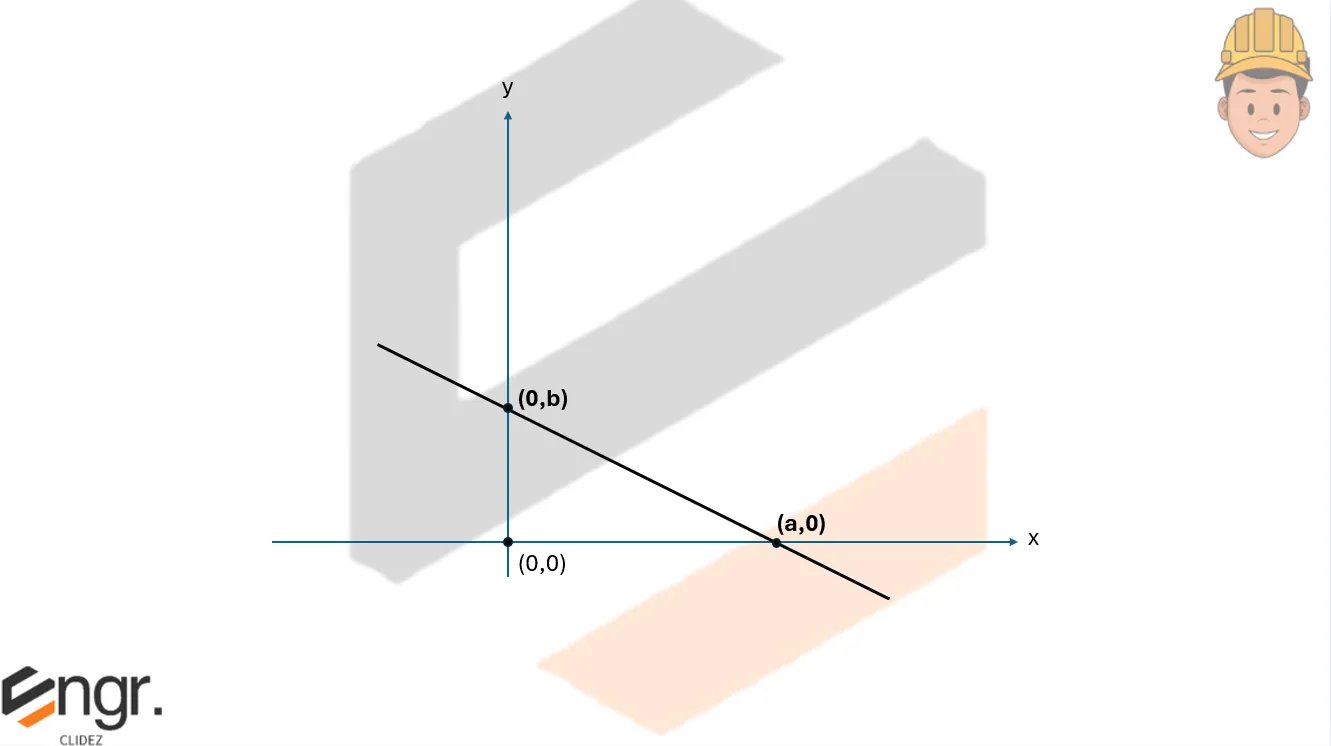
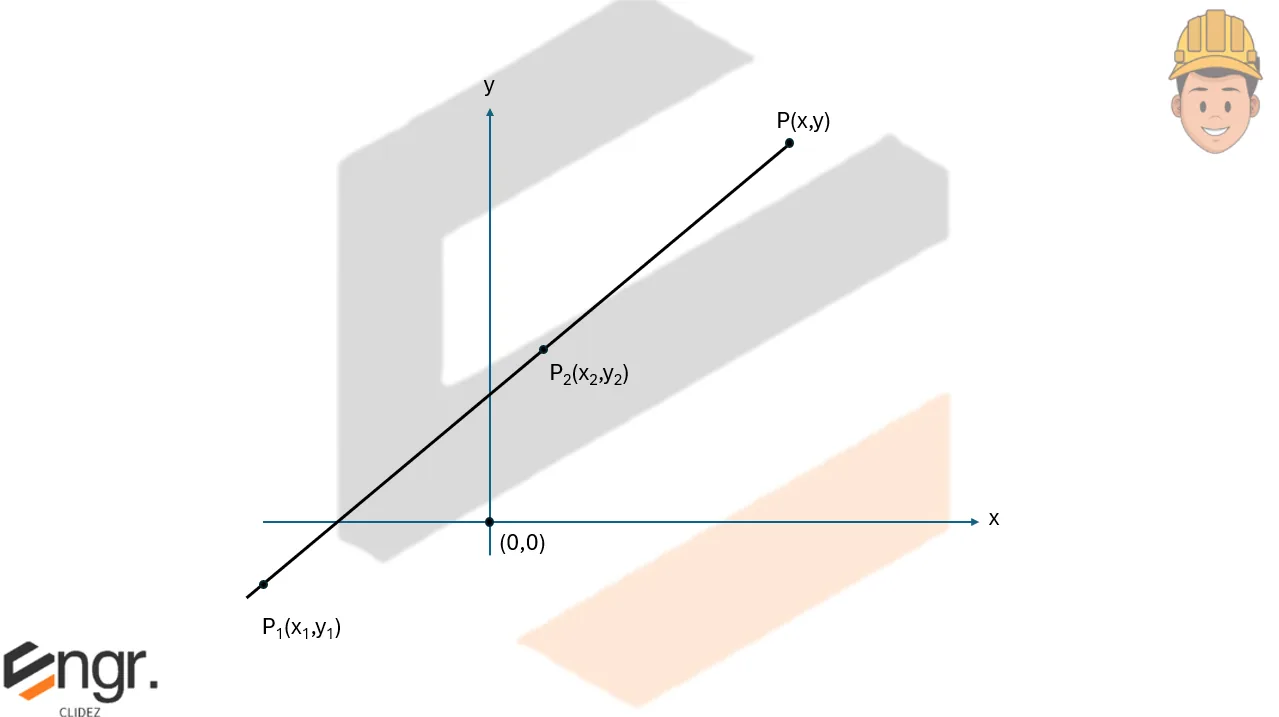
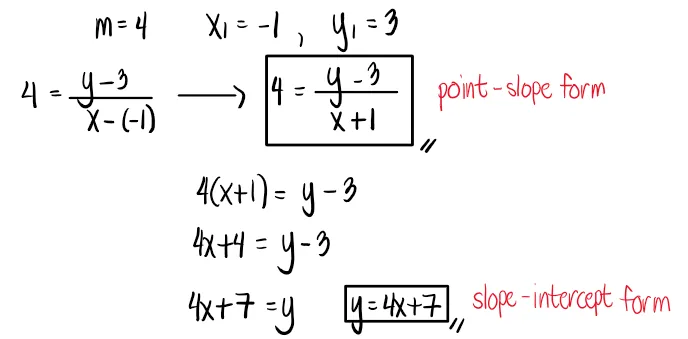
Write the point-slope form and the slope intercept form of the equation of the line with a slope of 4 that passes through the point (-1,3).
See images:
Problem 2:
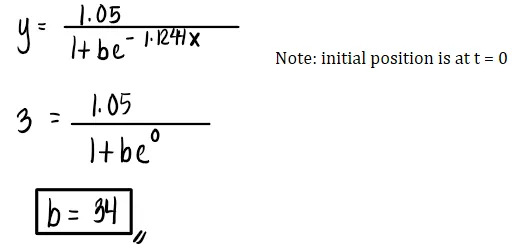
A logistic curve is the graph of an equation of the form where k, b, and c are positive constants. Such curves are useful for describing a population y that grows rapidly initially, but whose growth rate decreases after x reaches a certain value. In a famous study of the growth of protozoa by Gause, a population of Paramecium caudata was found to be described by the logitc equation with c=1.1244, k=105, and x time in days. Find b if the intial position was 3 protozoa.
Hint: $y=\frac{k}{1+be^{-cx}}$
See images:
Problem 3:
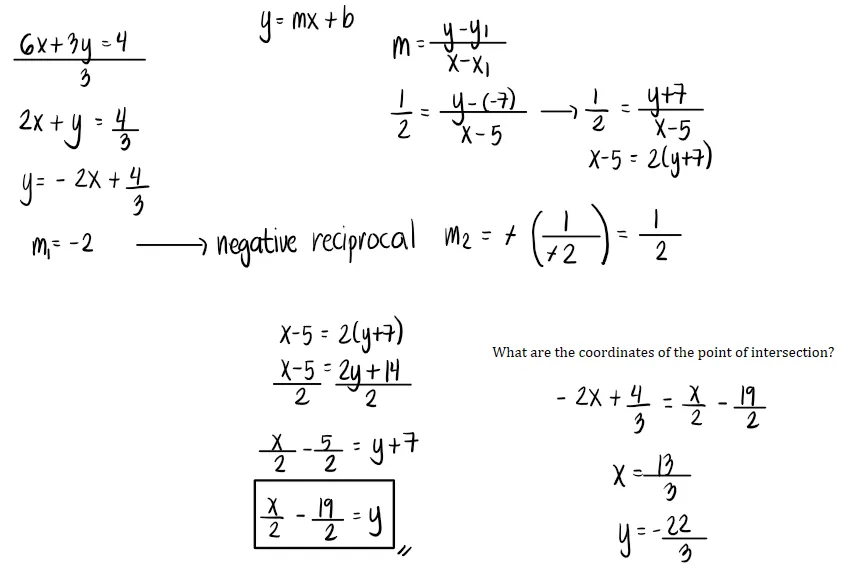
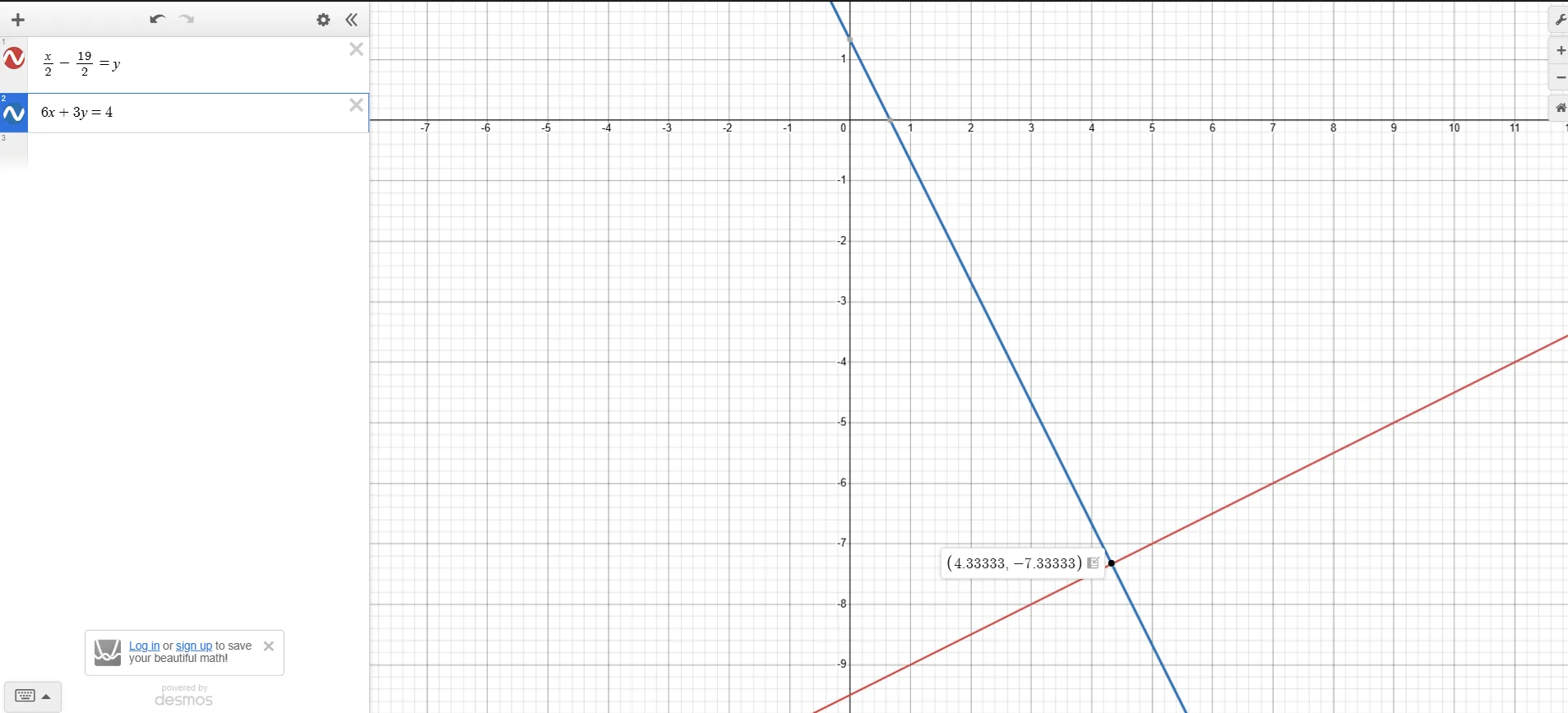
Find the slope-intercept form of the line that passes through (5,-7) that is perpendicular to the line 6x+3y=4. At what point do these lines intersect?
See images:
Problem 4:
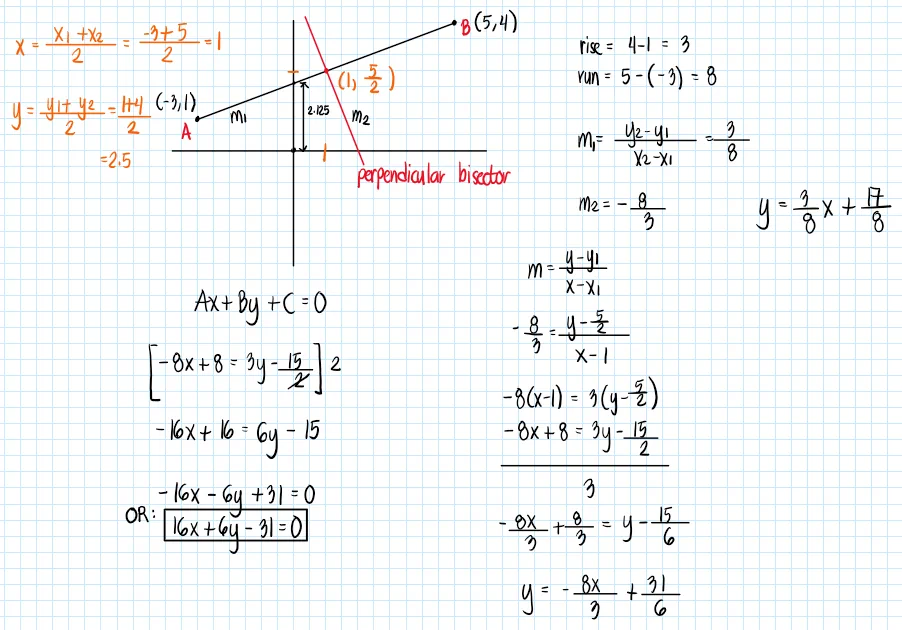
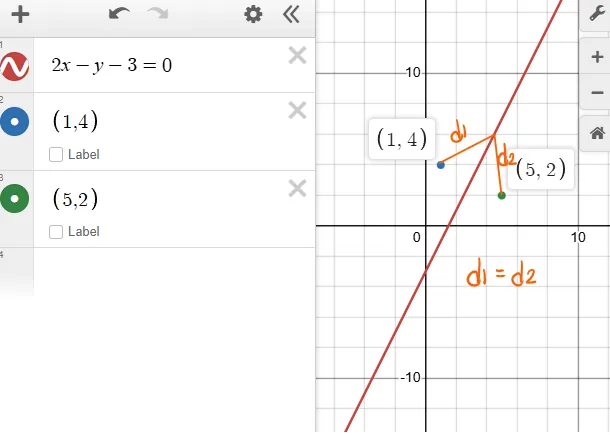
Given A(-3,1) and B(5,4), find the general form of the perpendicular bisector L of the line segment AB.
See images:
Problem 5:
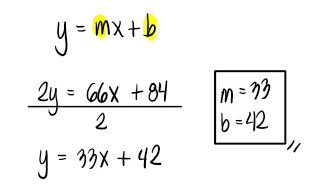
With wireless internet gaining popularity, the number of public wireless internet access points (in thousands) is projected to grow from 2003 to 2008 according to the equation -66x+2y=84, where is is the number of years after 2003. Find the slope and y-intercept of the line equation.
See images:
Problem 6:
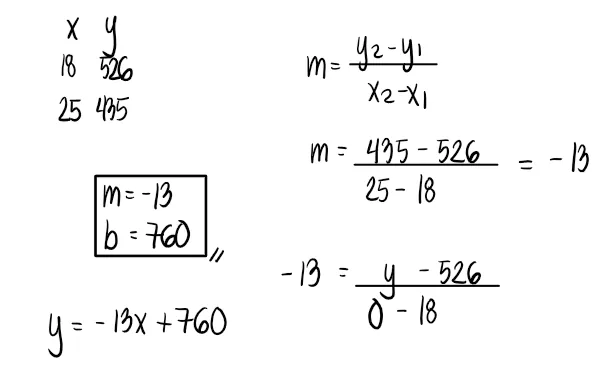
The quantity of a product that consumers purchase depends on its price, with higher prices
leading to fewer sales. The table below shows the price of a video and the quantity of that
video sold on a weekly basis in a store.
x (Price of the video)
\$18
\$25
y (No. of videos sold weekly)
526
435
Assuming that as price increases, the number sold weekly decreases steadily, use the linear
function $y = mx + b$ to find the values of $m$ and $b$, thereby modeling video demand.
See images:
Problem 7:
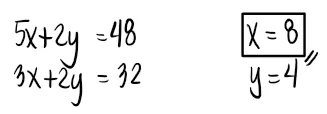
The equations $5x + 2y = 48$ and $3x + 2y = 32$ represent the money collected from
school concert ticket sales during the two class periods. If $x$ represents the cost
for each adult ticket and $y$ represents the cost for each student ticket, what is the
cost for each adult ticket?
See images:
Problem 8:
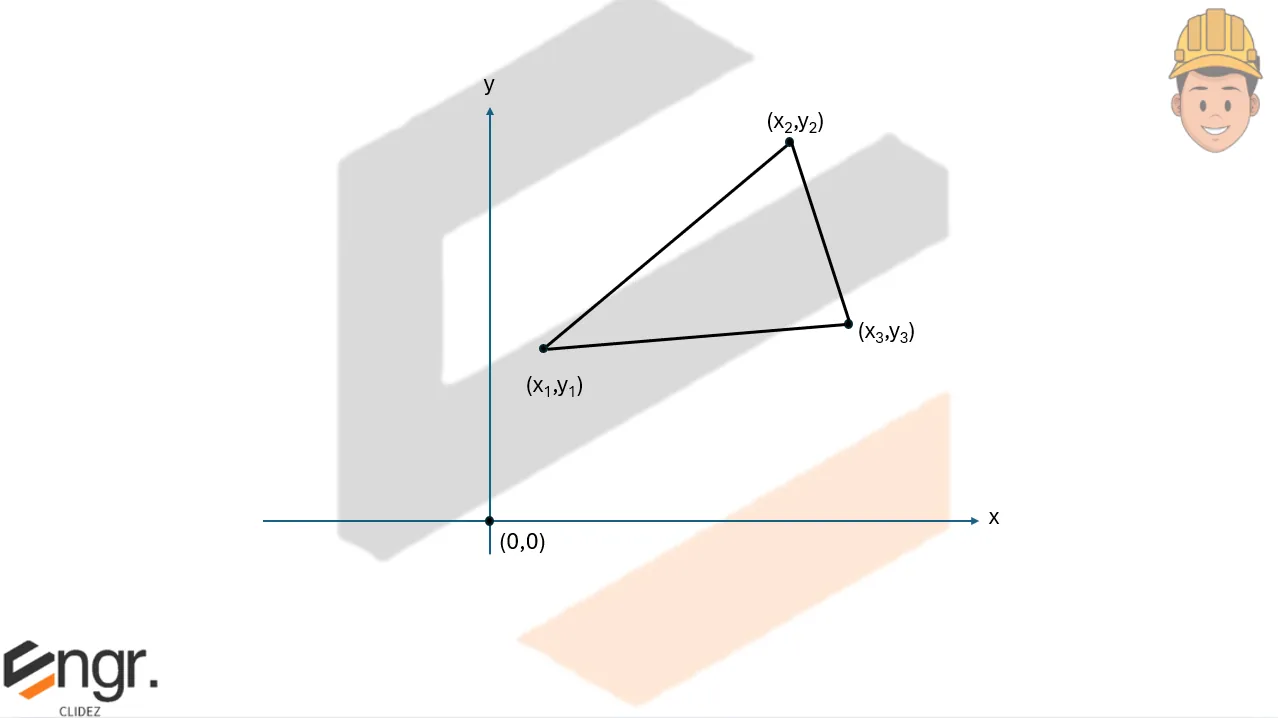
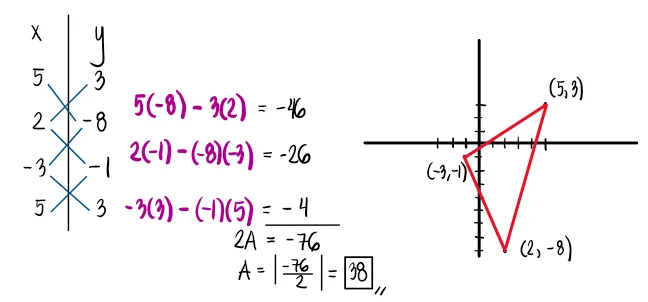
Find the area of a triangle whose vertices are A(-3,1), B(5,3), and (2,-8).
Write the coordinates in two columns, x and y. Follow a clockwise or counterclockwise direction when writing the coordinates. In the last row, copy the coordinates of the first row. Then, multiply from left to right and subtract the result when multiplying from right to left. Add all of the values and divide the result by 2. We use an absolute value sign as area cannot be negative.
Problem 9:
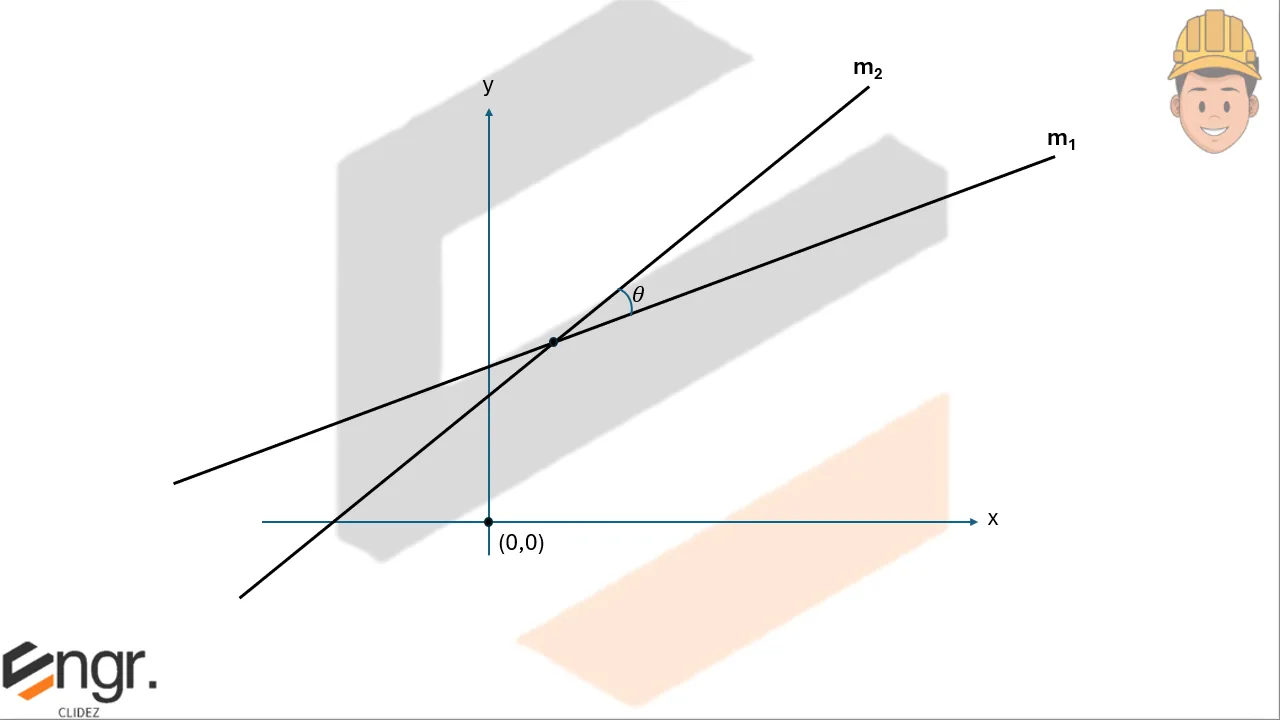
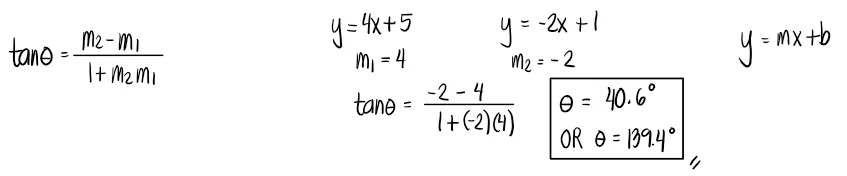
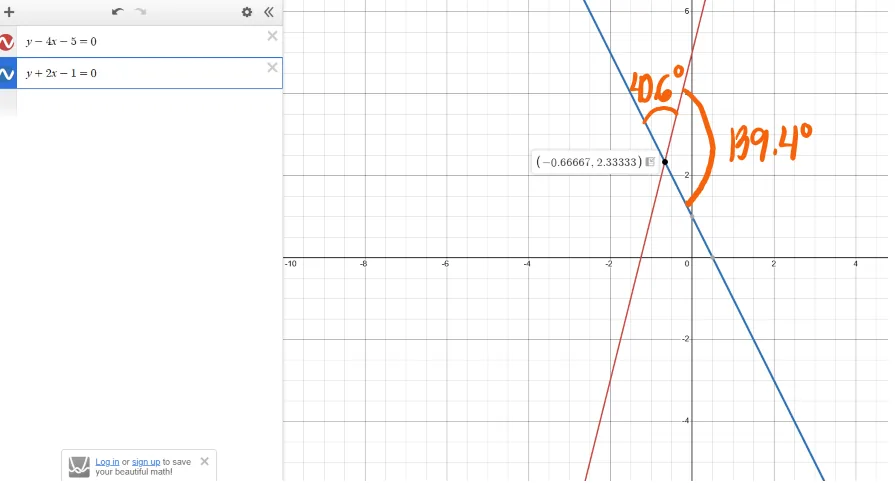
What is the angle between the lines y-4x-5=0 and y+2x-1=0?
Note that there are two possible answers because there is an acute and obtuse angle between the two lines.
Problem 10:
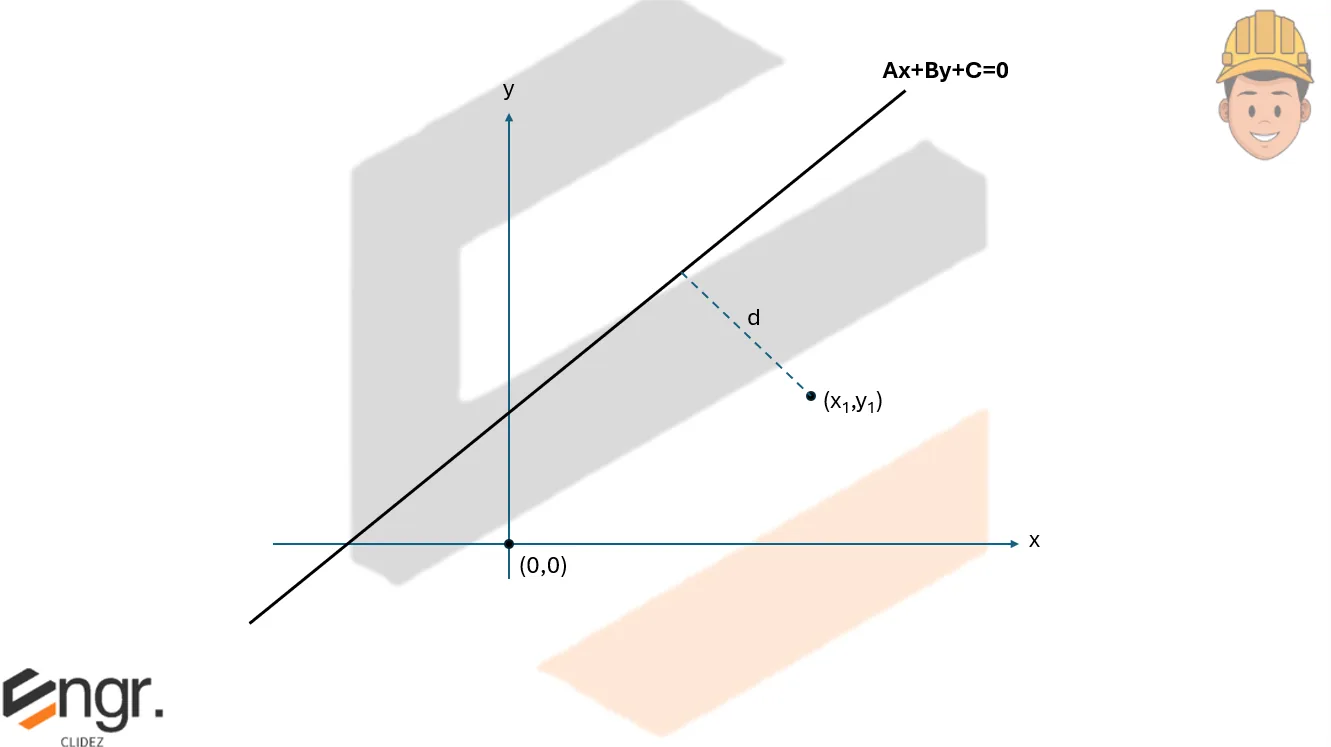
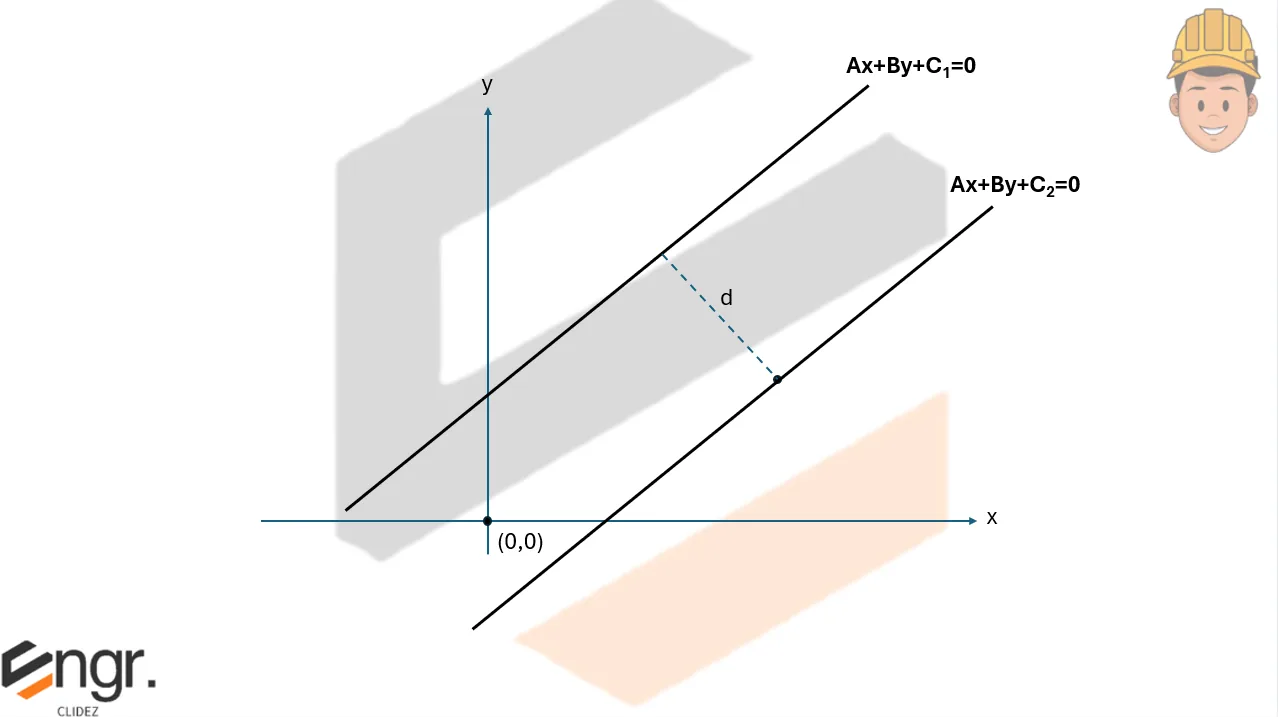
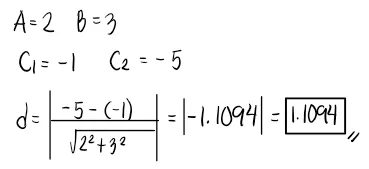
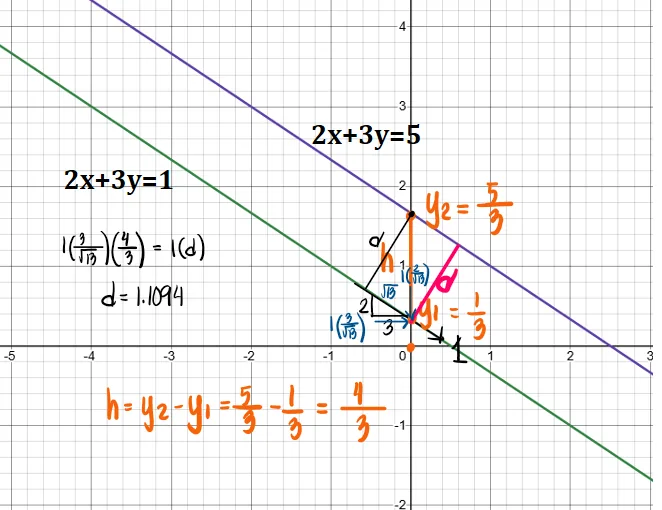
Find the distance between the lines 2x+3y=1 and 2x+3y=5.
We may also use the concept of moments in statics of rigid bodies. Treat one line as a unit force and take moments about the second line, vertically or horizontally, depending on preference. The vertical or horizontal distance can be obtained by y2-y1 or x2-x1. This moment shall equal the unit force multiplied by the perpendicular distance (which is the distance between the two lines).
Conic Sections
Conic Sections — Definitions, Locus, and General Equation
General Second-Degree Equation of a Conic
Any conic section can be represented by the general quadratic equation:
$$ Ax^2 + Bxy + Cy^2 + Dx + Ey + F = 0 $$
The presence of the $Bxy$ term indicates a possible rotation of axes.
Circles, ellipses, parabolas, and hyperbolas can all appear rotated when $B \neq 0$.
How to Distinguish Conics Using A, B, and C
Ignoring rotation (or after rotating axes so that $B = 0$), the nature of the conic is determined by the signs of $A$ and $C$:
Circle: $A = C$ and $B = 0$
Ellipse: $A$ and $C$ have the same sign but not equal
Parabola: either $A = 0$ or $C = 0$ (but not both)
Hyperbola: $A$ and $C$ have opposite signs
With rotation included ($B \neq 0$), the classification is done using the discriminant:
$$ \Delta = B^2 - 4AC $$
Ellipse: $\Delta < 0$ (includes circles)
Parabola: $\Delta = 0$
Hyperbola: $\Delta > 0$
1. Circle
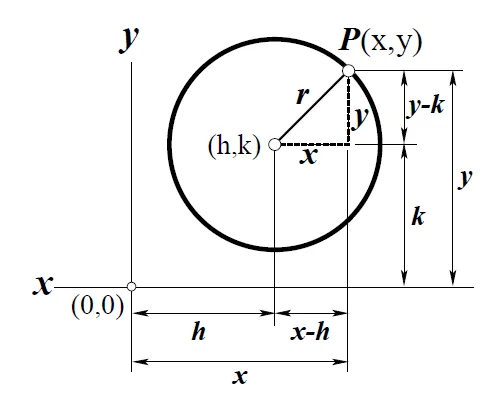
A circle is the locus of all points that are a fixed distance (radius) from a fixed point (center).
Standard form:
$$ (x - h)^2 + (y - k)^2 = r^2 $$
(h,k) is the center of the circle
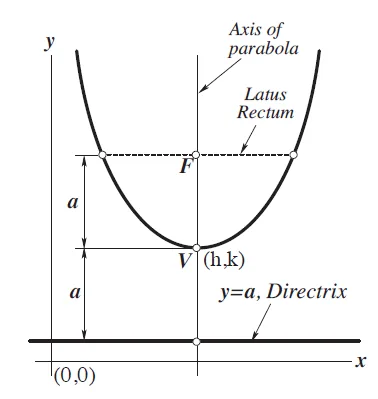
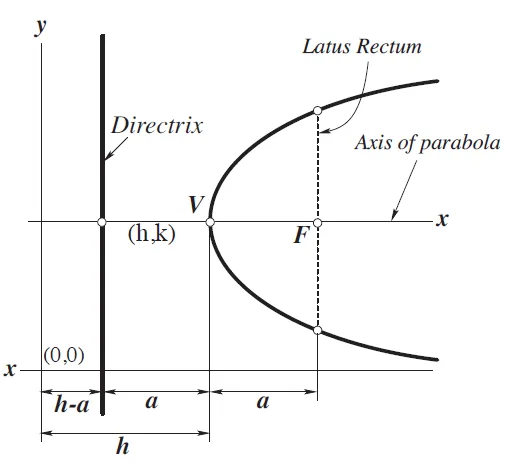
2. Parabola
A parabola is the locus of all points equidistant from a fixed point (focus) and a fixed line (directrix).
Standard forms:
Horizontal axis:
$$ (y-k)^2 = 4a(x-h) $$
Vertical axis:
$$ (x-h)^2 = 4a(y-k) $$
(h,k) is the vertex of the parabola
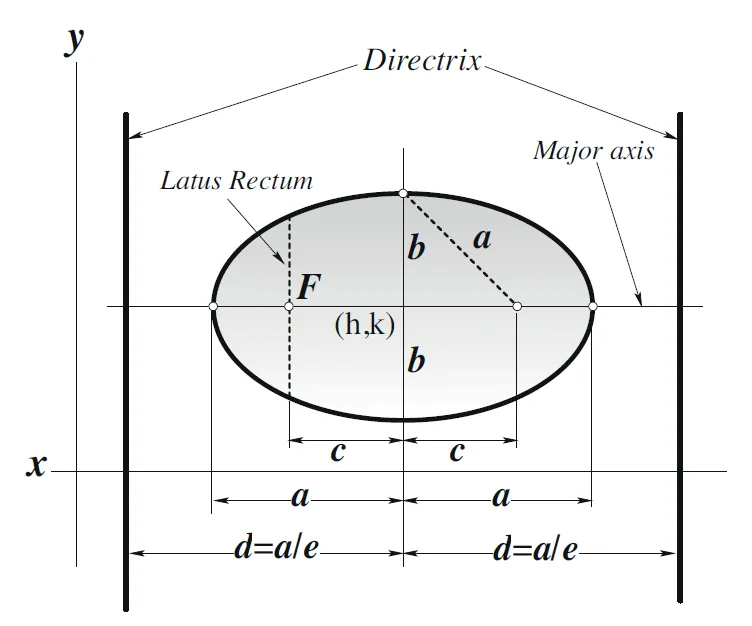
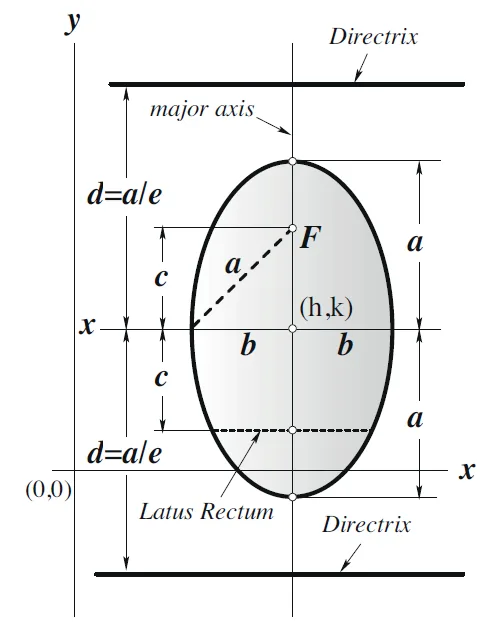
3. Ellipse
An ellipse is the locus of all points for which the sum of the distances to two fixed points (foci) is constant.
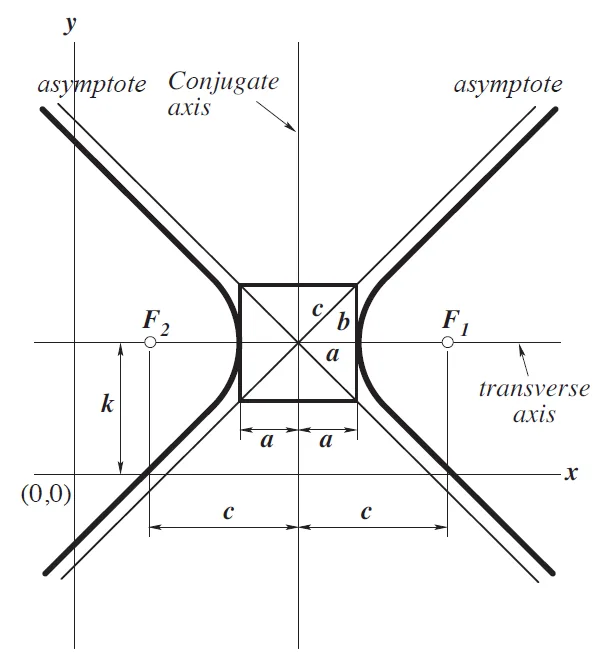
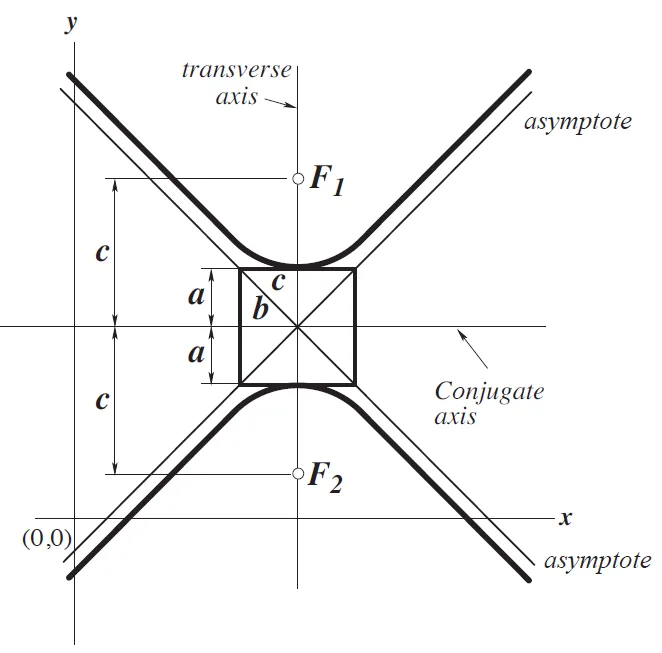
The center of the hyperbola is at $(h,k)$.
Note: Equilateral hyperbolas are hyperbolas whose transverse and conjugate axes have the same length and whose asymptotes are perpendicular to each other.
Equation of asymptotes
$$ y - k = \pm \frac{a}{b}(x - h) $$
Latus rectum (latera recta) of a hyperbola:
$$ L = \frac{2b^2}{a} $$
Eccentricity of Conic Sections
The eccentricity of a conic section describes the shape and “flatness” of the curve.
It is defined as:
$$ e = \frac{\text{distance to focus}}{\text{distance to directrix}} $$
This value fully determines the nature of the conic:
Circle: $e = 0$
Ellipse: $0 < e < 1$
Parabola: $e = 1$
Hyperbola: $e > 1$
1. Eccentricity of an Ellipse
For the ellipse
$$ \frac{(x-h)^2}{a^2} + \frac{(y-k)^2}{b^2} = 1, $$
the first eccentricity is:
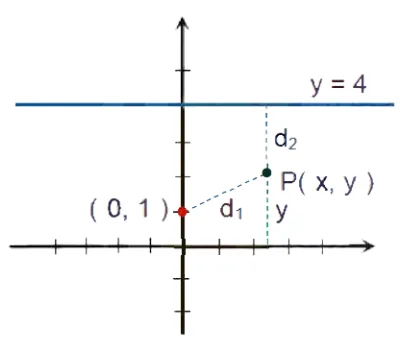
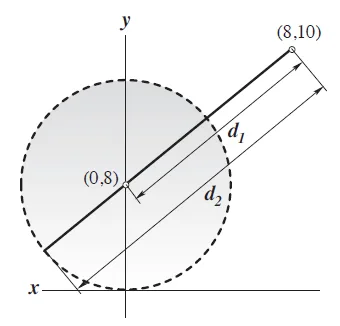
Locus: Distance to a Point is Half the Distance to a Line
Point $P(x,y)$ moves so that its distance from the point $(0,1)$ is one half of its distance from the line $y=4$.
Compute the eccentricity of the resulting curve.
The condition is:
$$
d_1 = \tfrac12 d_2
$$
Distance to the point $(0,1)$:
$$
d_1 = \sqrt{(x-0)^2 + (y-1)^2}
$$
Distance to the line $y=4$:
$$
d_2 = |4 - y|
$$
Impose the condition:
$$
\sqrt{(x)^2 + (y-1)^2} = \tfrac12 (4 - y)
$$
Square both sides:
$$
x^2 + (y-1)^2 = \tfrac14 (4 - y)^2
$$
Expand:
$$
x^2 + y^2 - 2y + 1 = \tfrac14 (16 - 8y + y^2)
$$
Multiply both sides by 4:
$$
4x^2 + 4y^2 - 8y + 4 = 16 - 8y + y^2
$$
Simplifying, we obtain the equation of an ellipse.
$$
4x^2 + 3y^2 = 12
$$
Divide by 12:
$$
\frac{x^2}{3} + \frac{y^2}{4} = 1
$$
Thus the ellipse has center $(0,0)$, with:
$$
a = 2,\quad b = \sqrt{3}
$$
Compute $c$:
$$
c^2 = a^2 - b^2 = 4 - 3 = 1
$$
$$
c = 1
$$
Eccentricity:
$$
e = \frac{c}{a} = \frac12
$$
Therefore, the eccentricity is:
$$
\boxed{\frac12}
$$
Problem: Equation of a Circle with Given Center and Tangent to a Given Line
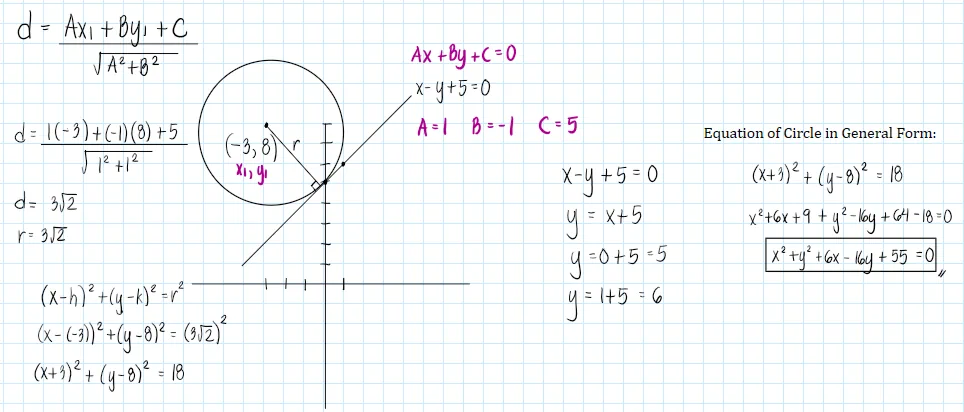
Find the equation of the circle with center at (-3,8) and tangent to the line x-y+5=0.
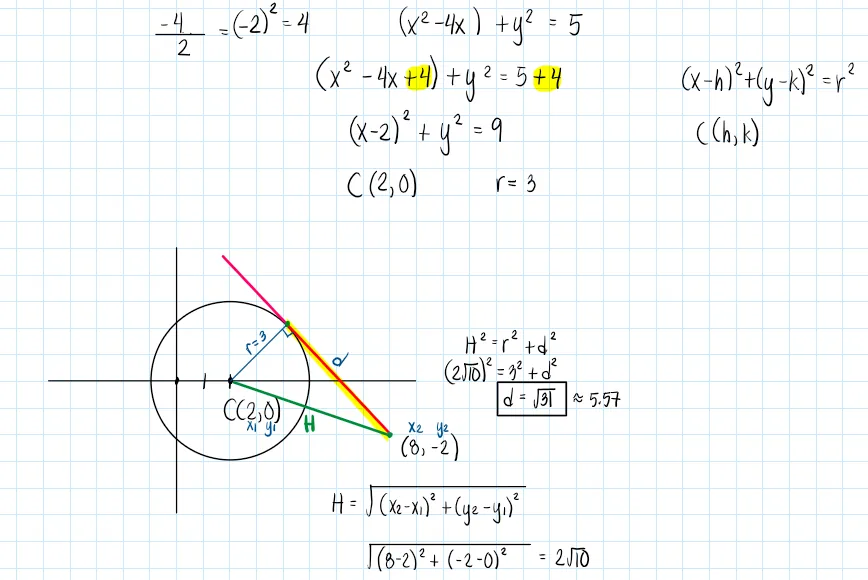
Problem: Length of the Tangent to a Circle
Determine the length of the tangent to the circle x2+y2-4x-5=0 from (8,-2).
Locus of a Moving Point that Forms a Triangle of Specific Area
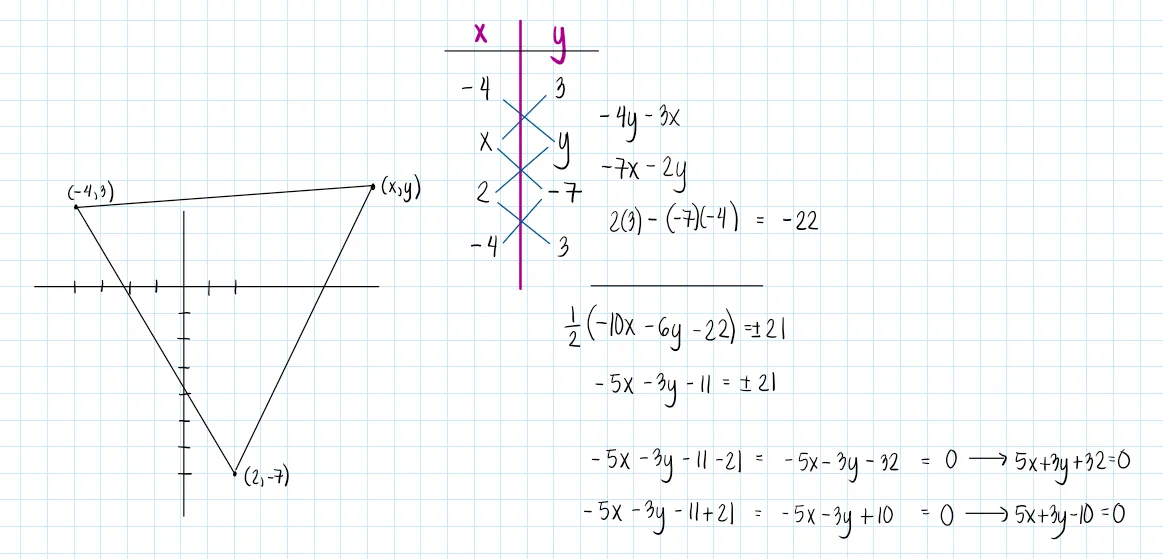
Find the locus of a moving point which forms a triangle of area 21 square units with the point (2, -7) and (-4, 3).
Ans. 5x+3y+32=0 or 5x+3y-10=0
Equation of the Curve Connecting Centers of Circles Tangent to the Fixed Circle and the x-axis
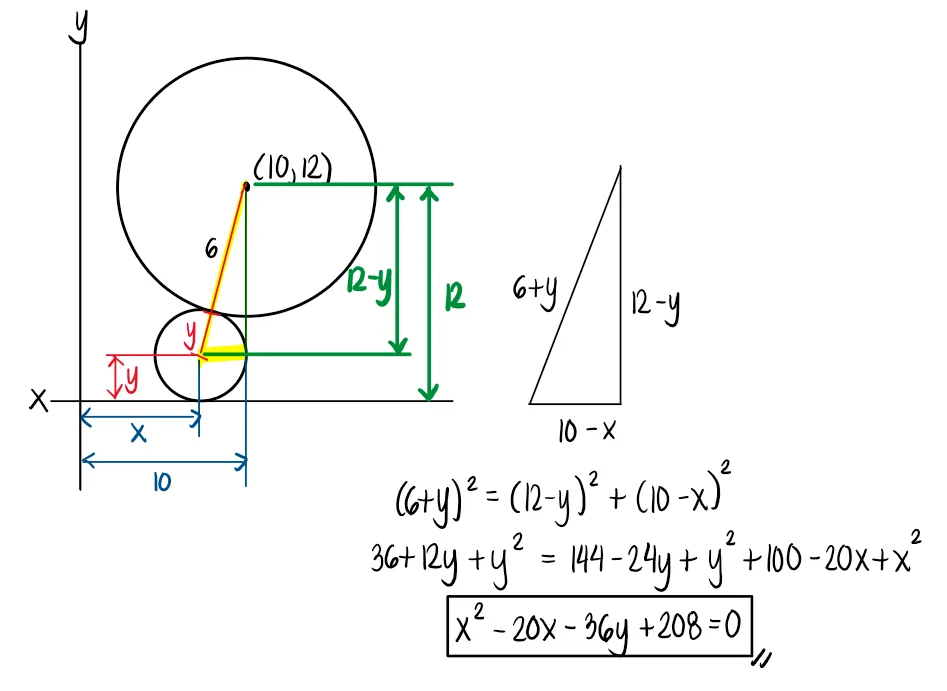
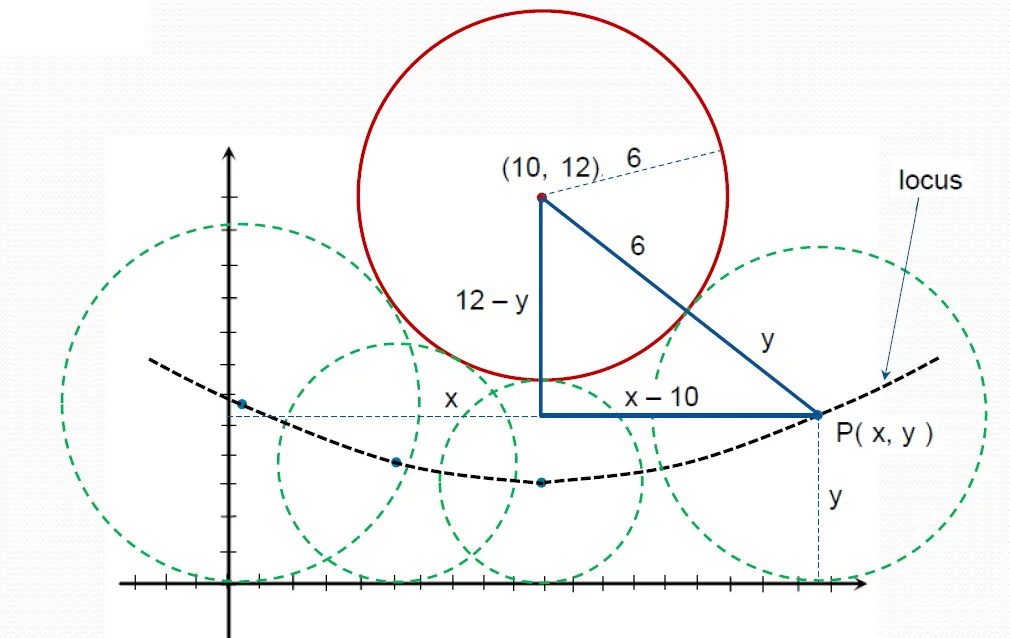
There is a fixed circle having a radius of 6 with center at (10, 12). Find the equation
of the curve connecting the centers of all circles that are tangent to the fixed circle
and the x axis.
Observation:
The equation is quadratic in $x$ but only first degree in $y$.
A curve of the form
$$Ax^2 + Ey + F = 0$$
is a parabola.
Hence, the locus is a parabola.
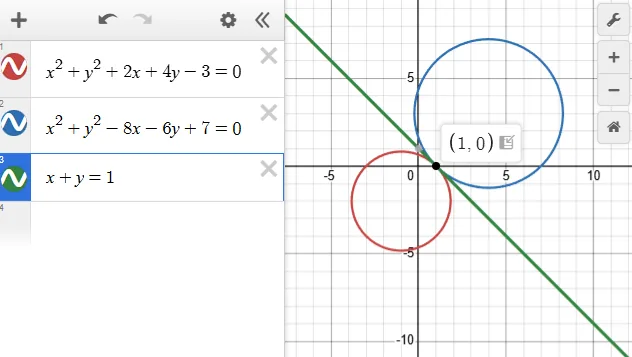
This line is the common tangent at the point of contact.
When two circles are tangent internally or externally, their point of tangency lies on a line
that is perpendicular to the line joining the centers.
The key idea:
The difference of the equations of two circles gives the radical axis—the locus of points
having equal power with respect to both circles.
If two circles intersect at two points, the radical axis is their common chord.
But if the circles touch at exactly one point (tangent), the radical axis collapses to the common
tangent at the point of contact.
Therefore, since subtracting C₂ from C₁ yields a linear equation, it must represent the common tangent.
Finding the y-coordinate of the Point of Tangency
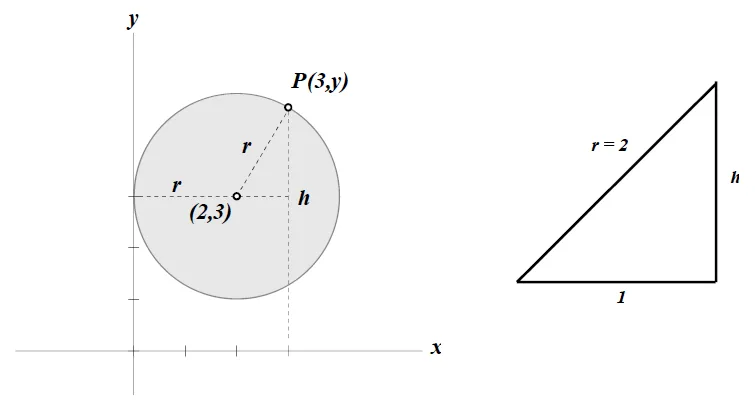
A circle has its center at (2, 3).
If the circle is tangent to the y-axis and a tangent line has its point of tangency at
P(3, y), determine the value of y.
Step 1: Determine the radius using the tangency to the y-axis
The distance from the center $(2,3)$ to the y-axis $(x = 0)$ is:
$$ r = |2| = 2 $$
Step 2: Use the right triangle formed by the center and point of tangency
Let the point of tangency be $P(3, y)$.
The horizontal distance from the center to $P$ is:
$$ 3 - 2 = 1 $$
Let the vertical distance be $h$.
Using the Pythagorean relationship:
$$ h^2 + 1^2 = r^2 $$
$$ h^2 + 1 = 4 $$
$$ h^2 = 3 $$
$$ h = \sqrt{3} $$
Step 3: Compute the y-coordinate
$$ y = 3 + h $$
$$ y = 3 + \sqrt{3} $$
Final Answer:
$$ \boxed{y = 3 + \sqrt{3}} $$
Finding the Value of k for a Circle Passing Through a Given Point
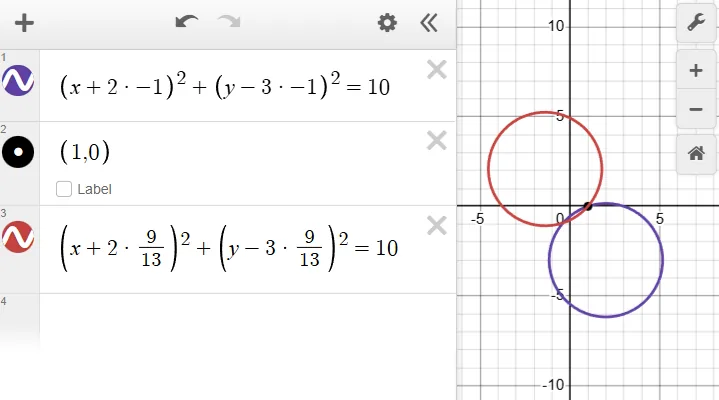
For what value of k does the circle
$
(x + 2k)^2 + (y - 3k)^2 = 10
$
pass through the point (1,0)?
Substitute the point (1,0) into the circle equation:
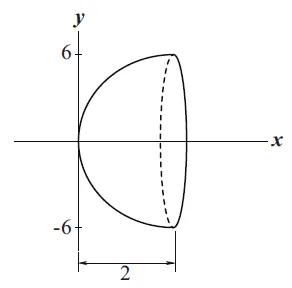
Distance From the Center of a Parabolic Dish to Its Focus
The interior of a satellite TV antenna is a dish shaped like a finite paraboloid.
The dish has a diameter of 12 meters and is 2 meters deep.
Find the distance from the center of the dish to the focus.
A vertical parabola opening to the right has the form
$$y^2 = 4ax$$
The radius of the dish is half the diameter:
$$6 \text{ meters}$$
The depth of the dish is
$$2 \text{ meters}$$
Substitute the point on the rim of the parabola:
$$y = 6, \quad x = 2.$$
Plug into the parabola equation:
$$(6)^2 = 4a(2)$$
$$36 = 8a$$
$$a = 4.5.$$
Final Answer:
$$\boxed{4.5 \text{ meters}}$$
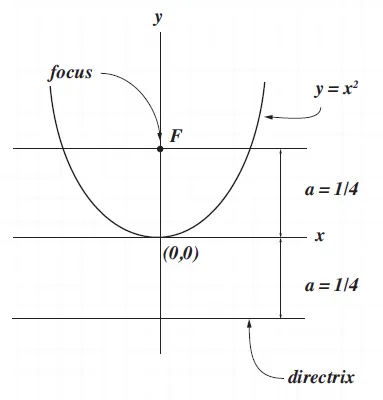
Focus and Directrix of the Parabola
Find the focus and directrix of the parabola whose equation is
$y = x^2$
Write the parabola in the form $y = 4ax^2$
Compare coefficients:
$4a = 1$
$a = \frac{1}{4}$
The focus of $y = 4ax^2$ is
$(0, a) = \left(0, \frac{1}{4}\right)$
Height of the Gateway Arch at a Point 100 ft From Its Foundation
The shape of the Gateway Arch in St. Louis is approximately a parabola with a base of 630 ft and a height of 630 ft.
How high is the arch 100 feet from its foundation?
Using similar triangles:
$\dfrac{315^2}{630} = \dfrac{215^2}{630 - y}$
Solve for $y$:
$630 - y = 293.49$
$y = 336.50$
Final Answer:
$\boxed{337\ \text{ft}}$
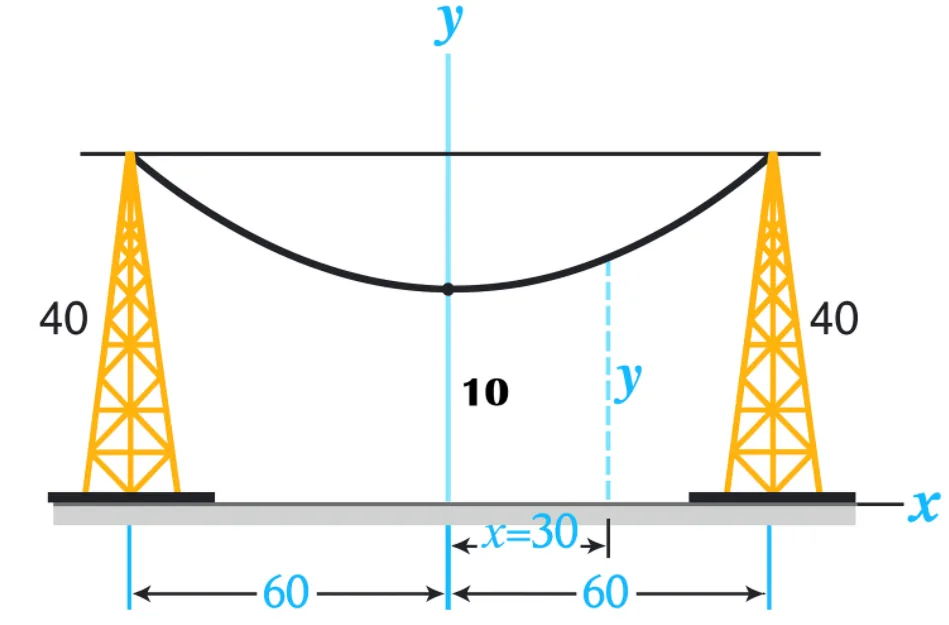
Equation of a Suspension Bridge Cable and Its Height 30 m From the Center
The cables of a horizontal suspension bridge are supported by two towers 120 m apart and 40 m high.
If the cable is 10 m above the floor of the bridge at the center and the midpoint of the bridge is taken as the origin,
find the equation of the parabola and the vertical distance above the bridge floor to the cable at a distance of 30 m from the center.
Vertex at the origin gives the form
$x^2 = 4a(y - 10)$
Equation of the cable:
$x^2 = 120(y - 10)$
Height at 30 m from center:
$17.5\ \text{m}$
Ceiling Height in a Parabolic Hut
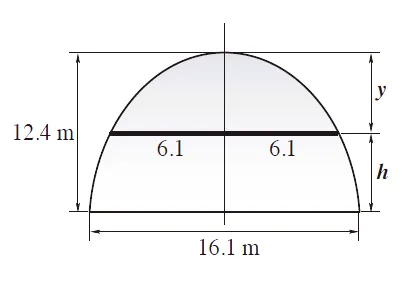
A construction worker built a parabolic hut which is 16.1 m wide at the base and 12.4 m high at the center.
How high above the base should a ceiling 12.2 m wide be constructed?
By the squared property of a parabola:
$\dfrac{8.05^2}{12.4} = \dfrac{6.1^2}{y}$
Equation of a Parabola in the Form $y = ax^2 + bx + c$
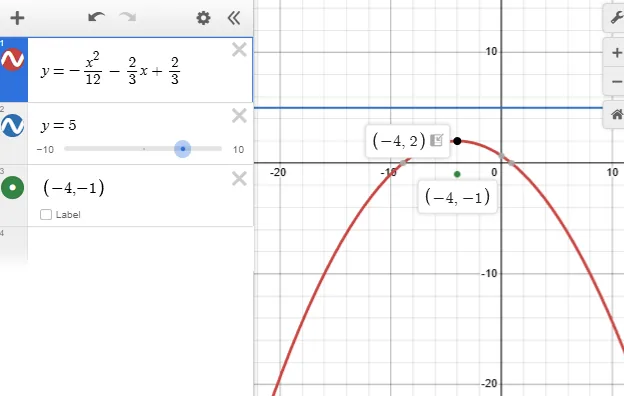
A parabola has vertex $V(-4, 2)$ and directrix $y = 5$.
Express the equation of the parabola in the form $y = ax^2 + bx + c$.
A vertical parabola opening downward has the form
$$ (x - h)^2 = -4a(y - k) $$
This opens downward because the parabola always faces away from the directrix. Since the directrix is above y=2 (vertex), the parabola is concave downward.
Equation of a Parabola With Vertex $V(2,3)$ and Passing Through $(5,1)$
Find an equation of a parabola that has vertex $V(2,3)$, has a vertical axis
(note: this means a vertical axis of symmetry), and passes through the point $(5,1)$.
Vertex form for a vertically oriented parabola:
$$ (x - h)^2 = -4a(y - k) $$
Here, $h = 2$ and $k = 3$.
Substitute the point $(5,1)$:
$$ (5 - 2)^2 = -4a(1 - 3) $$
$$ 9 = 8a $$
$$ a = \frac{9}{8} $$
Substitute $a$ back into the vertex form:
$$ y - 3 = -\frac{2}{9}(x - 2)^2 $$
Final equation:
$$ y = -\frac{2}{9}(x - 2)^2 + 3 $$
Final Answer:
$$ \boxed{\,y = -\frac{2}{9}(x - 2)^2 + 3\,} $$
Find the Vertex of the Parabola $y = 2x^2 - 6x + 4$
For a parabola $y = ax^2 + bx + c$:
$$x_\text{vertex} = -\frac{b}{2a}$$
Eccentricity of a Satellite Orbit from Apogee and Perigee Distances
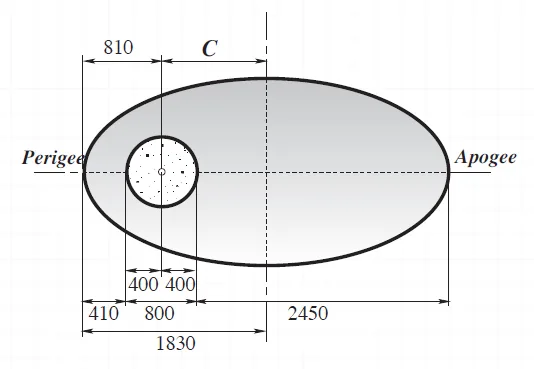
An earth satellite has an apogee of 2450 miles and a perigee of 410 miles.
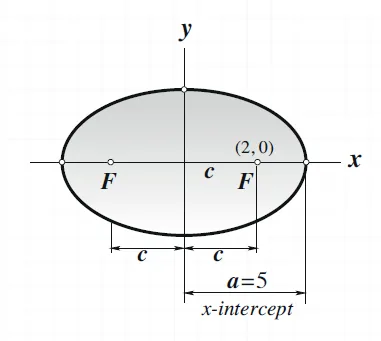
Assuming the earth’s radius is 400 miles, find the eccentricity of the ellipse whose center is at the earth's center and whose apogee and perigee satisfy these conditions.
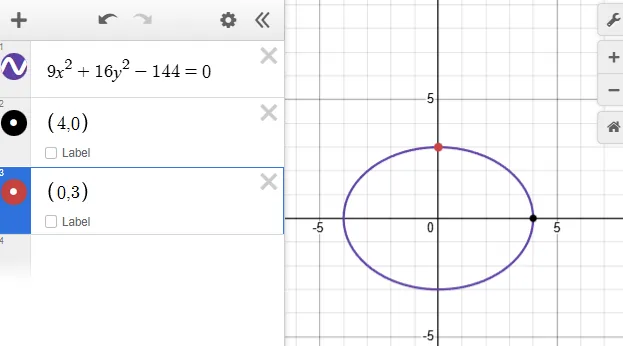
Determine the Equation of the Curve Passing Through $(4,0)$ and $(0,3)$
A curve has a general equation
$$Ax^2 + By^2 + F = 0.$$
Determine the equation of the curve which passes through the points $(4,0)$ and $(0,3)$.
Step 1: Substitute $(4,0)$ into the equation.
$$A(4)^2 + B(0)^2 + F = 0$$
$$16A + F = 0$$
$$\frac{F}{A} = -16$$
Step 2: Substitute $(0,3)$.
$$A(0)^2 + B(3)^2 + F = 0$$
$$9B + F = 0$$
$$B = -\frac{F}{9}$$
Step 3: Divide original equation by $A$.
$$x^2 + \frac{B}{A}y^2 + \frac{F}{A} = 0$$
Substitute $\frac{F}{A} = -16$ and $\frac{B}{A} = \frac{16}{9}$:
$$x^2 + \frac{16}{9}y^2 - 16 = 0$$
Final Answer:
$$\boxed{9x^2 + 16y^2 - 144 = 0}$$
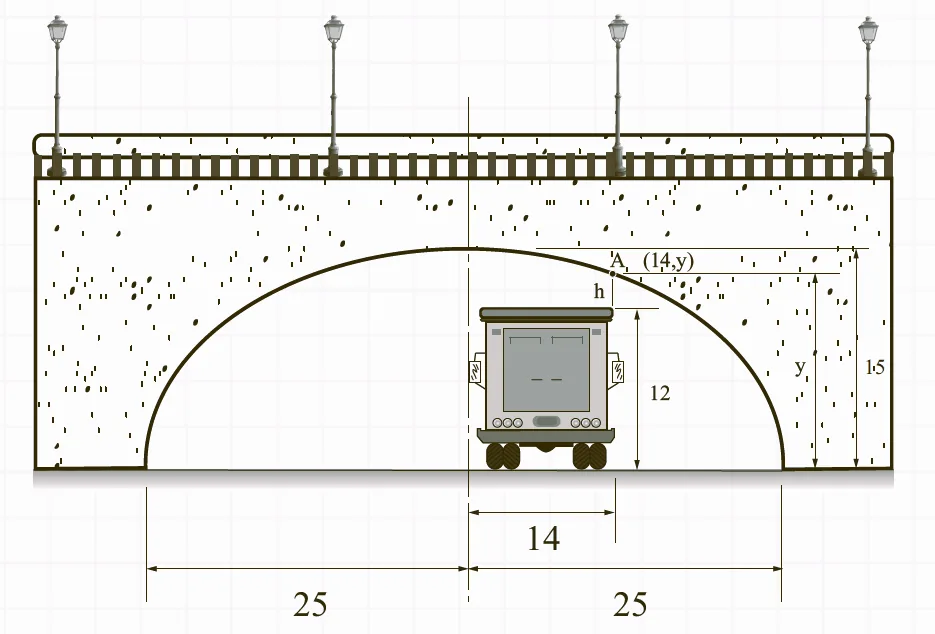
Clearance of a Truck Under a Semi-Elliptical Archway
A semi-elliptical archway has a height of 15 ft at the center and a width of 50 ft.
The width consists of a two-lane road. A truck drives under the archway without
crossing the road centerline. If the truck is 14 ft wide and 12 ft high, determine
the clearance of the truck below the archway.
The ellipse equation is
$$\frac{x^2}{a^2} + \frac{y^2}{b^2} = 1$$
Here, the semi-major axis is $a = 25$ ft and the semi-minor axis is $b = 15$ ft:
$$\frac{x^2}{25^2} + \frac{y^2}{15^2} = 1$$
The truck's right side is 14 ft from the centerline, so evaluate the arch height at $x = 14$:
$$\frac{14^2}{25^2} + \frac{y^2}{15^2} = 1$$
The equation of an asymptote of a hyperbola is $y = 2x$, and it passes through the point
$\left(\frac{5}{2},\, 3\right)$.
Determine the length of the latus rectum.
Start with the standard hyperbola:
$$\frac{x^2}{a^2} - \frac{y^2}{b^2} = 1$$
Substitute the point $\left(\frac{5}{2},\, 3\right)$:
So the equation becomes:
$$
x^2 - \frac{16}{27}y^2 - 9 = 0
$$
Multiply by 27:
$$
27x^2 - 16y^2 - 243 = 0
$$
Conclusion:
The equation has one positive and one negative squared term
$$27x^2 - 16y^2 + 144 = 0$$
which is the equation of a hyperbola since A and C have opposite signs in the general form: $Ax^2+Bxy+Cy^2+Dx+Ey+F=0$.
$$\boxed{\text{The curve is a hyperbola.}}$$
Eccentricity of the Hyperbola
Find the eccentricity of the hyperbola whose equation is
$$\frac{y^2}{2} - \frac{(x - 1)^2}{36} = 1$$
For a vertical hyperbola of the form
$$\frac{y^2}{a^2} - \frac{(x - h)^2}{b^2} = 1,$$
we identify:
$$a^2 = 2,\quad b^2 = 36.$$
So:
$$a = \sqrt{2}, \qquad b = 6.$$
The relationship between $a$, $b$, and $c$ for hyperbolas is:
$$c^2 = a^2 + b^2.$$
For hyperbolas:
$$
c^2 = a^2 + b^2 = 4 + 9 = 13
$$
$$
c = \sqrt{13}
$$
Since the transverse axis is horizontal:
$$
F\left(\sqrt{13},\,0\right),\quad F'\left(-\sqrt{13},\,0\right)
$$
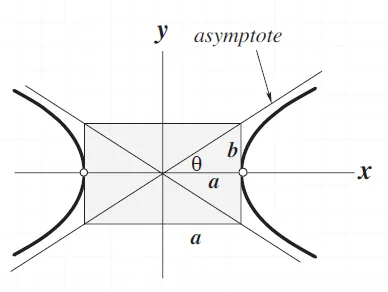
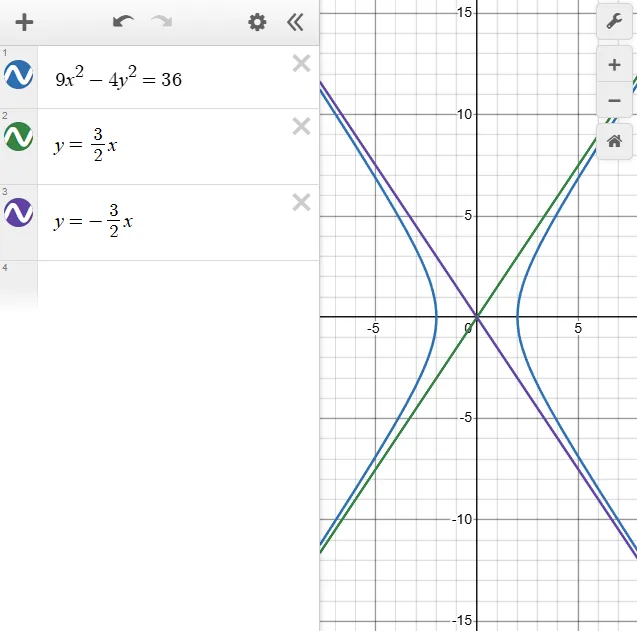
Step 3: Use the general asymptote formula.
For a hyperbola
$$
\frac{(x-h)^2}{a^2} - \frac{(y-k)^2}{b^2} = 1,
$$
the asymptotes are:
$$
y - k = \pm \frac{b}{a}(x - h)
$$
Here, the center is $(h,k) = (0,0)$.
So:
$$
y = \pm \frac{b}{a}x
$$
Substitute $a = 2,\ b = 3$:
$$
y = \pm \frac{3}{2}x
$$
$$
a = \frac{1}{2}
$$
$$
b = \frac{1}{\sqrt{2}} = \frac{\sqrt{2}}{2}
$$
For hyperbolas:
$$
c^2 = a^2 + b^2
$$
$$
c^2 = \frac{1}{4} + \frac{1}{2} = \frac{3}{4}
$$
$$
c = \frac{\sqrt{3}}{2}
$$
Foci: For a vertical hyperbola, the foci are $(0,\pm c)$.
$$
\boxed{(0,\pm \frac{\sqrt{3}}{2})}
$$
Asymptotes
General formula for a vertical hyperbola centered at $(h,k)$:
$$
y - k = \pm \frac{a}{b}(x - h)
$$
Here $(h,k) = (0,0)$, so:
$$
y = \pm \frac{a}{b}x
$$
Substitute:
$$
\frac{a}{b} = \frac{\frac{1}{2}}{\frac{\sqrt{2}}{2}} = \frac{1}{\sqrt{2}} = \frac{\sqrt{2}}{2}
$$
Thus:
$$
\boxed{y = \pm \frac{\sqrt{2}}{2}x}
$$
Rutherford Scattering and Hyperbolic Particle Path
In an experiment that led to the discovery of the atomic structure of matter,
Lord Rutherford (1871–1937) shot high-energy alpha particles toward a thin sheet of gold.
Because many were reflected, Rutherford showed the existence of the nucleus of a gold atom.
The alpha particle is repelled by the nucleus at the origin; it travels along the hyperbolic path
$$4x^2 - y^2 = 16.$$
How close does the particle come to the nucleus?
$$
a^2 = 4,\quad a = 2
$$
$$
b^2 = 16,\quad b = 4
$$
For a hyperbola of the form
$$\frac{x^2}{a^2} - \frac{y^2}{b^2} = 1,$$
the shortest distance from the center to the curve (closest approach to the nucleus)
occurs at the vertex $(\pm a, 0)$.
Thus, the particle comes within
$$
\boxed{a = 2}
$$
units of distance from the nucleus.
Equation of the Diameter of a Conic
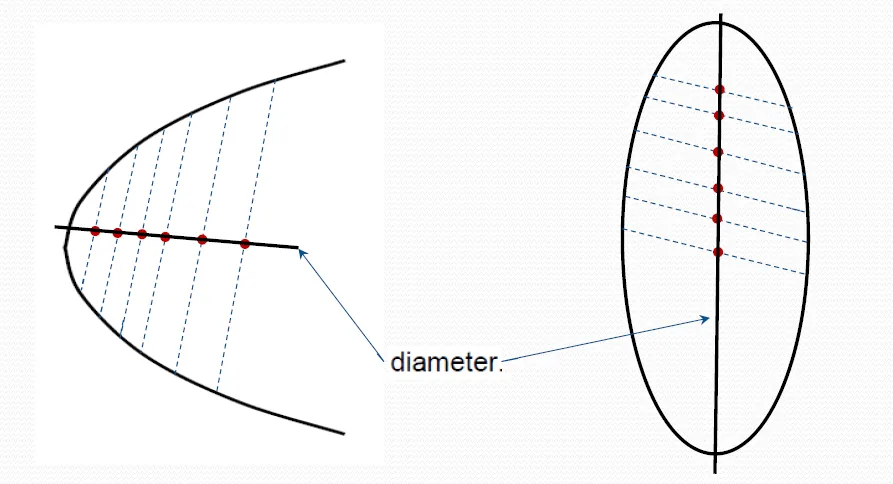
The diameter of a conic is the locus of the midpoints of a family of parallel chords drawn to the conic.
For any conic, parallel chords share a common direction.
Let the slope of these parallel chords be $m$.
To find the equation of the diameter corresponding to slope $m$:
1. Differentiate the conic equation to obtain $y'$.
2. Substitute $y' = m$ into the derivative.
3. The resulting equation represents the locus of midpoints — the diameter.
Geometrically, each chord midpoint lies on a straight line (the diameter),
and every chord in the family is parallel to the others.
Summary:
The diameter associated with slope $m$ is determined by enforcing
$$ y' = m $$
on the conic equation.
This produces a linear locus describing all midpoint positions of the parallel chords.
Diameter of an Ellipse from Chords of Equal Slope
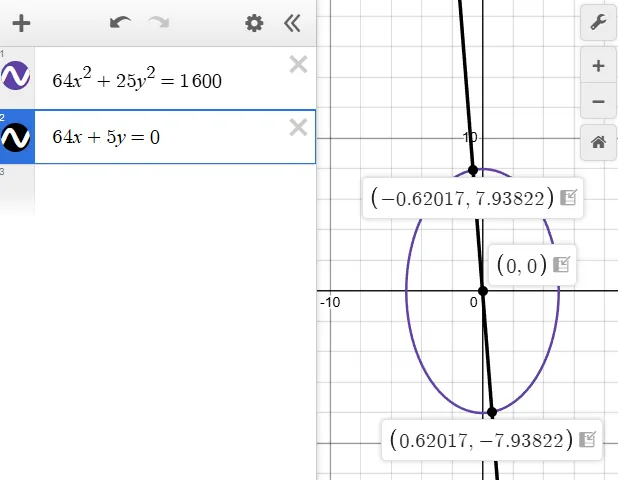
The chords of the ellipse $64x^2 + 25y^2 = 1600$ having equal slopes of $1/5$
are bisected by its diameter. Determine the equation of this diameter.