CE Board Exam Randomizer

⬅ Back to Subject Topics

Frames

Concept Concept

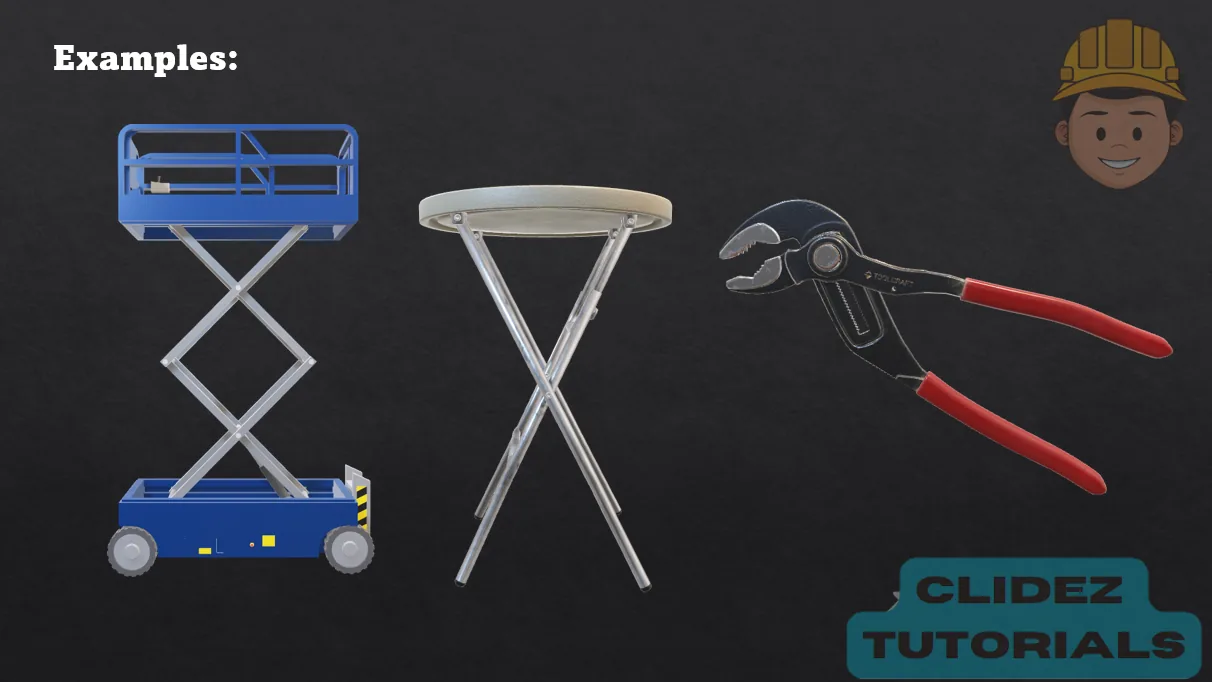
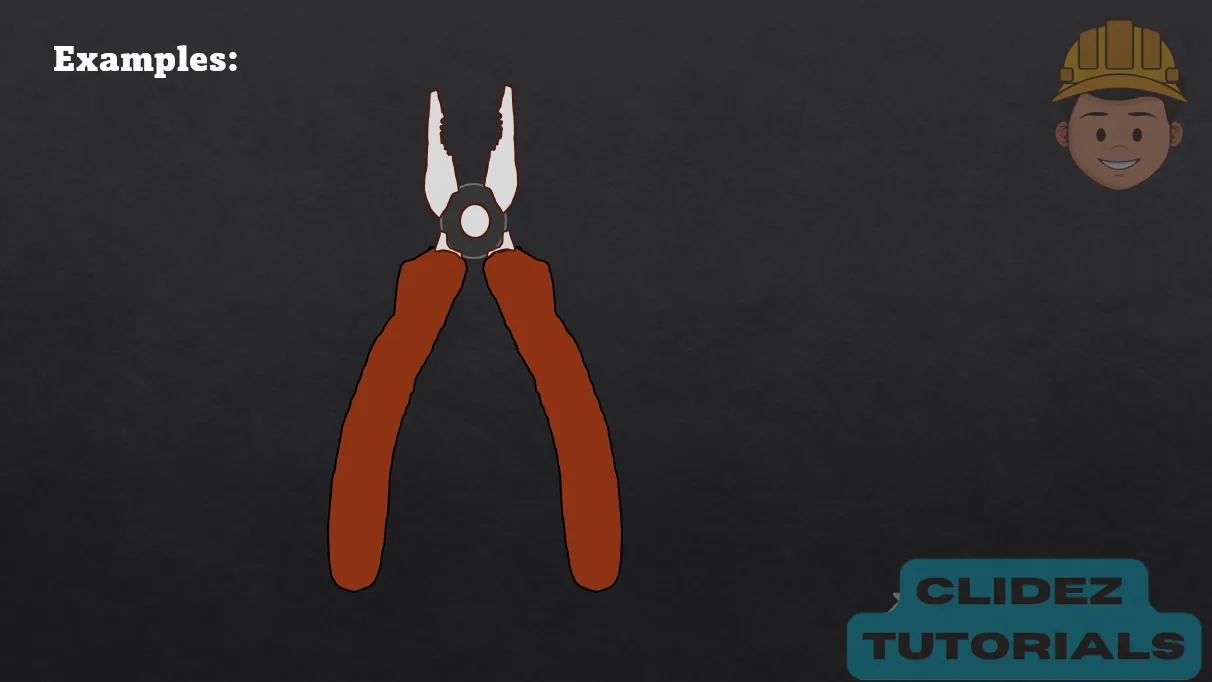
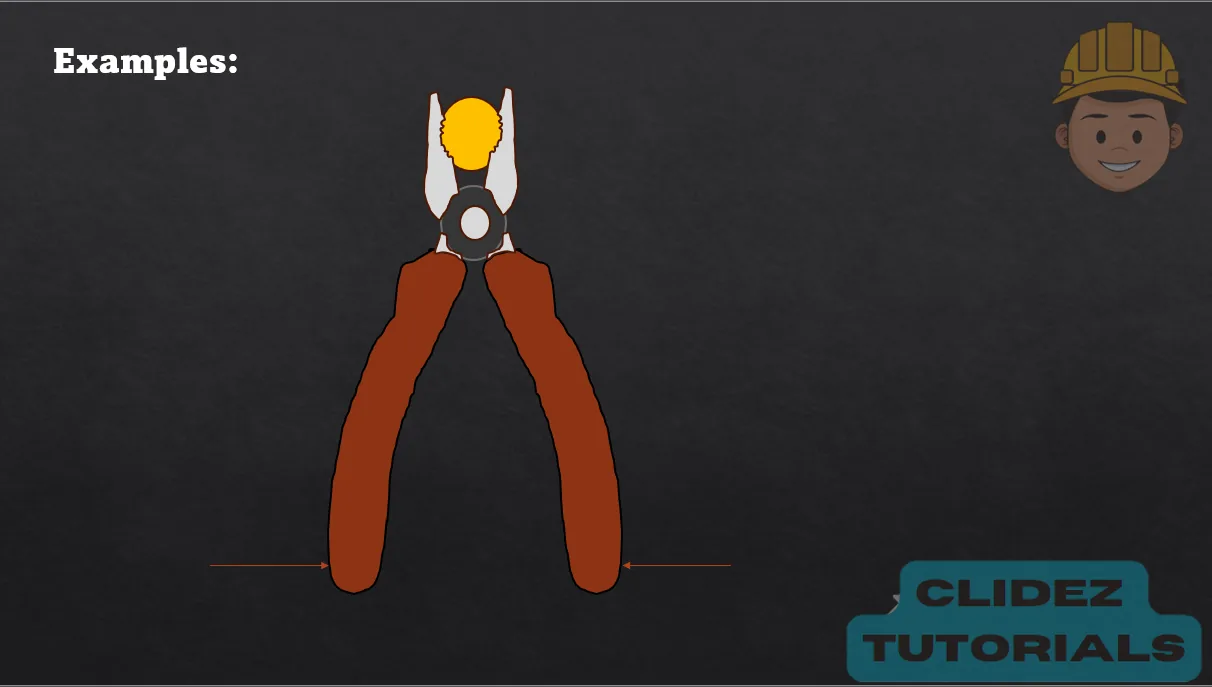
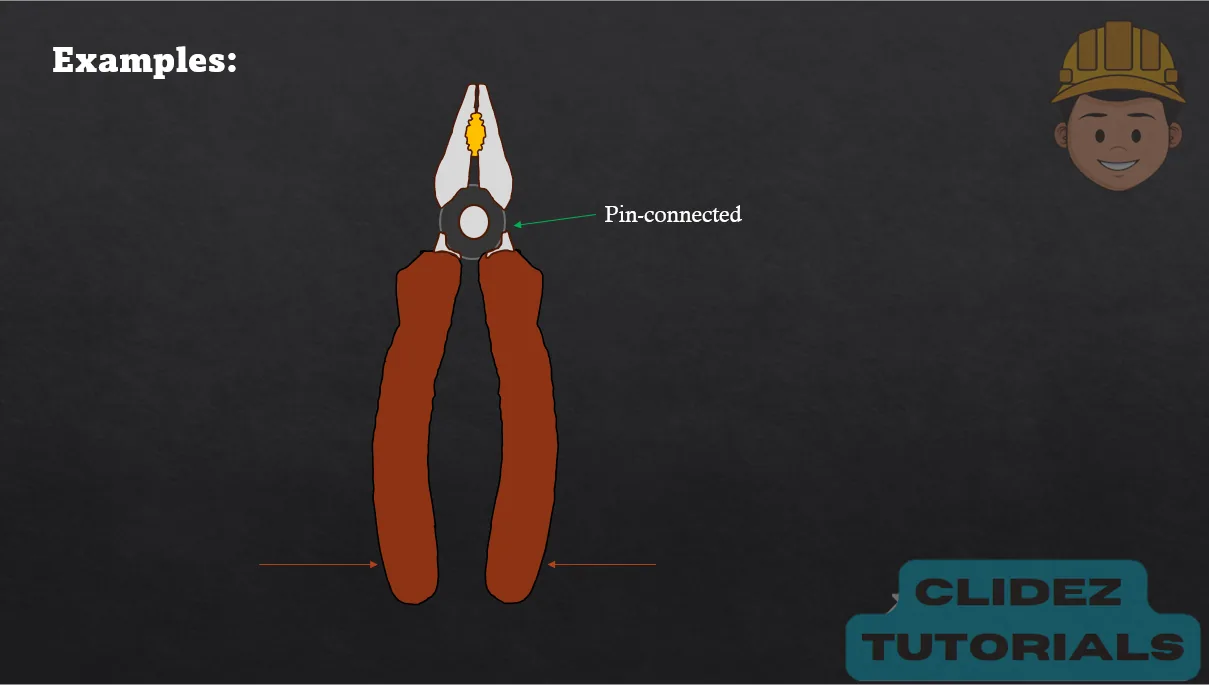
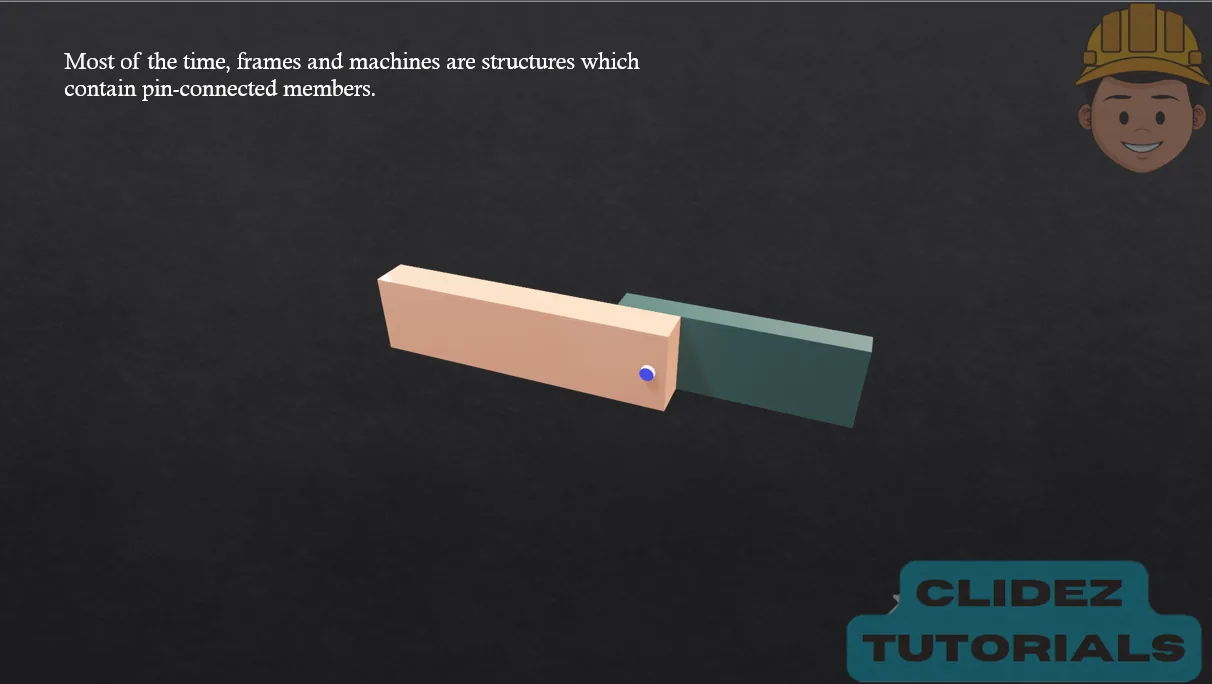
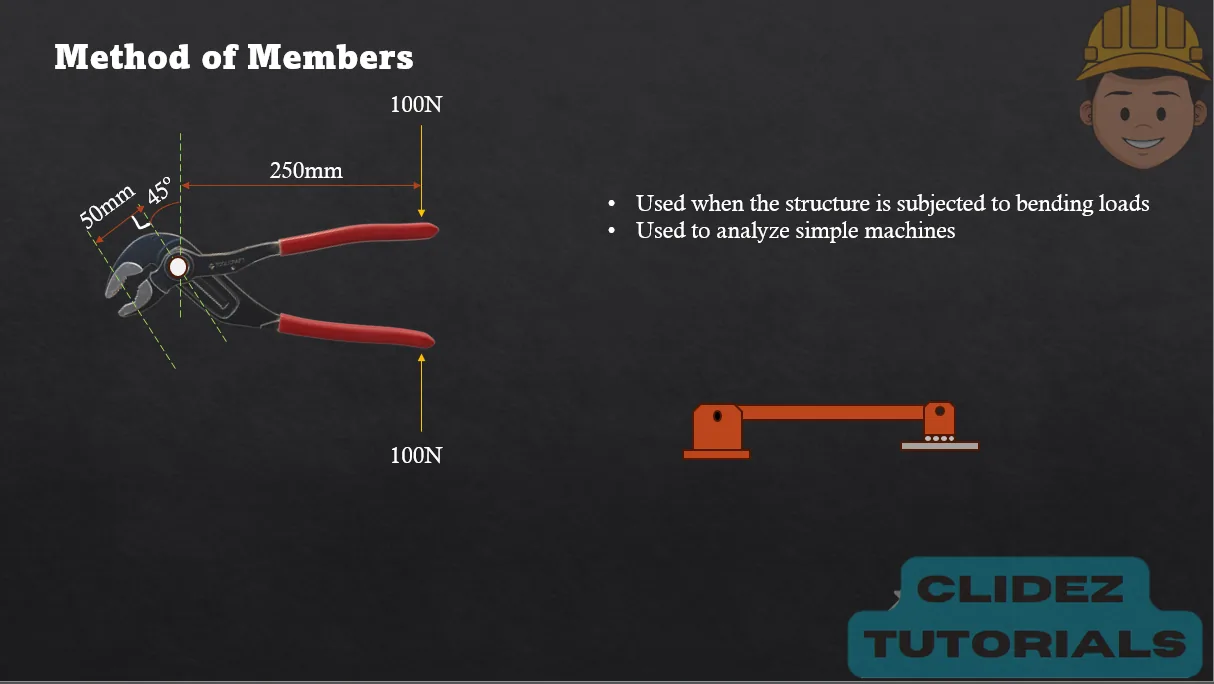
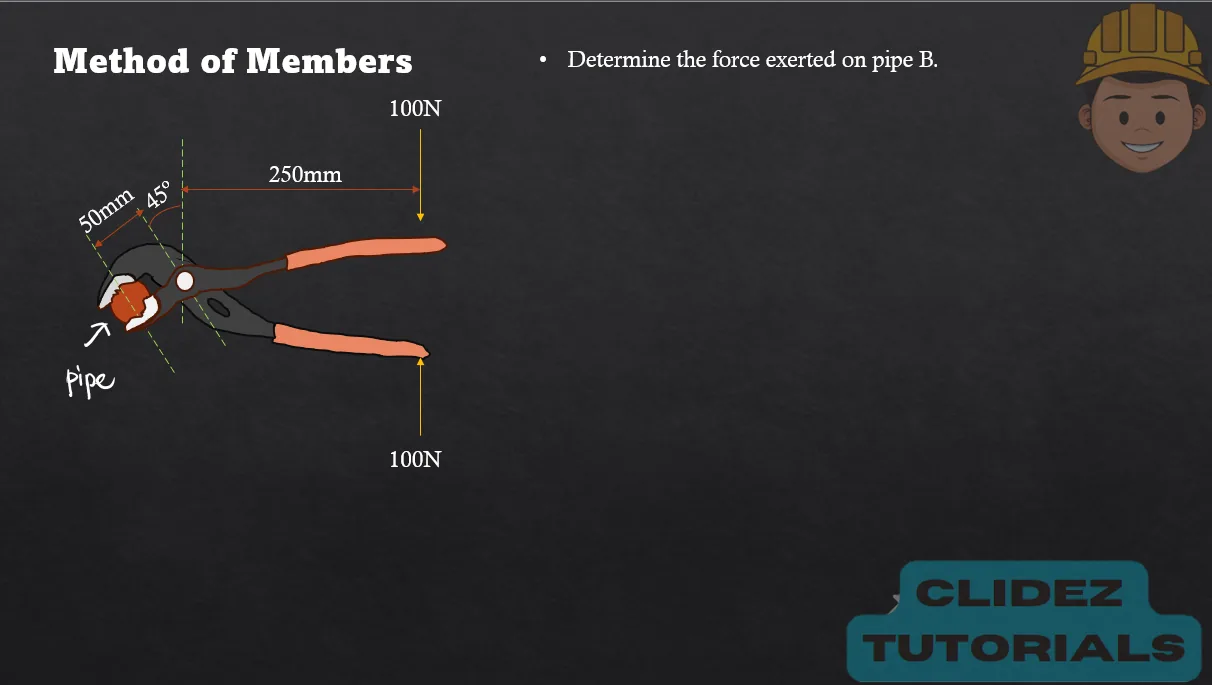
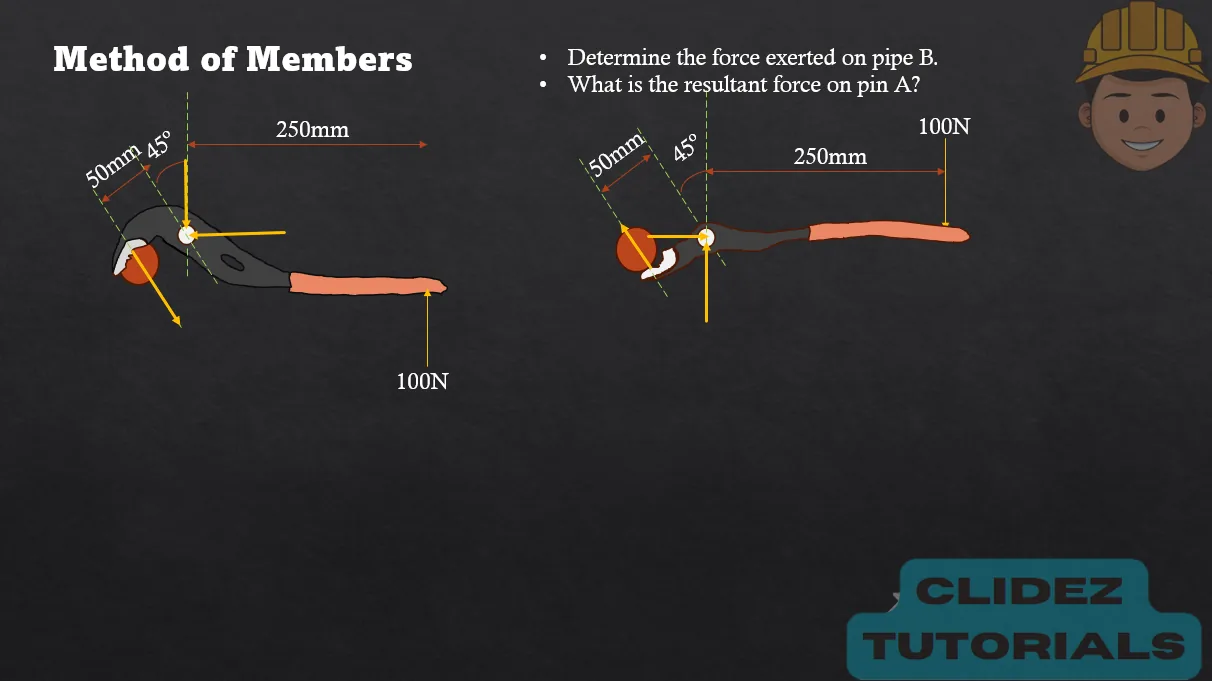
Frames and machines like pliers and wrenches use pin connections to create mechanical advantage—they allow a small applied force at one point to produce a much larger force at another. This is especially helpful when we need to exert forces that would be difficult or impossible with our bare hands, such as tightening bolts or gripping pipes. The pin joints act as pivots, allowing different members of the frame to rotate and transfer forces efficiently.

As in the case of the pliers, the input force (from our hand) travels through rigid links and pivots, generating a greater output force at the jaws due to the geometry and relative lengths of the members—shorter output arms and longer input arms multiply the applied force.

This principle is the same behind levers and is fundamental to machines like wrenches, clamps, scissors, and even robotic arms.

Concept Concept Concept Concept Concept Concept Concept Concept Concept Concept Concept

Problem: Frame with Pulley by Method of Members

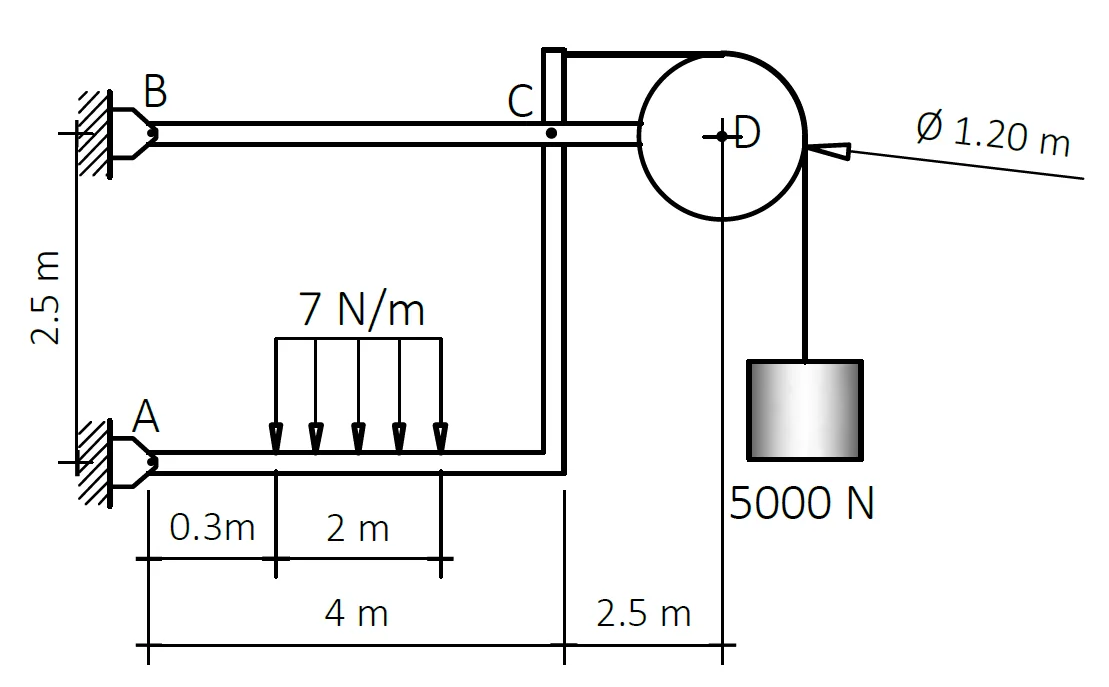
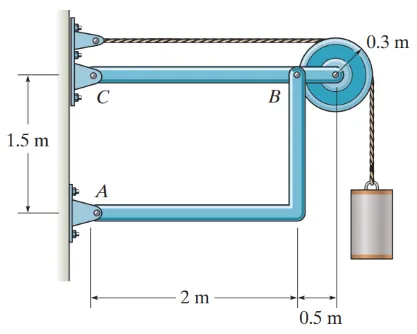
For the frame shown, the pulley has a mass of 200kg and is frictionless. Neglect the weight of the bars and determine the following:
a. Determine the resultant reaction at D. (8571.432N)
b. Determine the resultant reaction at C. (26812.158N)
c. Determine the resultant reaction at A. (22385.8N)
d. Determine the resultant reaction at B. (19792.695N)

Analysis of Pin-connected Frames | Statics of Rigid Bodies – Problem 1: – Diagram Analysis of Pin-connected Frames | Statics of Rigid Bodies – Problem 1: – Diagram Analysis of Pin-connected Frames | Statics of Rigid Bodies – Problem 1: – Diagram

See images:

Analysis of Pin-connected Frames | Statics of Rigid Bodies – Problem 1: – Diagram Analysis of Pin-connected Frames | Statics of Rigid Bodies – Problem 1: – Diagram Analysis of Pin-connected Frames | Statics of Rigid Bodies – Problem 1: – Diagram Analysis of Pin-connected Frames | Statics of Rigid Bodies – Problem 1: – Diagram

Problem: Frame with Pulley

Determine the resultant reaction at A if the mass of the block is 75kg. (1532.8N)

Analysis of Pin-connected Frames | Statics of Rigid Bodies – Problem 2: – Diagram Analysis of Pin-connected Frames | Statics of Rigid Bodies – Problem 2: – Diagram Analysis of Pin-connected Frames | Statics of Rigid Bodies – Problem 2: – Diagram

See images:

Analysis of Pin-connected Frames | Statics of Rigid Bodies – Problem 2: – Diagram Analysis of Pin-connected Frames | Statics of Rigid Bodies – Problem 2: – Diagram Analysis of Pin-connected Frames | Statics of Rigid Bodies – Problem 2: – Diagram Analysis of Pin-connected Frames | Statics of Rigid Bodies – Problem 2: – Diagram

Problem: Frame with Internal Hinge | CE Past Board Exam

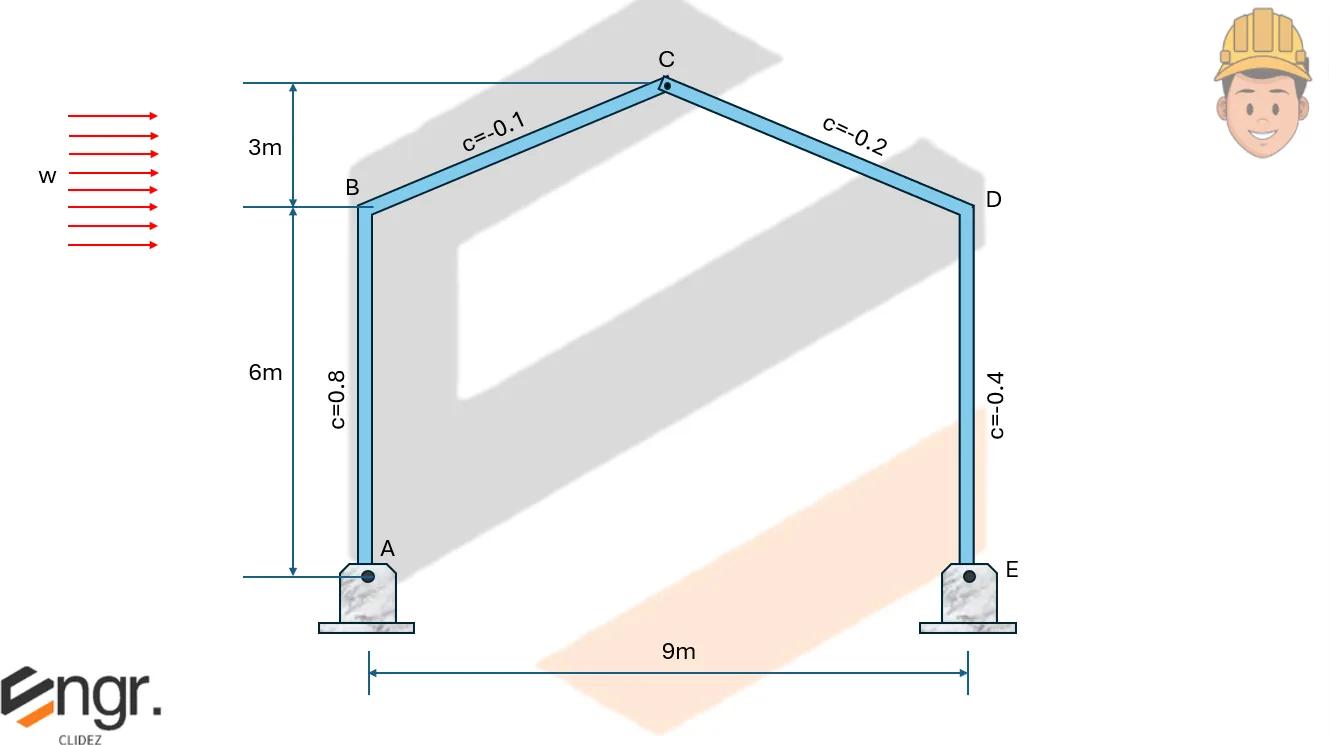
The frame shown in the figure is acted on by wind load pressure of p=1.44kPa. These frames are spaced 6m apart.
a. Determine the vertical component of the reaction at A. (27.756kN)
b. Determine the vertical component of the reaction at B. (16.092kN)
c. Determine the total horizontal force acting on the frame. (64.8kN)

Analysis of Pin-connected Frames | Statics of Rigid Bodies – Problem 3: – Diagram Analysis of Pin-connected Frames | Statics of Rigid Bodies – Problem 3: – Diagram Analysis of Pin-connected Frames | Statics of Rigid Bodies – Problem 3: – Diagram

See images:

Analysis of Pin-connected Frames | Statics of Rigid Bodies – Problem 3: – Diagram Analysis of Pin-connected Frames | Statics of Rigid Bodies – Problem 3: – Diagram Analysis of Pin-connected Frames | Statics of Rigid Bodies – Problem 3: – Diagram Analysis of Pin-connected Frames | Statics of Rigid Bodies – Problem 3: – Diagram

Problem: Beam with Internal Hinge by Method of Members

For the continuous beam shown, P=356kN and w=43.80kN/m.
a. Determine the vertical reaction of the support at A in kN.
b. Determine the reaction of the support at F in kN.
c. Determine the reaction of the support at E in kN.

Analysis of Pin-connected Frames | Statics of Rigid Bodies – Problem 4: – Diagram Analysis of Pin-connected Frames | Statics of Rigid Bodies – Problem 4: – Diagram Analysis of Pin-connected Frames | Statics of Rigid Bodies – Problem 4: – Diagram

See images:

Analysis of Pin-connected Frames | Statics of Rigid Bodies – Problem 4: – Diagram Analysis of Pin-connected Frames | Statics of Rigid Bodies – Problem 4: – Diagram Analysis of Pin-connected Frames | Statics of Rigid Bodies – Problem 4: – Diagram Analysis of Pin-connected Frames | Statics of Rigid Bodies – Problem 4: – Diagram

Problem:

Refer to the image shown:

Analysis of Pin-connected Frames | Statics of Rigid Bodies – Problem 5: – Diagram Analysis of Pin-connected Frames | Statics of Rigid Bodies – Problem 5: – Diagram Analysis of Pin-connected Frames | Statics of Rigid Bodies – Problem 5: – Diagram

See images:

Analysis of Pin-connected Frames | Statics of Rigid Bodies – Problem 5: – Diagram Analysis of Pin-connected Frames | Statics of Rigid Bodies – Problem 5: – Diagram Analysis of Pin-connected Frames | Statics of Rigid Bodies – Problem 5: – Diagram Analysis of Pin-connected Frames | Statics of Rigid Bodies – Problem 5: – Diagram

Problem:

Refer to the image shown:

Analysis of Pin-connected Frames | Statics of Rigid Bodies – Problem 6: – Diagram Analysis of Pin-connected Frames | Statics of Rigid Bodies – Problem 6: – Diagram Analysis of Pin-connected Frames | Statics of Rigid Bodies – Problem 6: – Diagram

See images:

Analysis of Pin-connected Frames | Statics of Rigid Bodies – Problem 6: – Diagram Analysis of Pin-connected Frames | Statics of Rigid Bodies – Problem 6: – Diagram Analysis of Pin-connected Frames | Statics of Rigid Bodies – Problem 6: – Diagram Analysis of Pin-connected Frames | Statics of Rigid Bodies – Problem 6: – Diagram

Problem:

Refer to the image shown:

Analysis of Pin-connected Frames | Statics of Rigid Bodies – Problem 7: – Diagram Analysis of Pin-connected Frames | Statics of Rigid Bodies – Problem 7: – Diagram Analysis of Pin-connected Frames | Statics of Rigid Bodies – Problem 7: – Diagram

See images:

Analysis of Pin-connected Frames | Statics of Rigid Bodies – Problem 7: – Diagram Analysis of Pin-connected Frames | Statics of Rigid Bodies – Problem 7: – Diagram Analysis of Pin-connected Frames | Statics of Rigid Bodies – Problem 7: – Diagram Analysis of Pin-connected Frames | Statics of Rigid Bodies – Problem 7: – Diagram

Problem: Beam with Internal Hinge by Method of Members

Analysis of Pin-connected Frames | Statics of Rigid Bodies – Problem 8: – Diagram Analysis of Pin-connected Frames | Statics of Rigid Bodies – Problem 8: – Diagram Analysis of Pin-connected Frames | Statics of Rigid Bodies – Problem 8: – Diagram

See images:

Analysis of Pin-connected Frames | Statics of Rigid Bodies – Problem 8: – Diagram Analysis of Pin-connected Frames | Statics of Rigid Bodies – Problem 8: – Diagram Analysis of Pin-connected Frames | Statics of Rigid Bodies – Problem 8: – Diagram Analysis of Pin-connected Frames | Statics of Rigid Bodies – Problem 8: – Diagram

Problem (Frame support reactions):

A rigid frame is supported by a pin at A and a roller at B, 4m apart. A 12kN vertical load acts 1m from A. Determine the vertical reactions.

For the whole frame, use external equilibrium.

\[ \begin{aligned} \sum M_A=0:\quad B_y(4)-12(1)&=0 \\ B_y&=3\ \text{kN} \\ A_y+B_y-12&=0 \\ A_y&=9\ \text{kN} \end{aligned} \] $\boxed{A_y=9\ \text{kN}},\qquad \boxed{B_y=3\ \text{kN}}$

Problem (Frame with horizontal load):

A frame has a pin at A and a roller at B. A 6kN horizontal force acts to the right at a joint 3m above A. The span AB is 4m. Determine Ax, Ay, and By.

The horizontal force creates an overturning moment balanced by the vertical reactions.

\[ \begin{aligned} A_x+6&=0 \Rightarrow A_x=6\ \text{kN left} \\ B_y(4)-6(3)&=0 \Rightarrow B_y=4.5\ \text{kN} \\ A_y+B_y&=0 \Rightarrow A_y=-4.5\ \text{kN} \end{aligned} \] $\boxed{A_x=6\ \text{kN left}},\quad \boxed{A_y=4.5\ \text{kN downward}},\quad \boxed{B_y=4.5\ \text{kN upward}}$

Problem (Internal hinge moment check):

A frame member contains an internal hinge at C. The left segment has an 8kN downward load located 2m from pin A and the hinge C is 4m from A. Determine the vertical force at C on the left segment.

Take moments about A for the left segment. The hinge transmits force but no moment.

\[ \begin{aligned} \sum M_A=0:\quad C_y(4)-8(2)&=0 \\ C_y&=4\ \text{kN} \end{aligned} \] $\boxed{C_y=4\ \text{kN upward on the left segment}}$
Scroll to zoom

Exam Generator Problems

Additional board-style practice items for this topic.

Question Bank: q156

PSAD - Statics / Analysis of Frames / Engr. Janclyde Espinosa (Clidez)

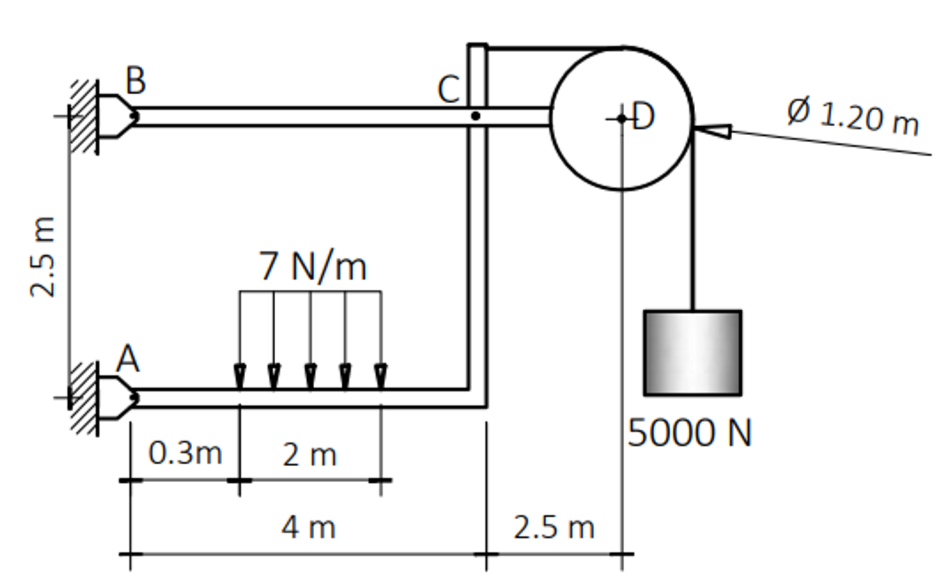
From the frame shown, the pulley has a mass of 200kg and is frictionless. Neglect the weight of the bars.

Which of the following gives the reaction at D?

  1. 8571N
  2. 7581N
  3. 5871N
  4. 8751N

Which of the following gives the reaction at C?

  1. 26812N
  2. 11313N
  3. 28612N
  4. 31821N

Which of the following gives the reaction at A?

  1. 22385N
  2. 19308N
  3. 11327N
  4. 31127N

Solution pending in psadquestions/q156.json.

Question Bank: q157

PSAD - Statics / Analysis of Frames / Engr. Janclyde Espinosa (Clidez)

From the frame shown, the pulley has a mass of 200kg and is frictionless. Neglect the weight of the bars.

Which of the following gives the reaction at D?

  1. 8571N
  2. 7581N
  3. 5871N
  4. 8751N

Which of the following gives the reaction at C?

  1. 26812N
  2. 11313N
  3. 28612N
  4. 31821N

Which of the following gives the reaction at A?

  1. 22385N
  2. 19308N
  3. 11327N
  4. 31127N

Which of the following gives the reaction at B?

  1. 19791N
  2. 17971N
  3. 19306N
  4. 19603N

Solution pending in psadquestions/q157.json.

Question Bank: q284

PSAD - Statics / Analysis of Frames / Engr. Janclyde Espinosa (Clidez)

For the frame shown, the pulley has a mass of 200kg and is frictionless. Neglecting the weight of the bars,

q284

Determine the reaction at D in N.

  1. 8571.43
  2. 6962
  3. 5000
  4. 1962

Determine the reaction at C in N.

  1. 26812.158
  2. 19308.48
  3. 11327.25
  4. 24308.48

Determine the reaction at A in N.

  1. 19792.695
  2. 11313.25
  3. 19308.48
  4. 14351.25

Determine the reaction at B in N.

  1. 27306.314
  2. 19308.48
  3. 14351.25
  4. 26812.158

Solution pending in psadquestions/q284.json.

Question Bank: q319

PSAD - Statics / Analysis of Frames / Engr. Janclyde Espinosa (Clidez)

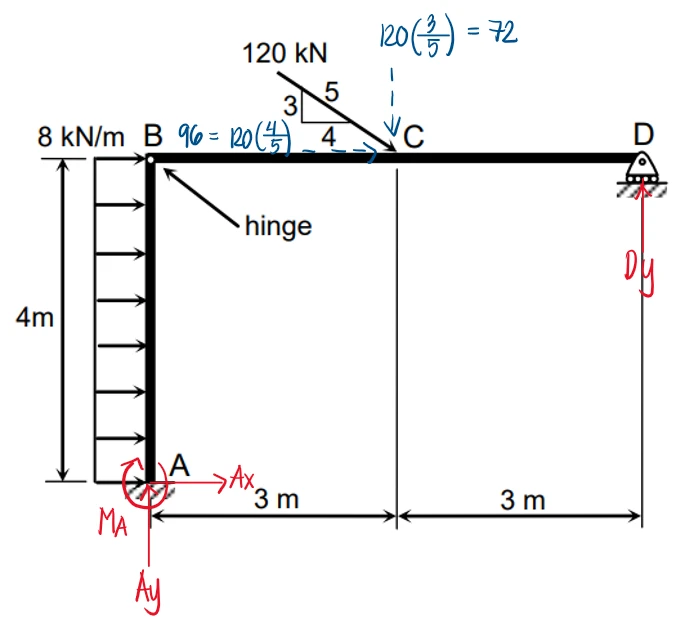
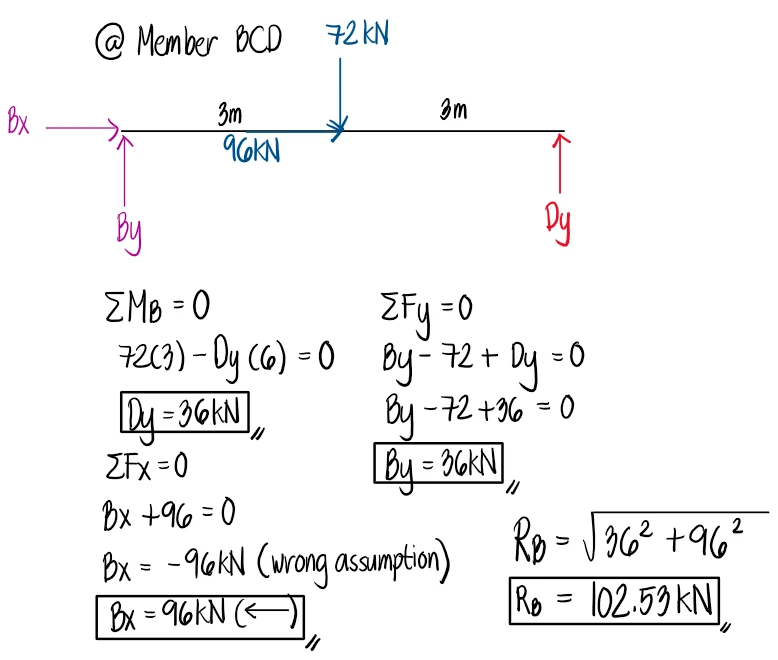
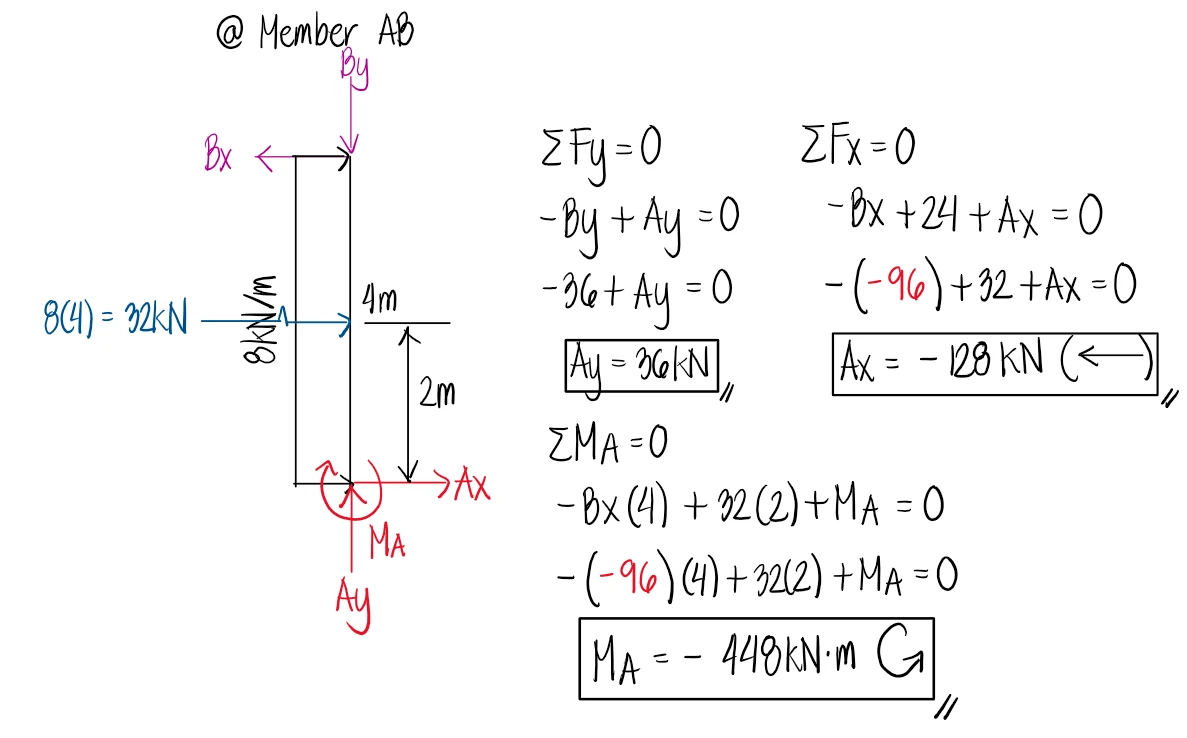
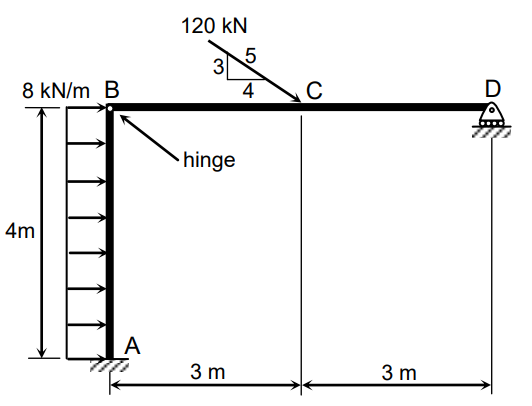
Determine the resultant reactions of the frame shown.

q319

Resultant reaction at D in kN

  1. 36
  2. 50.91
  3. 42
  4. 60.91

Resultant reaction at B in kN

  1. 102.53
  2. 96
  3. 36
  4. 108.66

Resultant reaction at A in kN

  1. 132.97
  2. 128
  3. 160
  4. 167.90

Moment reaction at A in kN-m

  1. 448
  2. 460
  3. 453
  4. 466

Solution pending in psadquestions/q319.json.