Analysis of Trusses (Method of Sections)
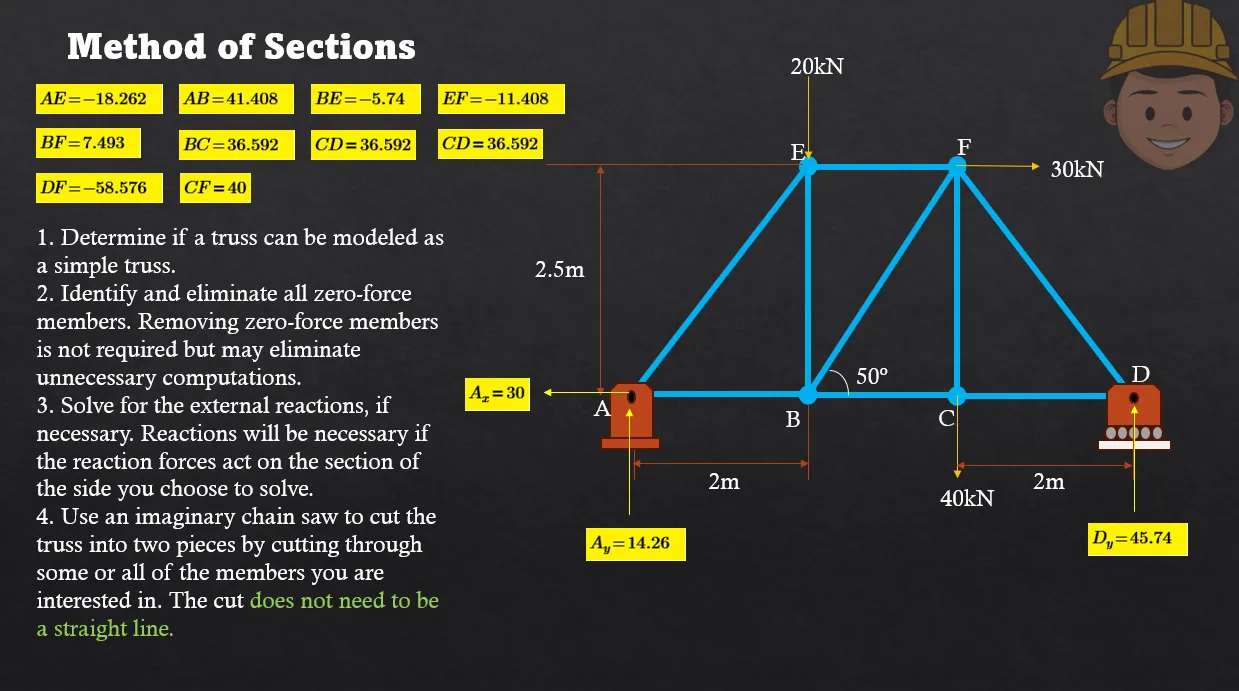
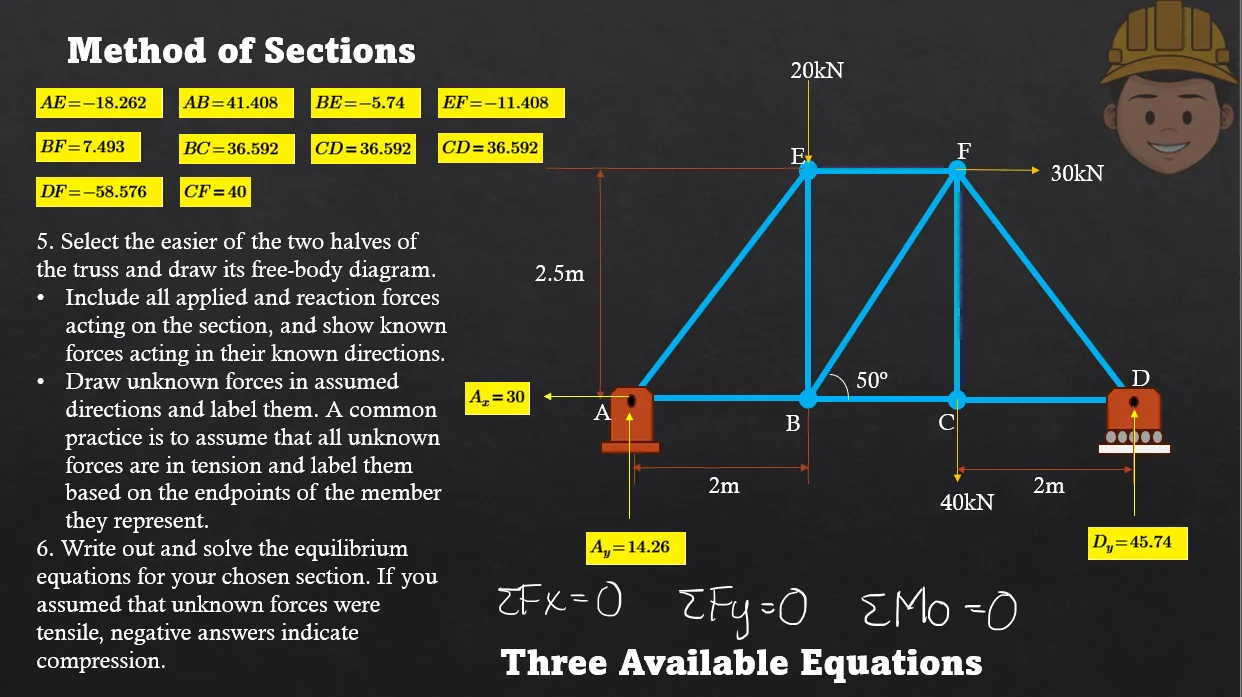
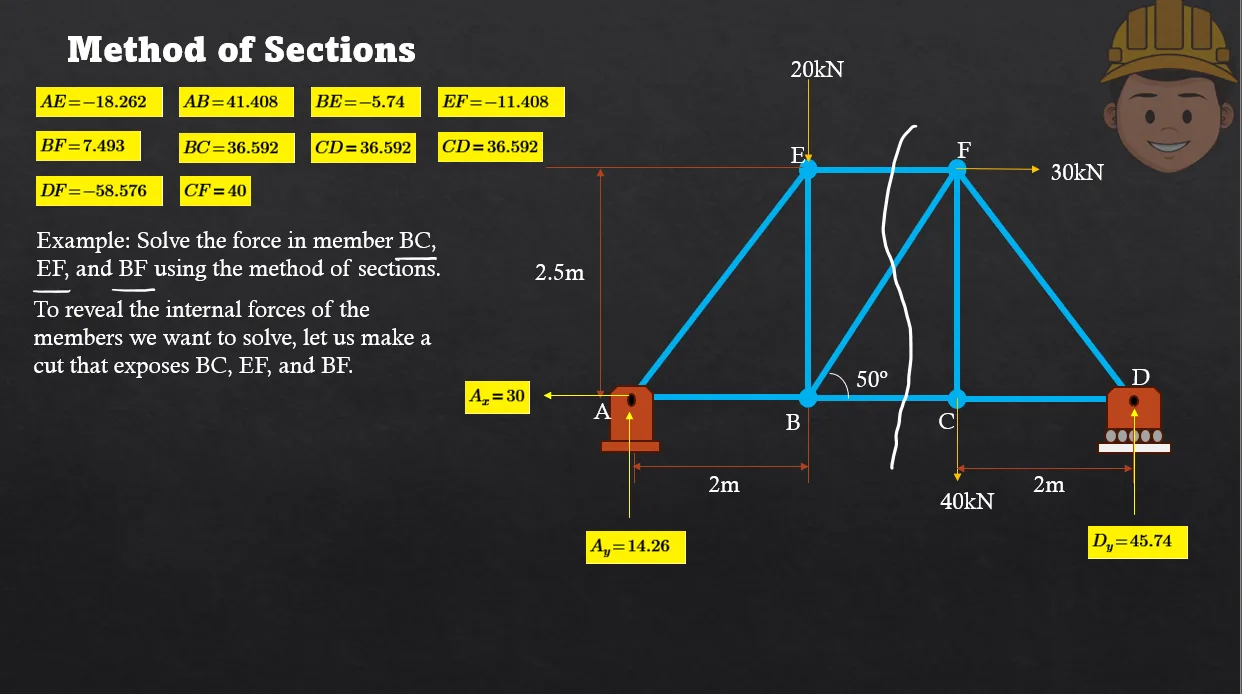
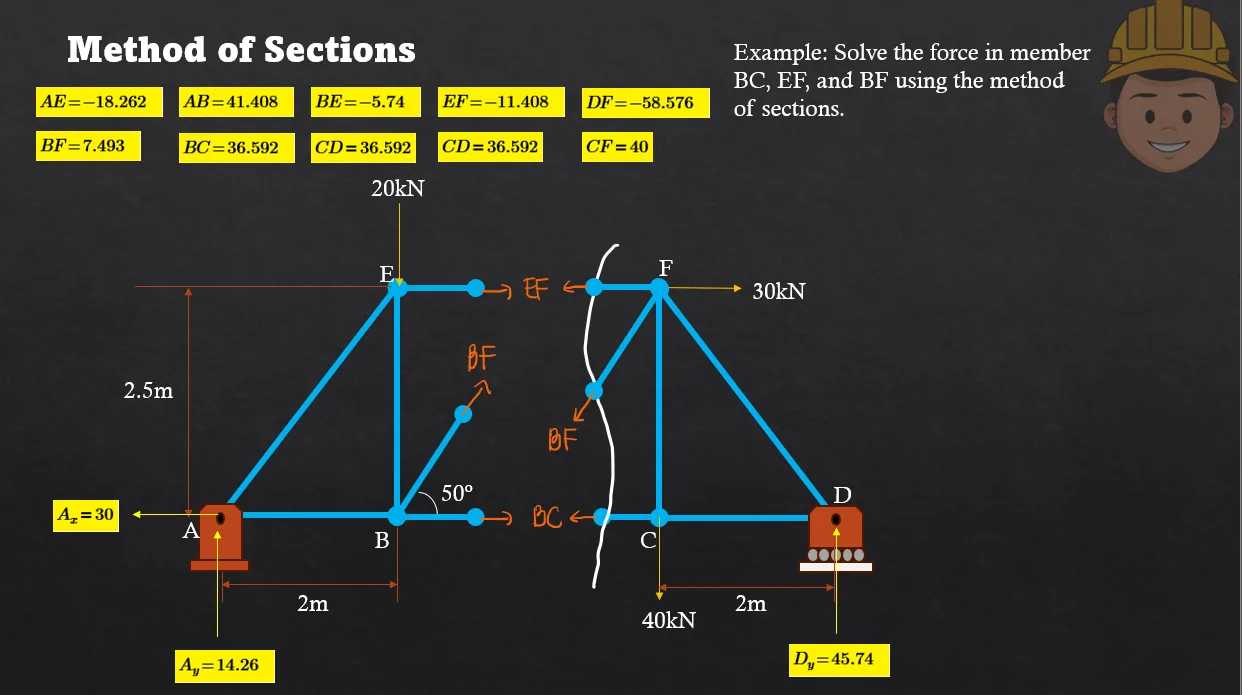
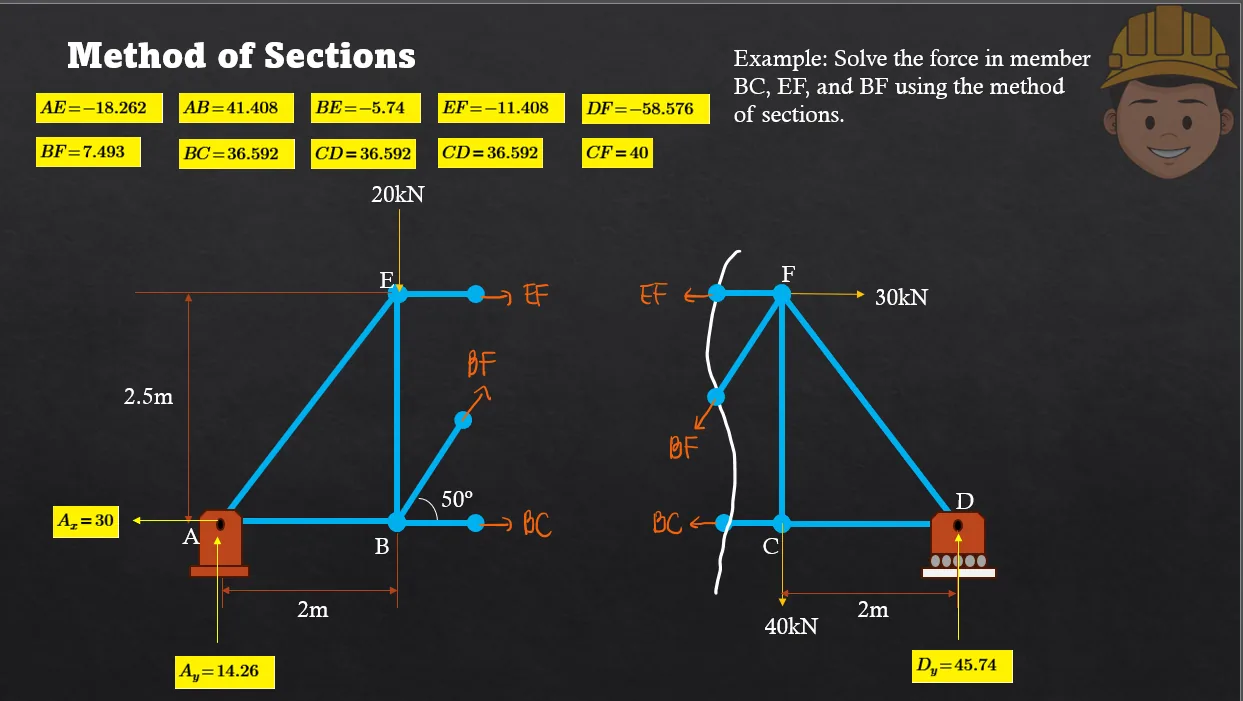
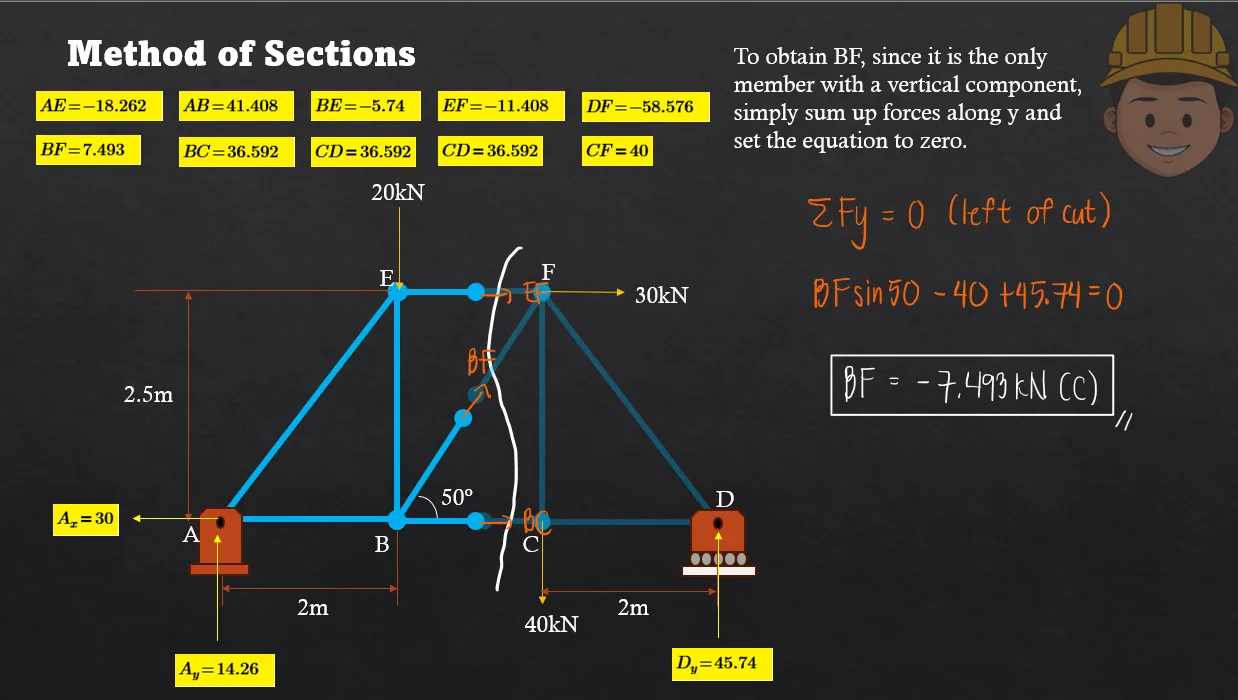
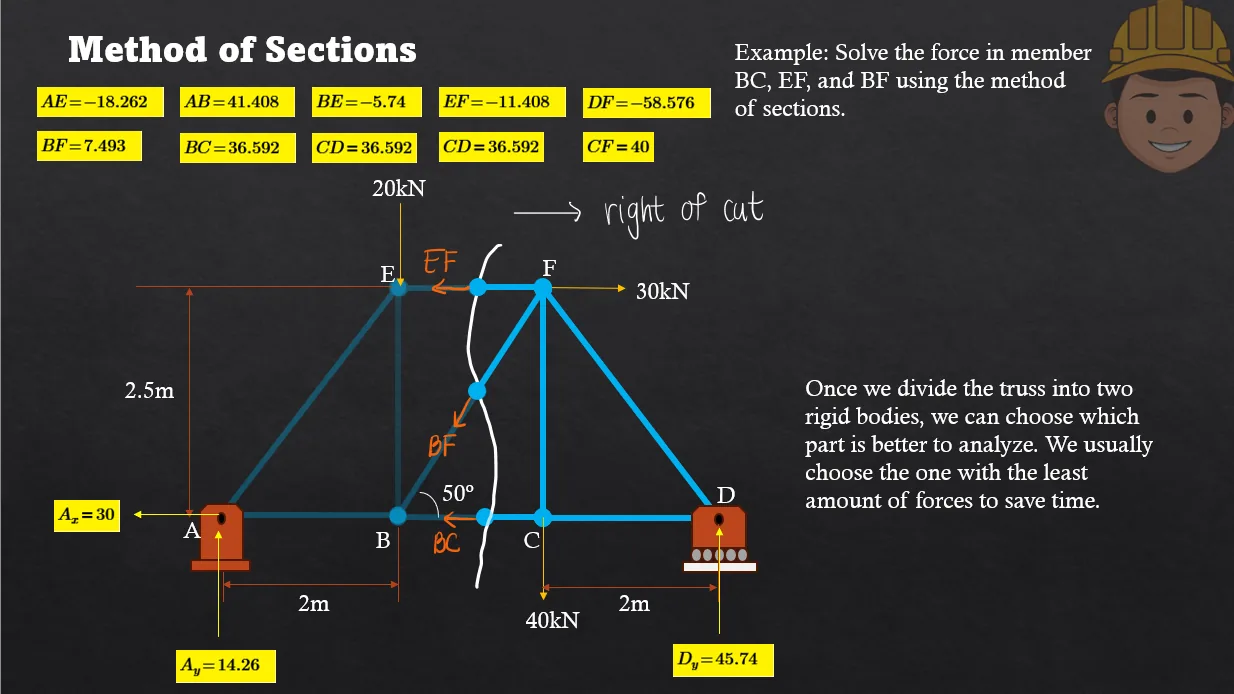
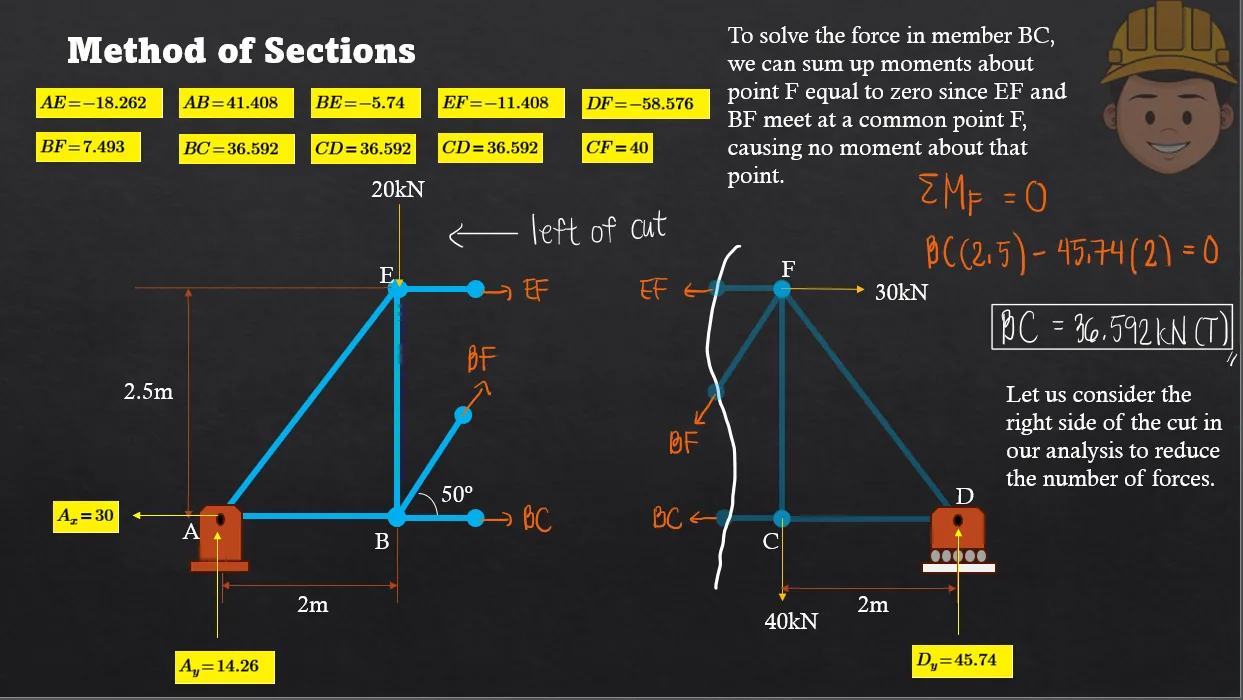
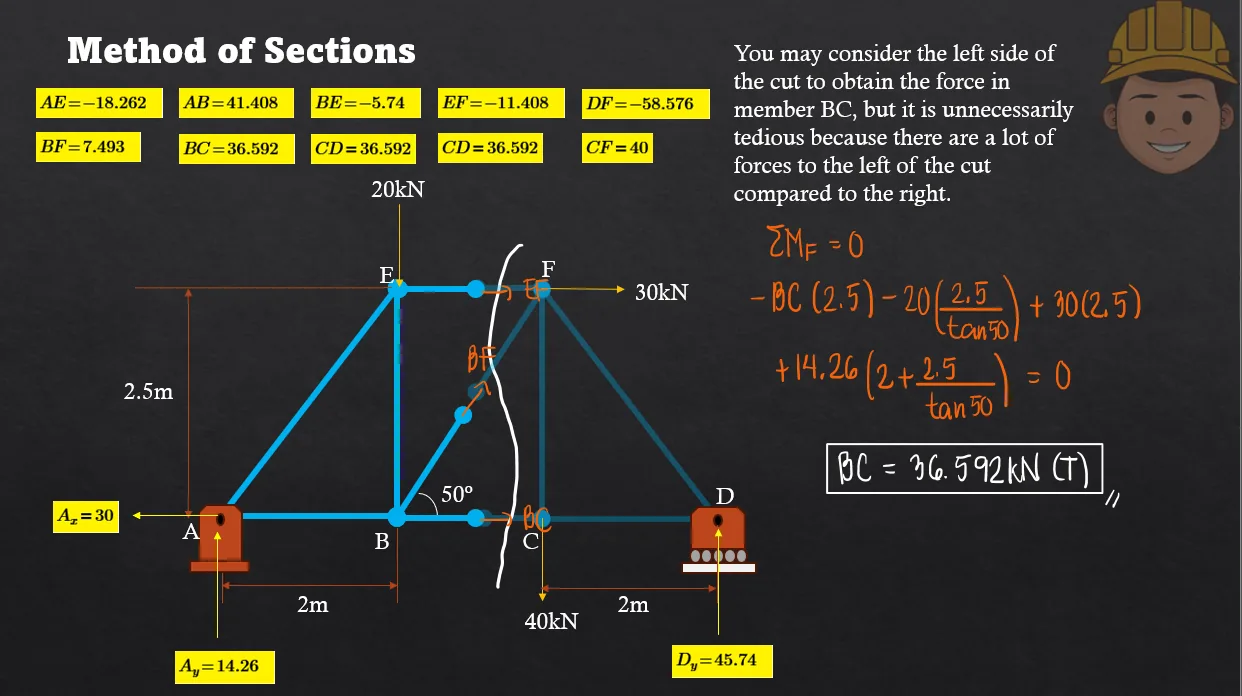
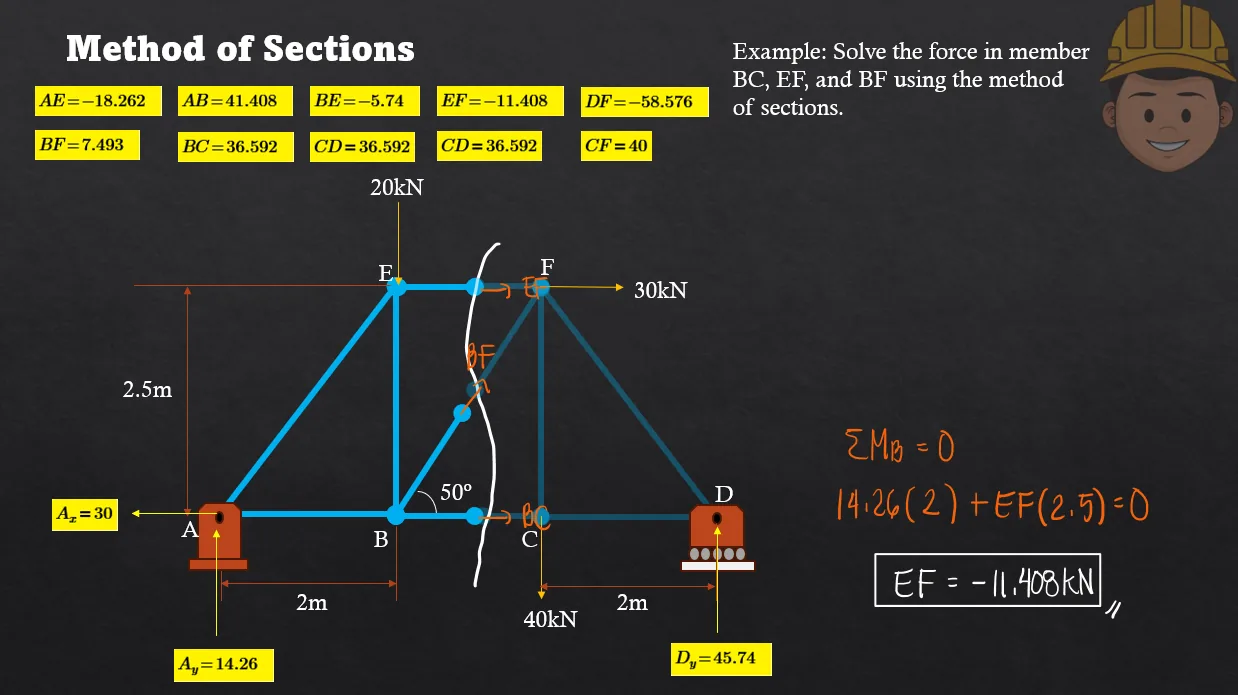

Determine the force in members CD, CH, GH, and CG and state if these members are in tension or compression.
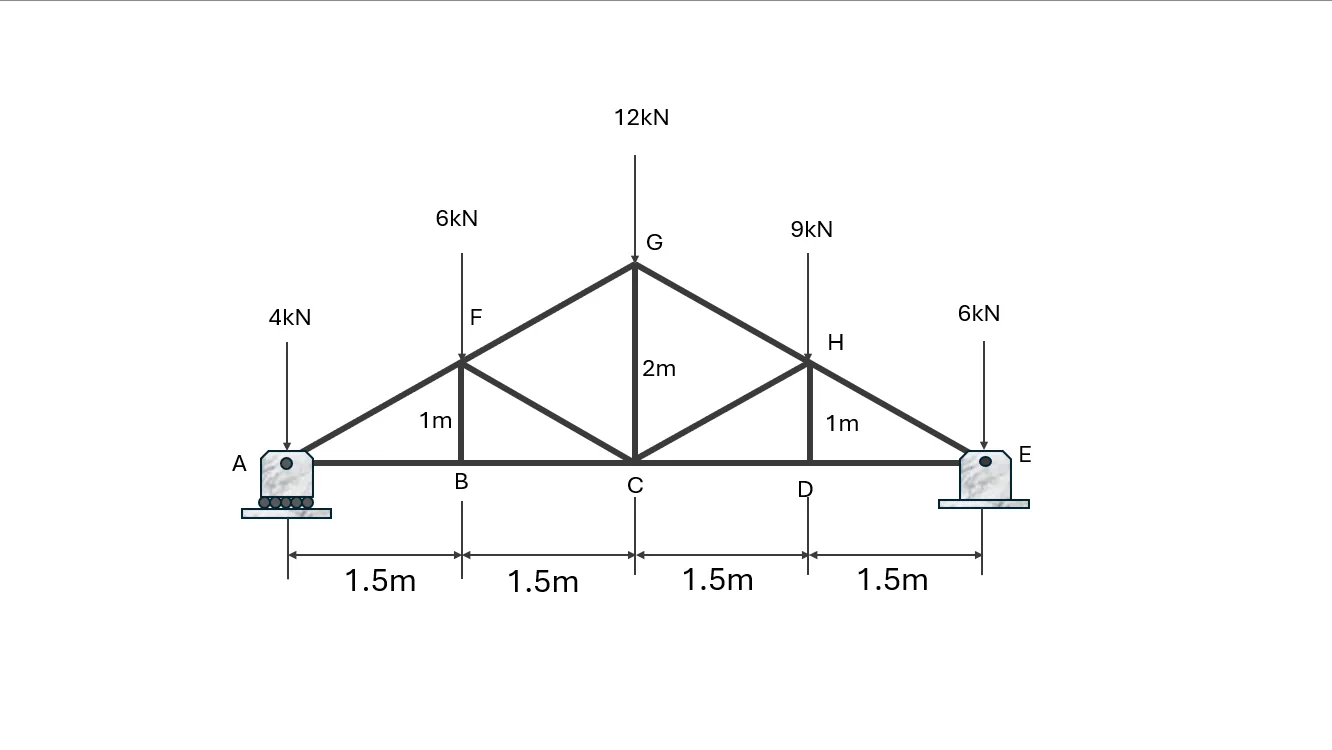


See images:
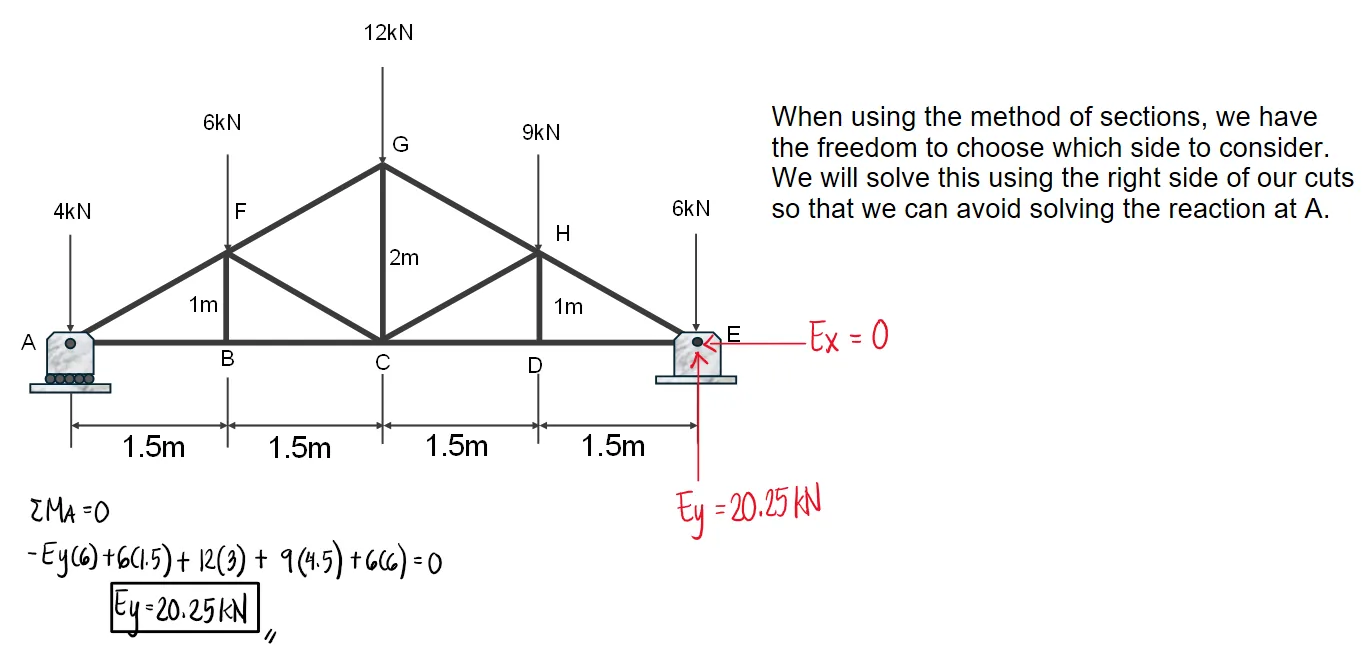
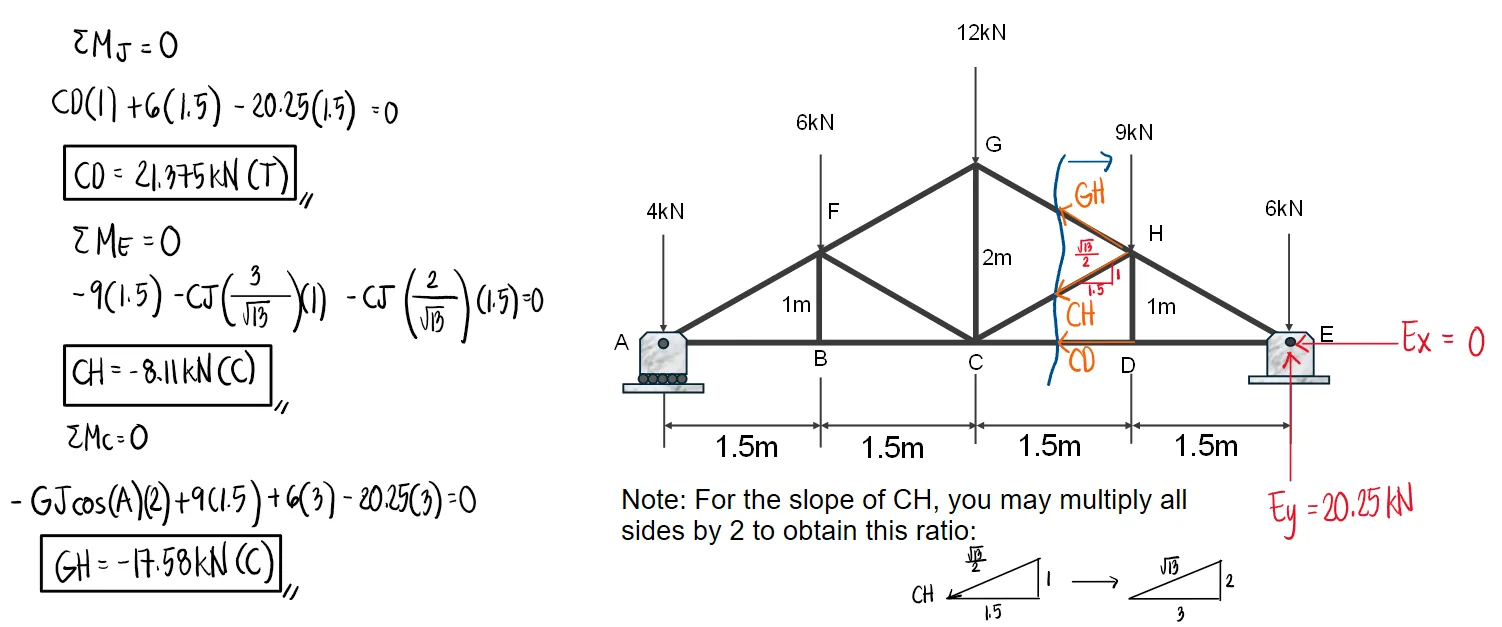
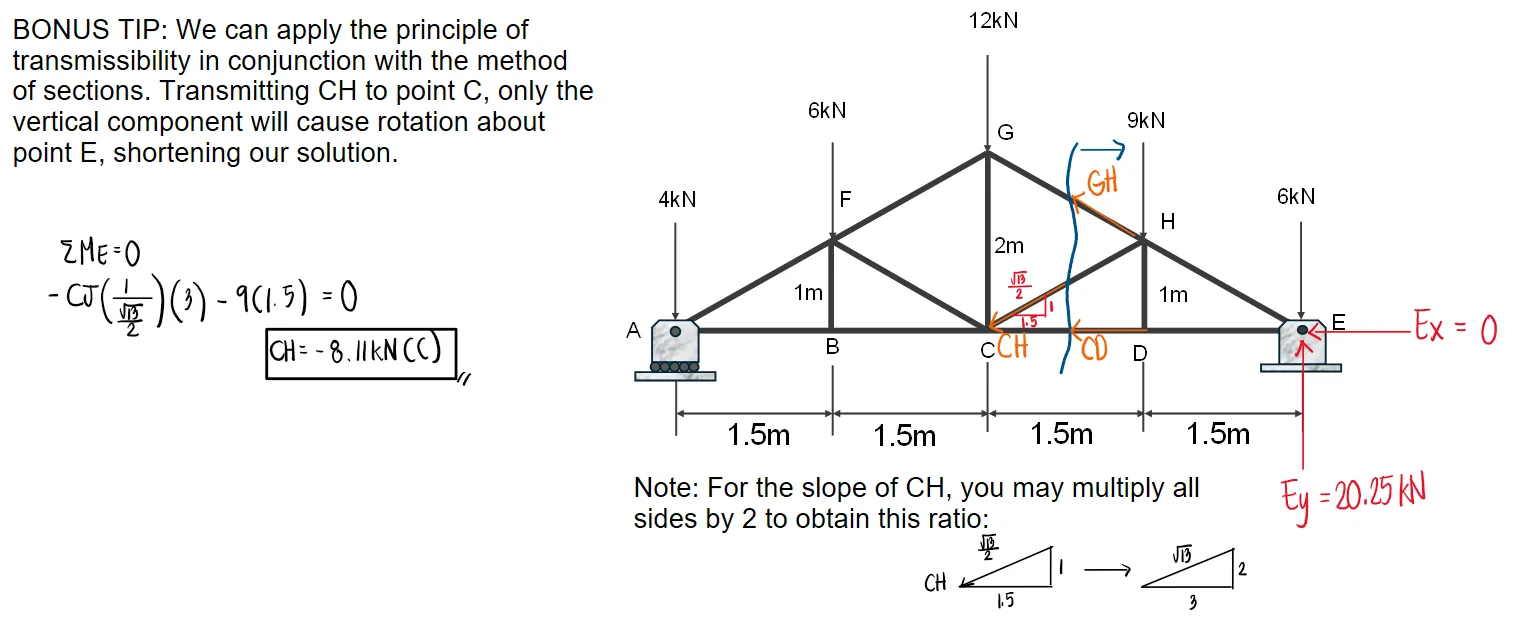
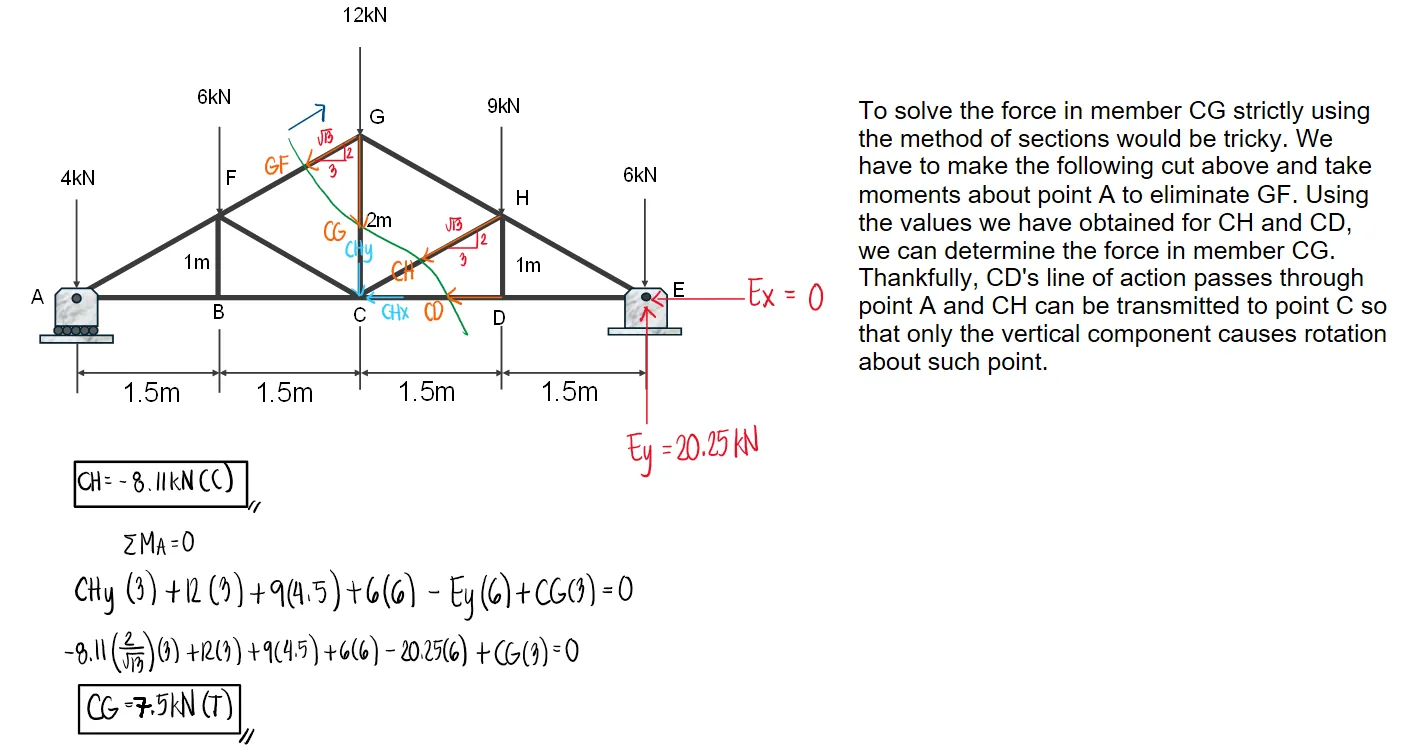
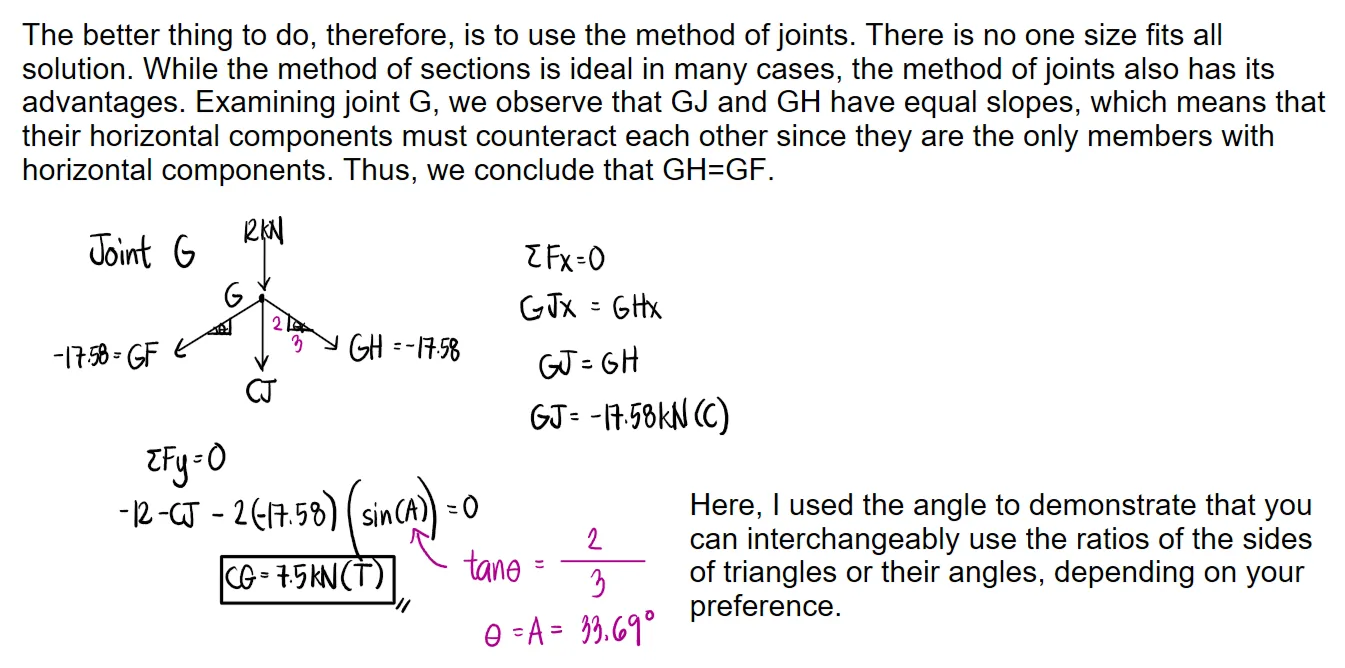
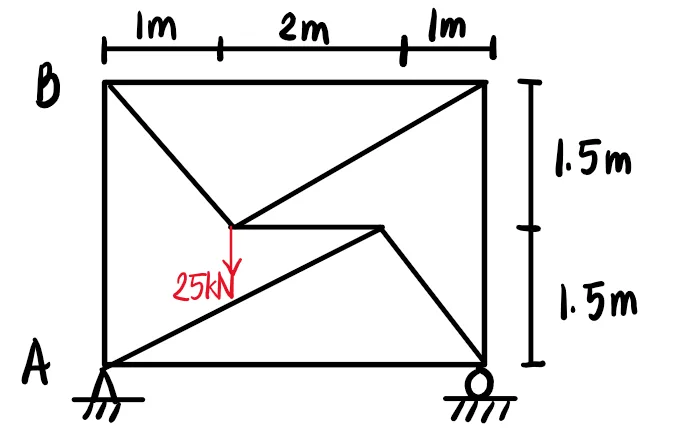


See images:


In the truss shown below:
a. Determine the force in AD
b. Determine the force in BD
c. Determine the force in BC.
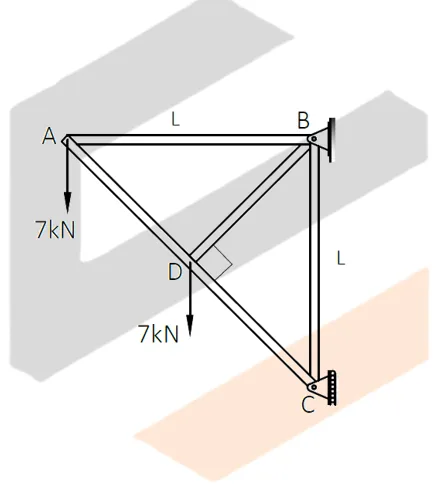


See images:
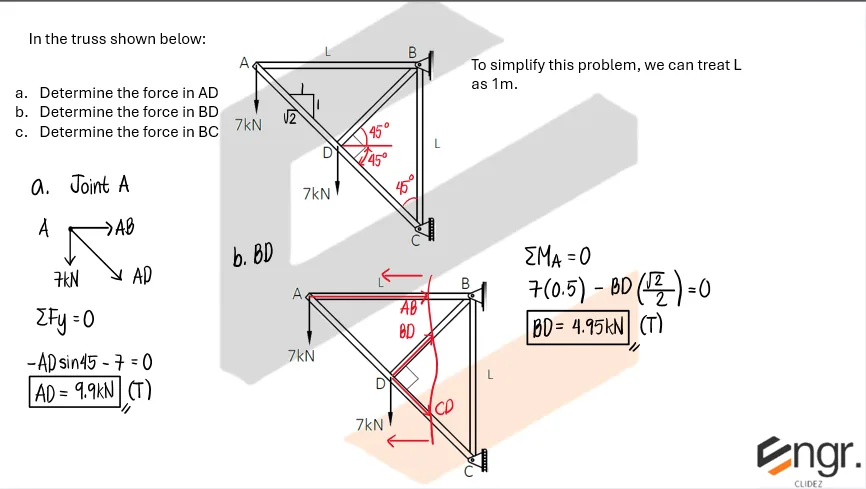
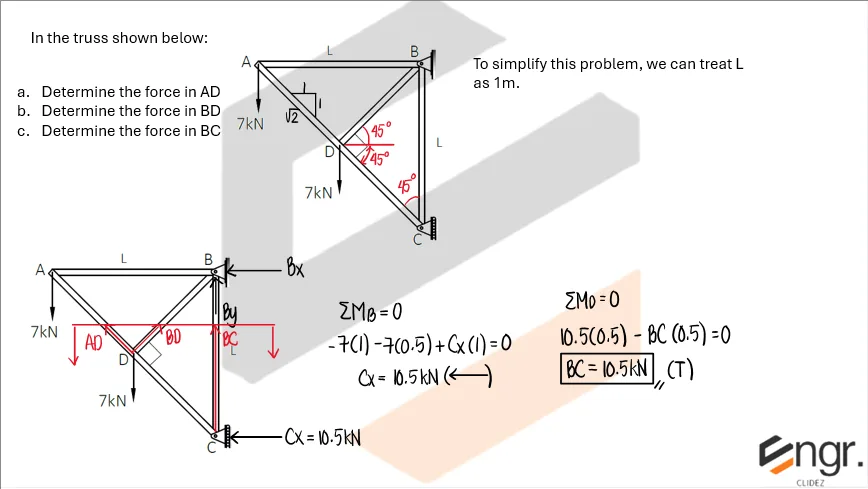


Given the truss shown in the figure,

a. If the strength of the truss is governed by the compressive load of member BD which is 100 kN, compute the maximum value of P in kilonewtons.
a. 25
b. 30
c. 20
d. Not in the list
b. If its strength is governed by the tensile force of member CD of 50 kN, compute the maximum value of P in kilonewtons.
a. 20
b. 50
c. 30
d. 40
c. If its strength is governed by the tensile force of member CF of 75 kN, compute the maximum value of P in kilonewtons.
a. 25
b. 30
c. 20
d. 15


See images:


A truss section cuts member DE. Taking moments about a joint where the other two cut members intersect gives a perpendicular distance of 3m from DE. If the external moment about that joint is 45kN-m clockwise, determine the force in DE.
Use moment equilibrium of the cut free body.
A cut exposes an inclined member with a 3-4-5 slope. The vertical equilibrium of the free body requires an upward component of 24kN from this member. Determine the member force.
The vertical component is four-fifths of the member force.
After cutting a truss, horizontal equilibrium gives F1 + 0.6F2 = 18, and vertical equilibrium gives 0.8F2 = 16. Determine F1 and F2.
Solve the vertical equation first, then substitute into the horizontal equation.