Partial fraction decomposition is a method used to rewrite rational expressions—fractions where both numerator and denominator are polynomials—into a sum of simpler fractions. This technique is essential in calculus, Laplace transforms, and system analysis in engineering.
Form of a Rational Expression:
$$
\frac{P(x)}{Q(x)}
$$
Where $P(x)$ and $Q(x)$ are polynomials, and the degree of the numerator is less than the degree of the denominator.
Why It Works:
If the denominator can be factored, the rational expression can be decomposed into a sum of simpler terms whose denominators match those factors. This makes integration and algebraic manipulation easier.
Ensure the degree of the numerator is less than that of the denominator. If not, perform polynomial division.
Factor the denominator completely.
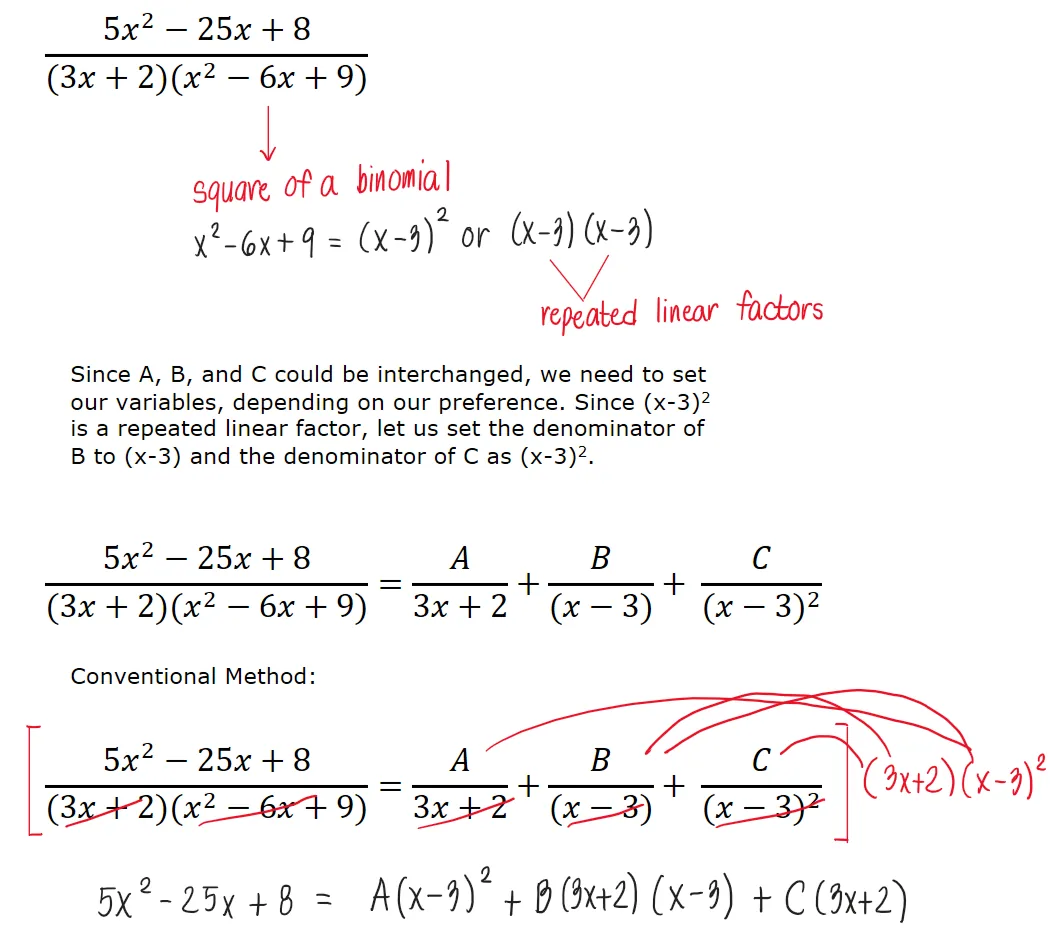
Set up partial fractions based on the type of factors (linear, repeated, or quadratic).
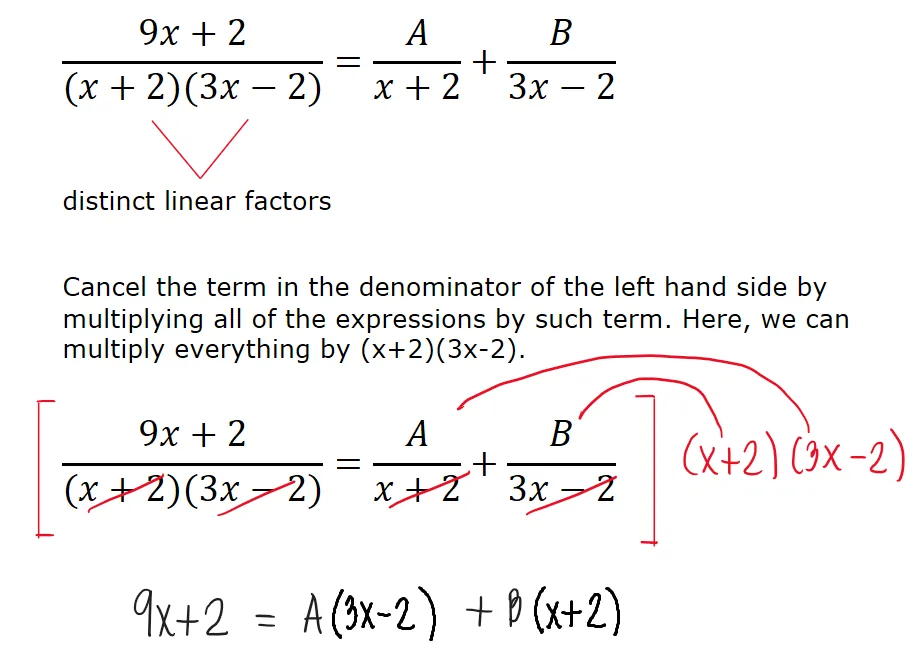
Multiply through by the common denominator to eliminate fractions.
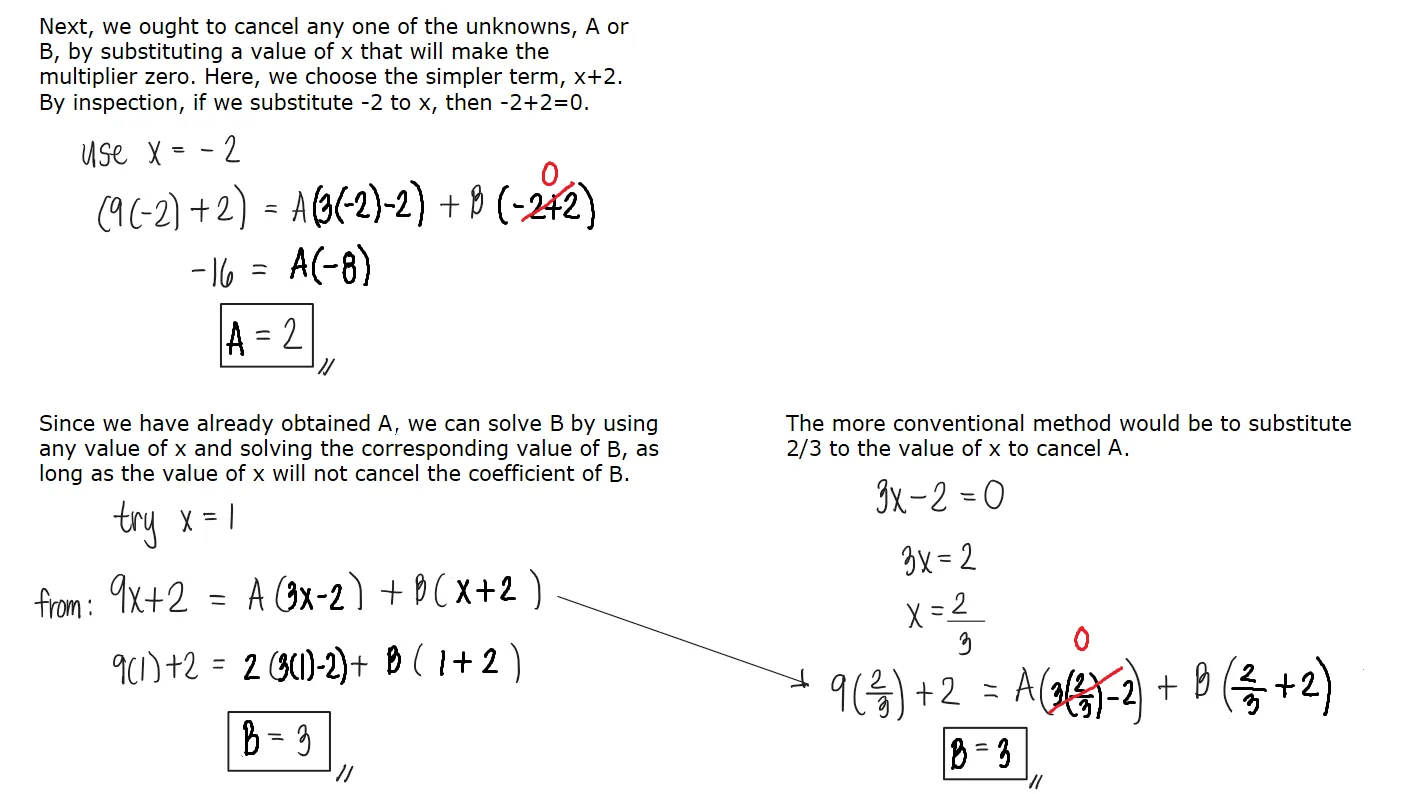
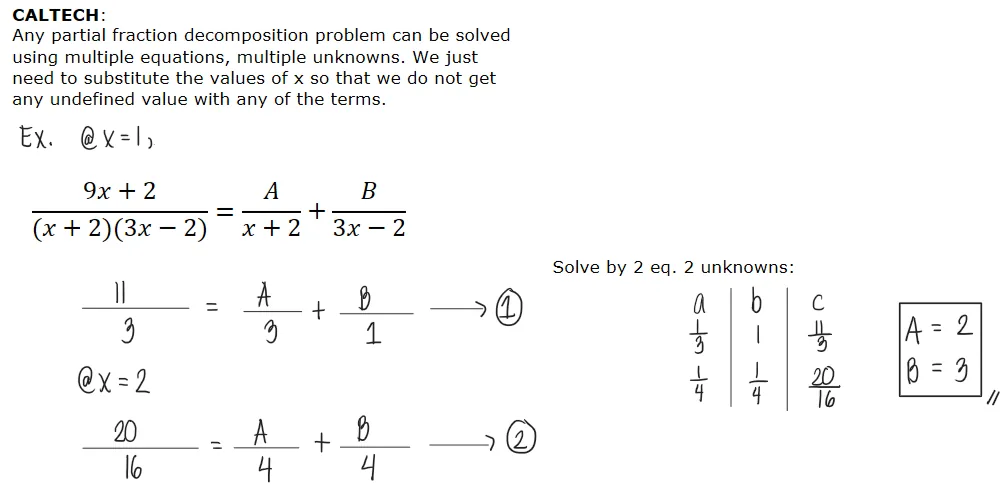
Solve for constants by substitution or comparing coefficients.
This decomposition method transforms complex expressions into manageable parts for integration, inverse transforms, or system modeling in engineering contexts.
Problem:
Perform partial fraction decomposition for the following function:
$$\frac{9x+2}{(x+2)(3x-2)}$$
See images:
Problem:
Perform partial fraction decomposition for the following function:
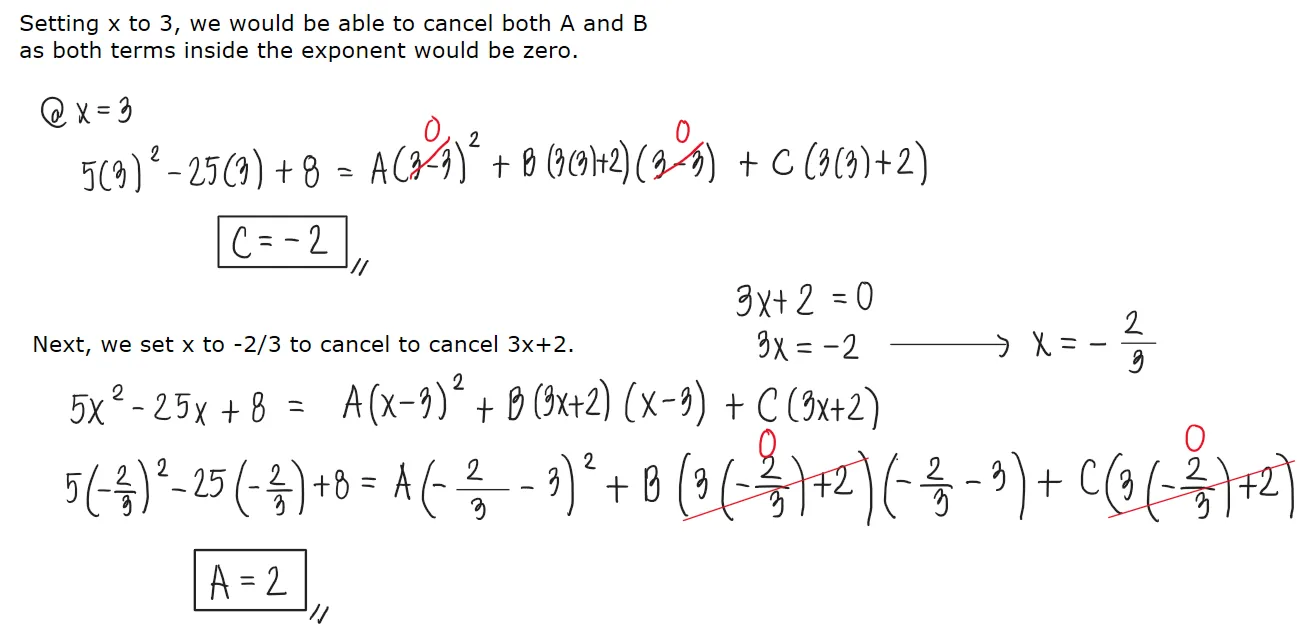
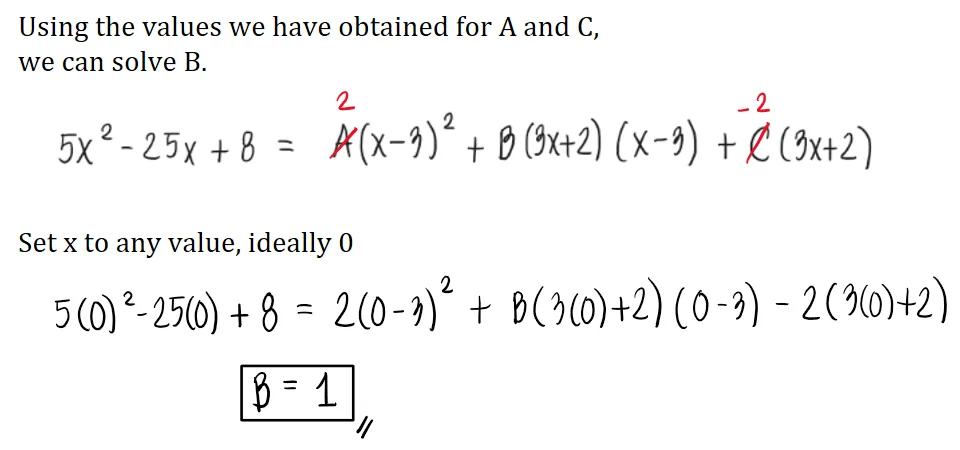
$$\frac{5x^2-25x+8}{(3x+2)(x^2-6x+9)}$$
See images:
Problem:
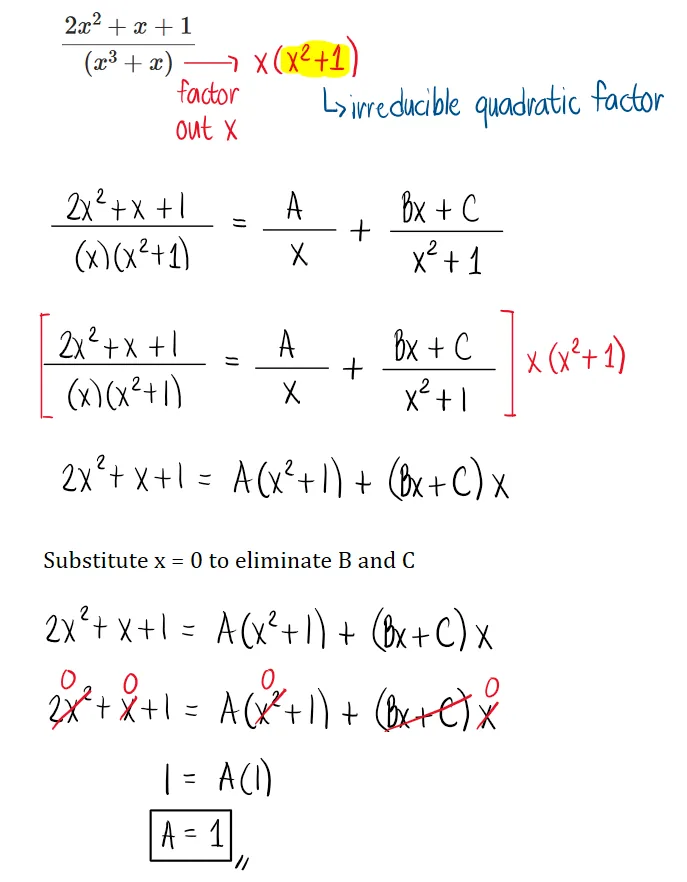
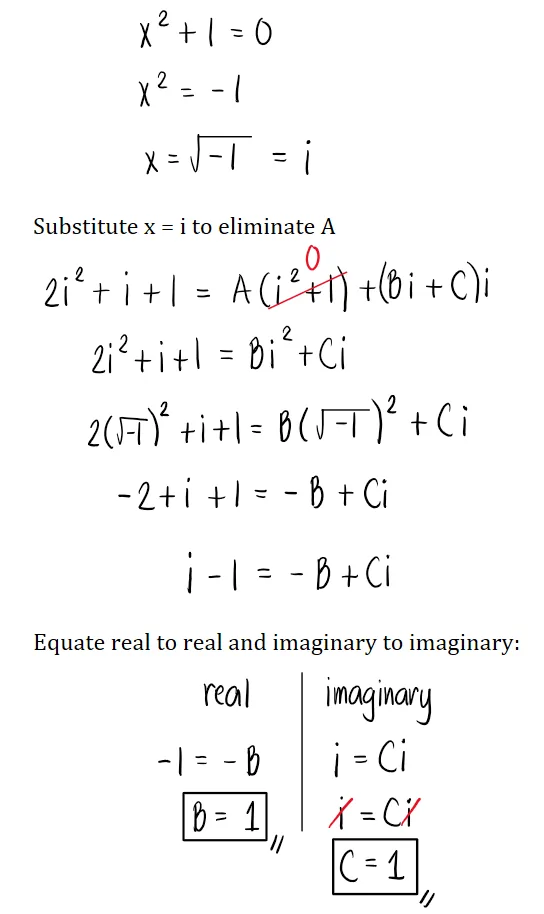
Determine the value of A, B, and C.
$$\frac{2x^2+x+1}{(x^3+x)}$$
See images:
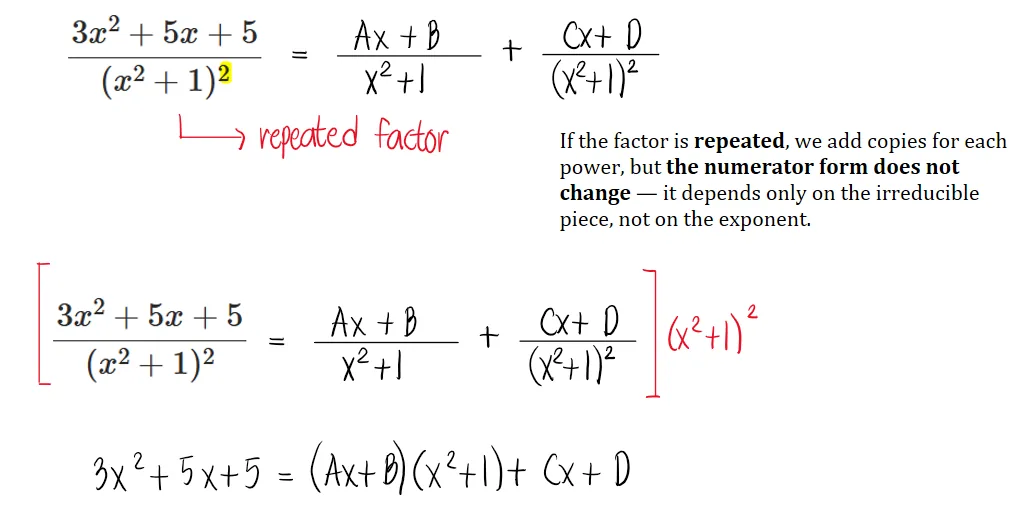
Problem:
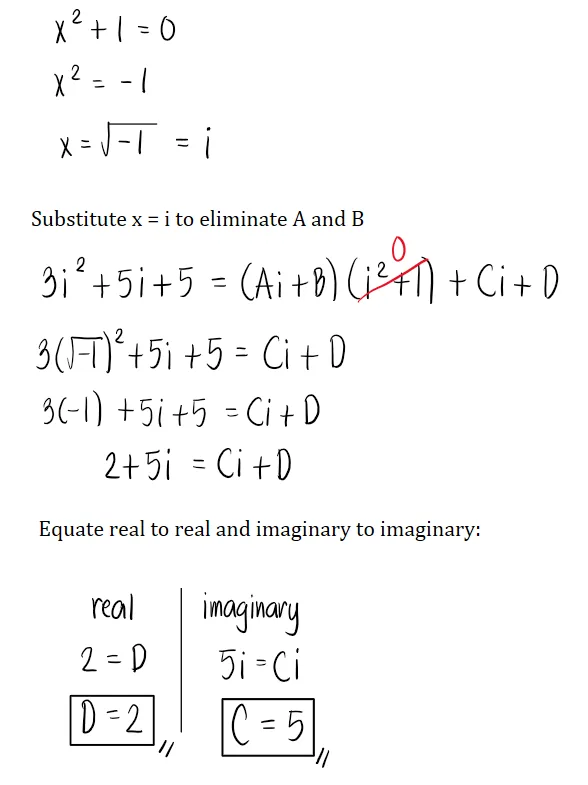
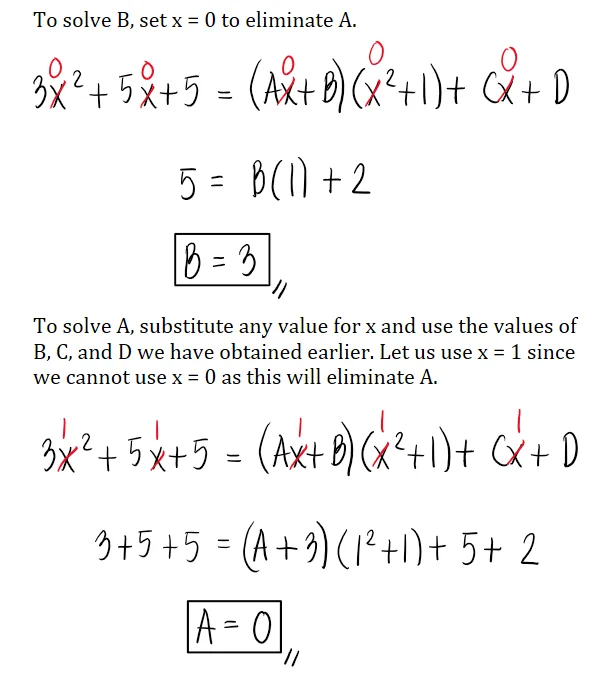
Determine the value of A, B, C, and D.
$$\frac{3x^2+5x+5}{(x^2+1)^2}$$
See images:
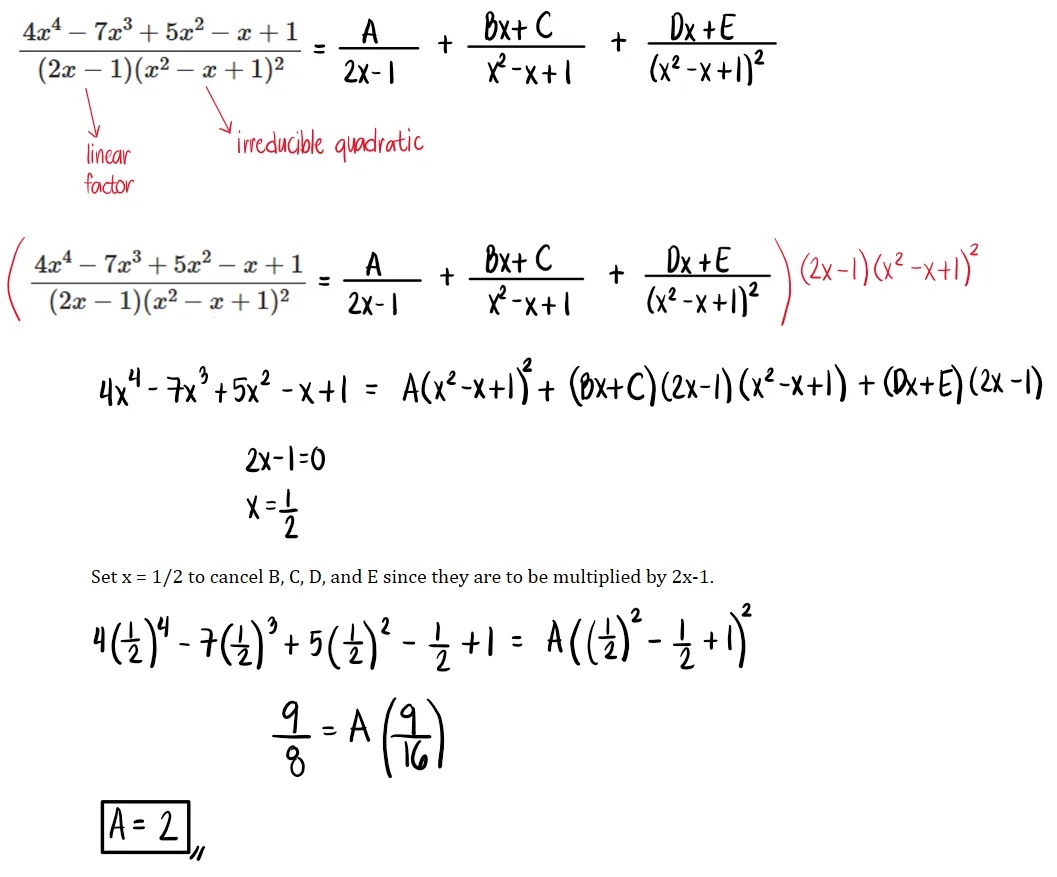
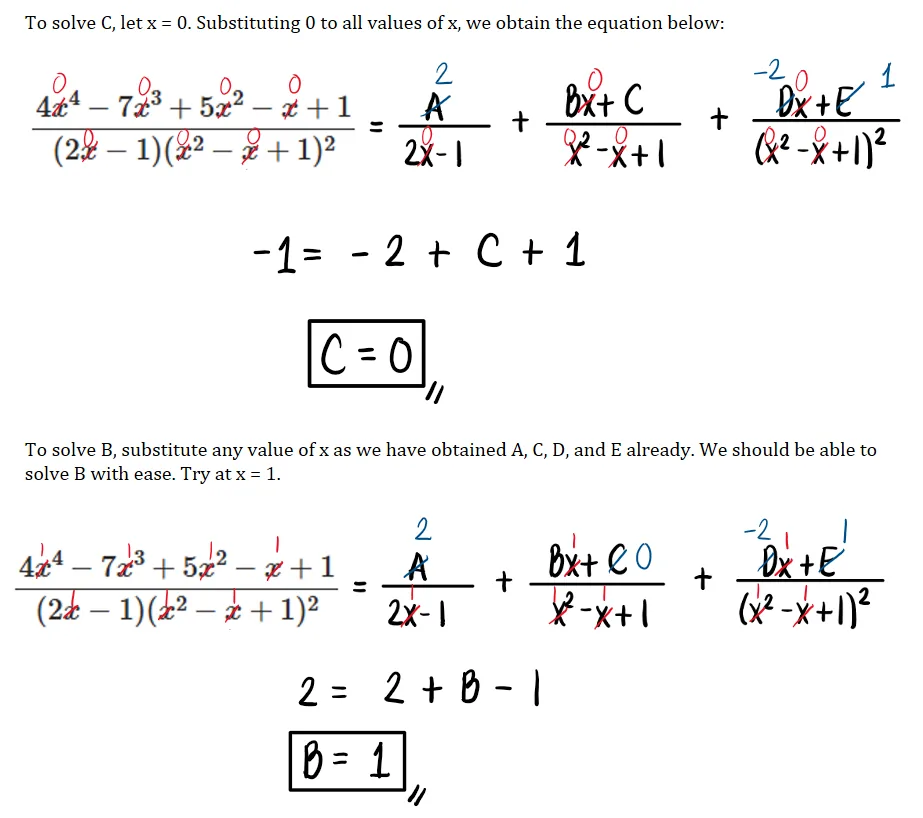
Problem:
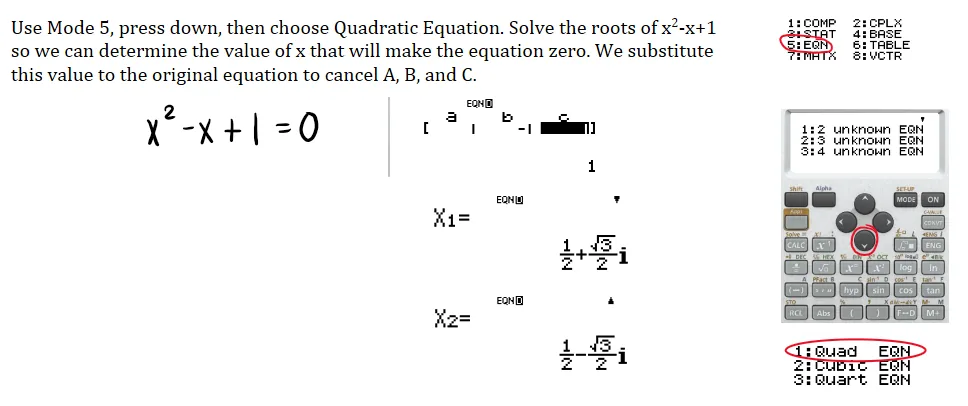
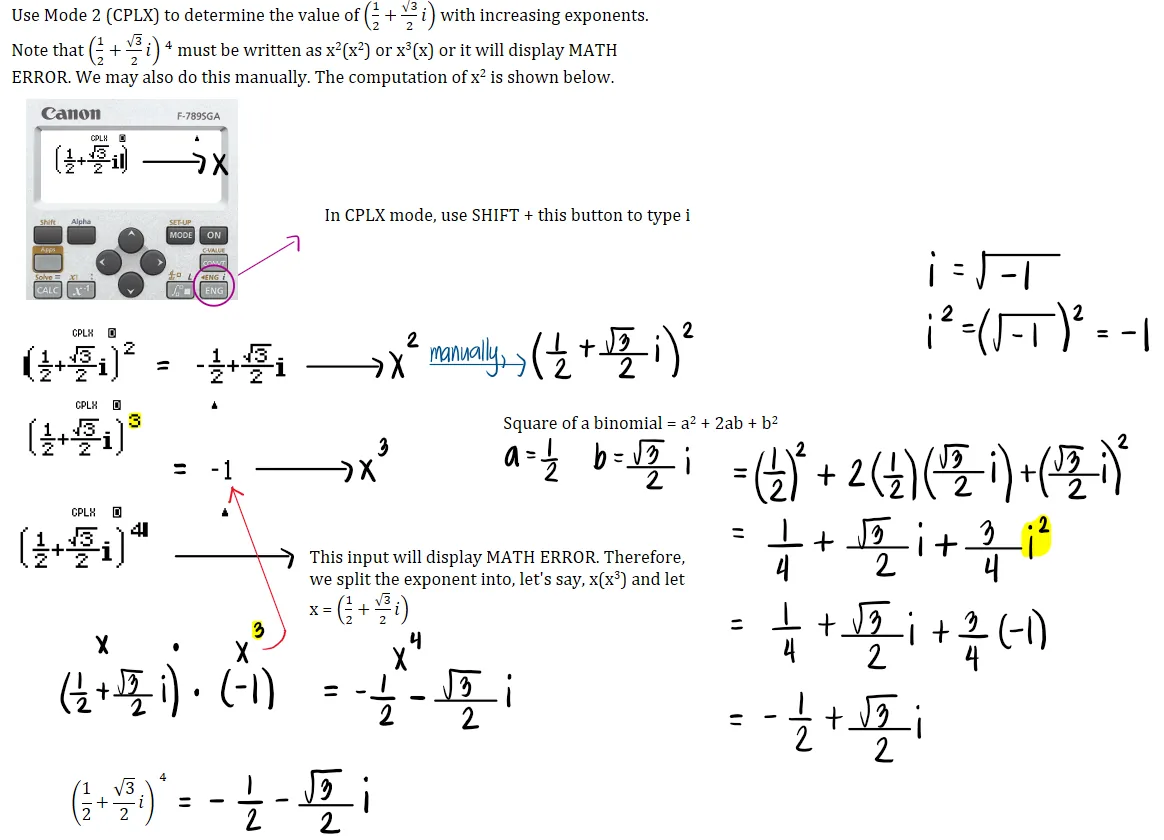
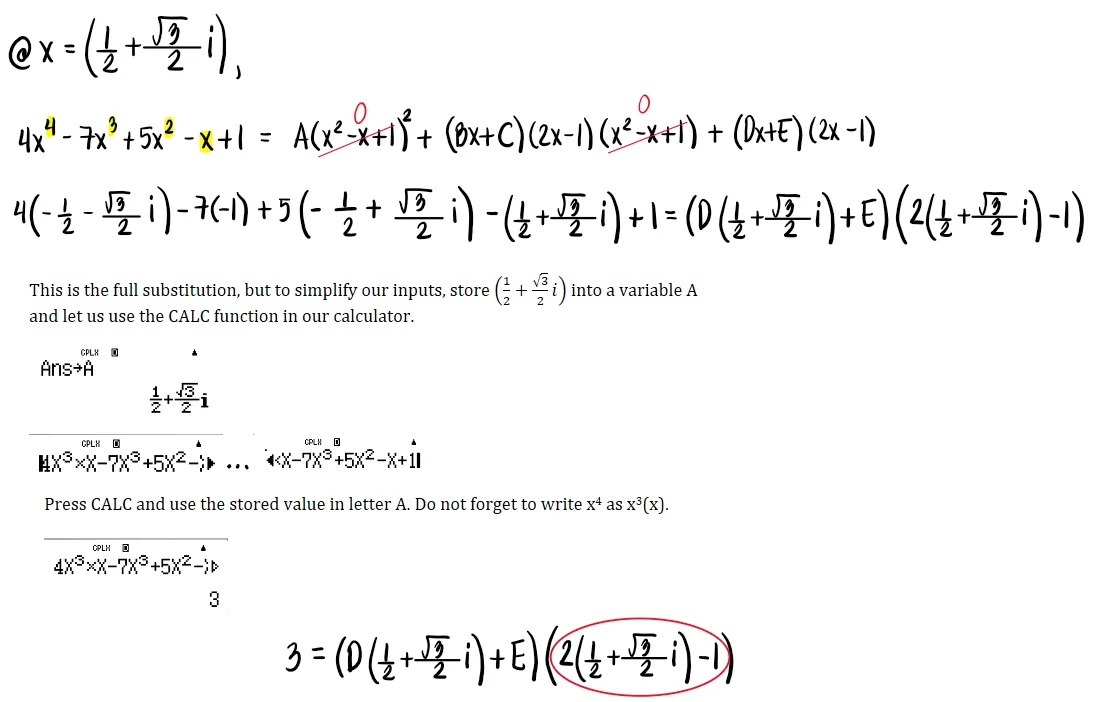
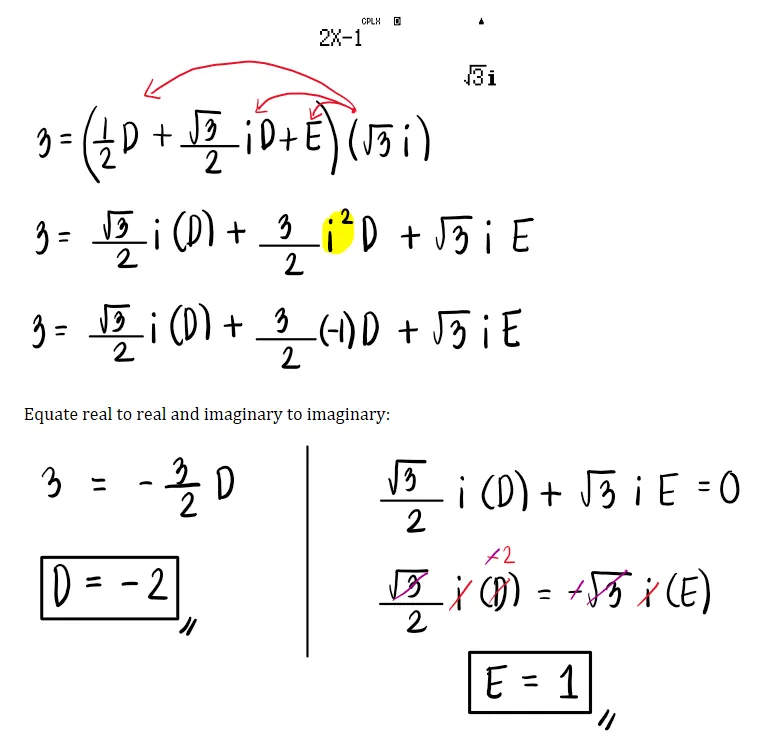
Determine the value of A, B, C, D, and E.
$$\frac{4x^4-7x^3+5x^2-x+1}{(2x-1)(x^2-x+1)^2}$$
See images:
-->
🧭 Jump to:
Scroll to zoom
Exam Generator Problems
Additional board-style practice items for this topic.
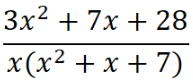
For the expression shown, perform partial fraction decomposition and determine the numerator associated with x2+x+7.
Answer:
3-x
2-x
x+3
x+2
### Partial fractions
Let
$$\frac{3x^2+7x+28}{x(x^2+x+7)}=\frac{A}{x}+\frac{Bx+C}{x^2+x+7}.$$
Multiplying by the denominator gives
$$3x^2+7x+28=A(x^2+x+7)+x(Bx+C).$$
Equating coefficients gives $7A=28$, $A+B=3$, and $A+C=7$. Therefore
$$A=4,\qquad B=-1,\qquad C=3.$$
The numerator over $x^2+x+7$ is
$$\boxed{3-x}.$$
Determine the value of A, B, C, and D, respectively
Answer:
4, 0, 0, 7
-4, 0, 7, 0
4, 0, 0, -7
4, -7, 0, 0
### Determine $A$, $B$, $C$, and $D$
Multiply the given identity by $(x^2+4)^2$:
$$4x^3+16x+7=(Ax+B)(x^2+4)+(Cx+D).$$
Expanding the right side gives
$$Ax^3+Bx^2+(4A+C)x+(4B+D).$$
Equating coefficients with $4x^3+0x^2+16x+7$ gives
$$A=4,\quad B=0,\quad C=0,\quad D=7.$$
Hence
$$\boxed{A,B,C,D=4,0,0,7}. $$
Decompose in partial fractions and solve A, B, and C.
Answer:
A=0, B=2, C=9
A=1, B=2, C=9
A=0, B=-2, C=9
A=1, B=2, C=-9
### Repeated linear factor
Write
$$\frac{2x+5}{(x-2)^3}=\frac{A}{x-2}+\frac{B}{(x-2)^2}+\frac{C}{(x-2)^3}.$$
After multiplying by $(x-2)^3$,
$$2x+5=A(x-2)^2+B(x-2)+C.$$
Set $x=2$ to get $C=9$. Expanding and comparing coefficients then gives $A=0$ and $B=2$. Therefore
$$\boxed{A=0,\ B=2,\ C=9}. $$